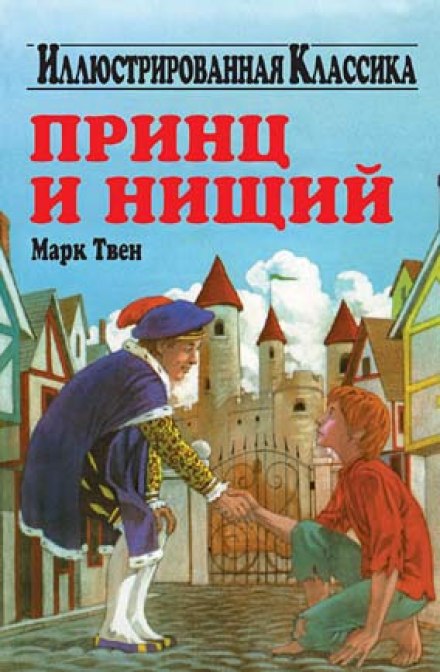
The Prince and the Pauper
6 hrs. 34 min.
Language
Russian
Author
Mark Twain
Author
Mark Twain
Narrator
Sergey Chonishvili
Narrator
Sergey Chonishvili
Description
The novel “The Prince and the Pauper” was written more than a century ago. It carries the reader into a half-fairytale world where kings rule, but at the same time there are also unhappy, hungry people. The author connects these two extremes into one by swapping the boys from the upper and lower worlds. Each of them wants new impressions and, as they say, thinks it’s better where he isn’t. But in the end of the book, everything falls into place…
M ark Twain’s work not only impresses with its intriguing plot, but also teaches that appearance can be deceptive, that wealth is illusory and not always brings happiness, and that life has more than just white and black. Of course, the king in rags had to experience not the most pleasant adventures. He misjudged his expectations, and freedom—which had attracted him so much—turned out to be a real trap. But at least he went through a true school of life.
Often it seems that someone else is better off and it’s easier for someone else, that someone else gets more luck. But it turns out that it’s not easy to be a pauper and not easy to be a king either. And ruling a people with whom you have nothing in common is just as blind as acting without seeing. This beautiful kind fairy tale is extremely instructive, and the dynamic plot will delight both adults and children.
M ark Twain’s work not only impresses with its intriguing plot, but also teaches that appearance can be deceptive, that wealth is illusory and not always brings happiness, and that life has more than just white and black. Of course, the king in rags had to experience not the most pleasant adventures. He misjudged his expectations, and freedom—which had attracted him so much—turned out to be a real trap. But at least he went through a true school of life.
Often it seems that someone else is better off and it’s easier for someone else, that someone else gets more luck. But it turns out that it’s not easy to be a pauper and not easy to be a king either. And ruling a people with whom you have nothing in common is just as blind as acting without seeing. This beautiful kind fairy tale is extremely instructive, and the dynamic plot will delight both adults and children.
100%
03:41
M.Tven_-_Princ_i_nischii_01
10:37
M.Tven_-_Princ_i_nischii_02
14:27
M.Tven_-_Princ_i_nischii_03
07:49
M.Tven_-_Princ_i_nischii_04
16:31
M.Tven_-_Princ_i_nischii_05
15:00
M.Tven_-_Princ_i_nischii_06
07:42
M.Tven_-_Princ_i_nischii_07
05:39
M.Tven_-_Princ_i_nischii_08
06:10
M.Tven_-_Princ_i_nischii_09
17:13
M.Tven_-_Princ_i_nischii_10
09:49
M.Tven_-_Princ_i_nischii_11
23:04
M.Tven_-_Princ_i_nischii_12
07:30
M.Tven_-_Princ_i_nischii_13
21:49
M.Tven_-_Princ_i_nischii_14
19:51
M.Tven_-_Princ_i_nischii_15
05:40
M.Tven_-_Princ_i_nischii_16
20:05
M.Tven_-_Princ_i_nischii_17
15:03
M.Tven_-_Princ_i_nischii_18
10:52
M.Tven_-_Princ_i_nischii_19
12:37
M.Tven_-_Princ_i_nischii_20
08:18
M.Tven_-_Princ_i_nischii_21
10:24
M.Tven_-_Princ_i_nischii_22
06:13
M.Tven_-_Princ_i_nischii_23
05:04
M.Tven_-_Princ_i_nischii_24
13:31
M.Tven_-_Princ_i_nischii_25
08:00
M.Tven_-_Princ_i_nischii_26
18:21
M.Tven_-_Princ_i_nischii_27
07:30
M.Tven_-_Princ_i_nischii_28
04:10
M.Tven_-_Princ_i_nischii_29
05:22
M.Tven_-_Princ_i_nischii_30
11:50
M.Tven_-_Princ_i_nischii_31
24:21
M.Tven_-_Princ_i_nischii_32
14:52
M.Tven_-_Princ_i_nischii_33
05:22
M.Tven_-_Princ_i_nischii_34
