The Adventures of Pinocchio
4 hrs. 9 min.
Language
Russian
Author
Carlo Collodi
Author
Carlo Collodi
Narrator
Alla Chovzhyk
Narrator
Alla Chovzhyk
Description
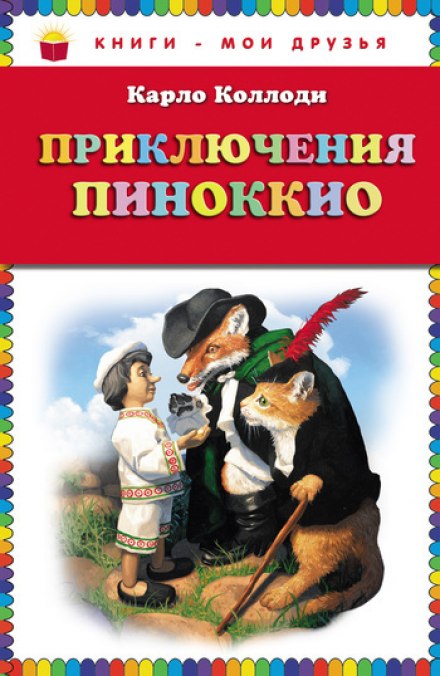
One day, Master Jeppetto made a wooden boy out of a log—Pinocchio—but he could only misbehave, and when he lied, his wooden nose grew even longer. He ran away from home, sat in prison, and worked in a circus. But one morning, a real boy came to Father Jeppetto—good and obedient.
Note:
In June 1881, the editor of Il Giornale dei Bambini (“Children’s newspaper”) received from his friend Carlo a sealed envelope containing a manuscript titled “The Story of Buratino,” along with a note: “I’m sending you this childish babble—do with it what you like. But if you print it, pay me properly, so that I’ll want to continue it.” As Collodi later recalled, the idea of this tale matured almost instantly and was, in general, shaped in a single night! The tale’s main character was a marionette doll (in Italy—the homeland of theatrical masks and puppet theater—“Buratino”). Collodi named his hero Pinocchio, from the word “pino,” which in the Tuscan dialect means “cedar nut.”
For “The Story of the Marionette,” the editor paid the author 50 lira, and on July 7, 1881, two first stories about Pinocchio appeared in his newspaper. In July–October, another 13 chapters were printed, and the story was completed with the 15th chapter. The ending, however, was initially harsh: the hero was hanged by robbers on an oak branch, as a lesson to all disobedient children. But this ending was completely rejected by young readers. Perhaps they thought that disobedience and pranks don’t deserve such punishment? In any case, after the editorial office was bombarded with letters in protest, the author continued his story and rewrote the ending. In 1883, the fairy tale “Adventures of Pinocchio. The Story of a Wooden Doll” was published as a separate book and began its triumphant journey across the planet. At that time Carlo Collodi was 57.
According to UNESCO, “The Adventures of Pinocchio” was translated into 87 languages, acquired 27 continuations, and was adapted for stage and screen no fewer than 400 times. Only in English did the book go through more than 111 editions, and the first Russian translation, in 1908, made by the M. O. Wolf publishing house, was based on the 480th Italian edition. Inspired by Pinocchio, in 1936 A. Tolstoy created his own fairy tale “The Golden Key, or the Adventures of Buratino.” And the full translation of the original work into Russian was carried out for the first time by writer E. G. Kazakevich and published in 1959.
In the late 19th century the Vatican banned Carlo Collodi’s “Pinocchio” because a craftsman—not God—created a living being there. Today, in the small Italian town of Collodi (named after the author’s pen name), a monument stands to the literary hero, the wooden boy named Pinocchio. On the monument is carved the inscription: “To immortal Pinocchio—from grateful readers aged four to seventy.
For “The Story of the Marionette,” the editor paid the author 50 lira, and on July 7, 1881, two first stories about Pinocchio appeared in his newspaper. In July–October, another 13 chapters were printed, and the story was completed with the 15th chapter. The ending, however, was initially harsh: the hero was hanged by robbers on an oak branch, as a lesson to all disobedient children. But this ending was completely rejected by young readers. Perhaps they thought that disobedience and pranks don’t deserve such punishment? In any case, after the editorial office was bombarded with letters in protest, the author continued his story and rewrote the ending. In 1883, the fairy tale “Adventures of Pinocchio. The Story of a Wooden Doll” was published as a separate book and began its triumphant journey across the planet. At that time Carlo Collodi was 57.
According to UNESCO, “The Adventures of Pinocchio” was translated into 87 languages, acquired 27 continuations, and was adapted for stage and screen no fewer than 400 times. Only in English did the book go through more than 111 editions, and the first Russian translation, in 1908, made by the M. O. Wolf publishing house, was based on the 480th Italian edition. Inspired by Pinocchio, in 1936 A. Tolstoy created his own fairy tale “The Golden Key, or the Adventures of Buratino.” And the full translation of the original work into Russian was carried out for the first time by writer E. G. Kazakevich and published in 1959.
In the late 19th century the Vatican banned Carlo Collodi’s “Pinocchio” because a craftsman—not God—created a living being there. Today, in the small Italian town of Collodi (named after the author’s pen name), a monument stands to the literary hero, the wooden boy named Pinocchio. On the monument is carved the inscription: “To immortal Pinocchio—from grateful readers aged four to seventy.
