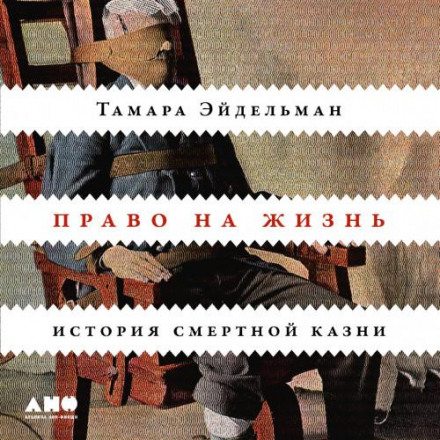
The Right to Life: A History of Capital Punishment
12 hrs. 45 min.
Language
Russian
Author
Tamara Eidelman
Author
Tamara Eidelman
Narrator
Maria Ermakova
Narrator
Maria Ermakova
Description
Sacrifices, blood feuds, executions—these forms of legalized taking of a person’s life by other people have existed since ancient times, and all of them were considered necessary. Historian Tamara Eydelman tells how and for what reasons people were executed and continue to be executed in different countries around the world, what arguments were put forward at different times by supporters and defenders of the death penalty, and how ordinary citizens, politicians, philosophers, writers, and artists have viewed it.
As examples, she discusses events from Antiquity to the present, including famous trials of the 20th century: over Irish rebels, over Marshal Pétain and other figures of the Vichy regime, over Andrei Chikatilo. The purpose of this historical excursion is to find an answer to the question: is the state allowed—even in the name of higher, noble goals—to take a person’s life?
As examples, she discusses events from Antiquity to the present, including famous trials of the 20th century: over Irish rebels, over Marshal Pétain and other figures of the Vichy regime, over Andrei Chikatilo. The purpose of this historical excursion is to find an answer to the question: is the state allowed—even in the name of higher, noble goals—to take a person’s life?
100%
29:39
001
09:27
002
06:08
003
10:05
004
14:53
005
16:57
006
04:37
007
04:15
008
25:22
009
05:55
010
06:54
011
09:27
012
06:59
013
08:46
014
12:58
015
18:12
016
13:07
017
06:19
018
11:38
019
13:20
020
12:05
021
17:21
022
17:03
023
24:40
024
16:27
025
16:26
026
10:50
027
14:00
028
13:28
029
23:58
030
10:18
031
10:44
032
13:05
033
23:15
034
22:07
035
21:17
036
05:39
037
21:53
038
05:36
039
13:34
040
14:56
041
08:37
042
21:07
043
21:38
044
11:14
045
06:54
046
03:45
047
27:14
048
19:19
049
26:07
050
15:29
051
10:31
052
26:57
053
03:24
054
