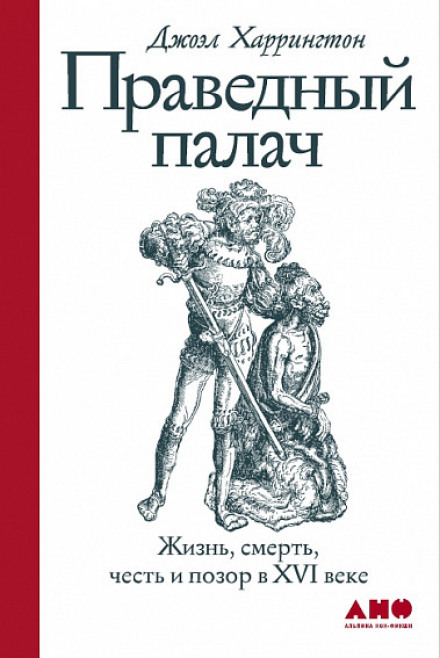
The Faithful Executioner
9 hrs. 52 min.
Language
Russian
Author
Joel Harrington
Author
Joel Harrington
Narrator
Roman Alexandrov
Narrator
Roman Alexandrov
Description
One day, Professor Joel Harrington of Vanderbilt University found the diaries of Master Franz Schmidt on dusty shelves in a used bookstore in Germany. The diaries had been written in the 16th century in the city of Nuremberg. For 45 years, Mr. Schmidt killed and mutilated hundreds of people. He worked as an executioner. A unique historical document was not meant to simply disappear. That is how this book was born—about a deeply religious man who dreamed of a medical practice, an ideal family man, and a true serial killer by profession.
This work stands out seriously from a whole series of medieval studies that have poured upon us in the last couple of years. Here you don’t just get an incredibly interesting story of its time; you also encounter very modern questions— the morality of the death penalty, human cruelty and retribution.
Sincere and detailed diaries of the executioner reflect Franz Schmidt’s painful attempts to reconcile his craft with faith. They show his understanding of justice, punishment, and humanity in the 16th century—and in parallel, how little our ideas have moved beyond the Middle Ages.
“The Righteous Executioner” made it into the top books of the British newspaper The Telegraph.
The audiobook will be interesting to everyone who is interested in history.
This work stands out seriously from a whole series of medieval studies that have poured upon us in the last couple of years. Here you don’t just get an incredibly interesting story of its time; you also encounter very modern questions— the morality of the death penalty, human cruelty and retribution.
Sincere and detailed diaries of the executioner reflect Franz Schmidt’s painful attempts to reconcile his craft with faith. They show his understanding of justice, punishment, and humanity in the 16th century—and in parallel, how little our ideas have moved beyond the Middle Ages.
“The Righteous Executioner” made it into the top books of the British newspaper The Telegraph.
The audiobook will be interesting to everyone who is interested in history.
