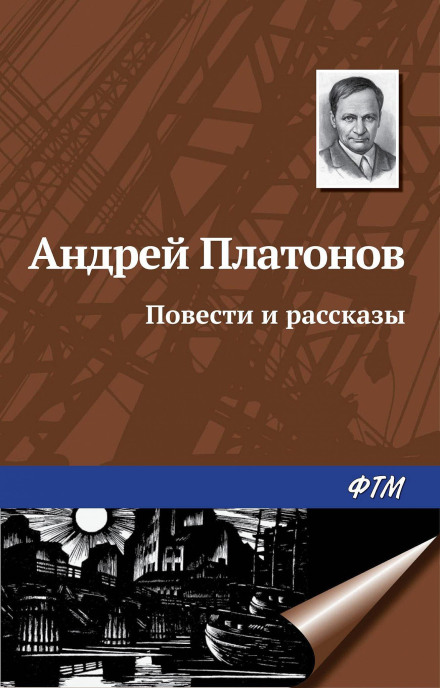
Novellas and Stories
12 hrs. 20 min.
Language
Russian
Author
Andrei Platonov
Author
Andrei Platonov
Narrator
Vadim Tsimbalov
Narrator
Golovilov Anton
Description
Andrey Platonov is a Russian writer with a language unmatched in literature. A frontline correspondent of the Civil War and a war correspondent for “Krasnaya Zvezda” during the Great Patriotic War, he absorbed into himself the full horror of the era: hunger, death, and wandering. The heroes of “The Secret Man” trudge along the roads of war; Voshchev from “The Foundation Pit” searches for the meaning of life in senseless labor; and “The Sand Teacher” tries to save starving children in the Asian desert.
Andrey Platonov (real name Andrey Platonovich Klimentov, 1899–1951) was a Russian writer, playwright, and poet.
As a frontline correspondent, Andrey Platonov was in the Civil War. Later, in the rank of captain, he served as a war correspondent for the newspaper “Krasnaya Zvezda” during the Great Patriotic War.
His vast life and wartime experience formed the basis of the writer’s exceptionally rich creative legacy. The most striking feature of A. Platonov’s prose is his original language—one that has no equals in Russian literature.
The theme of the novella “The Secret Man” (1927) is the Civil War with all the horrors of its manifestations: grief, wandering, and death. The main character of “The Foundation Pit” (1930), Voshchev, searches for the meaning of life. Trying to find answers to eternal questions, he loses himself in work—digging a foundation pit.
The story “The Sand Teacher” (1927) takes place in Central Asia. A young teacher arrives at a school on assignment. The enthusiasm with which she begins her work is soon replaced by bewilderment: hungry and sick students attend classes irregularly; local residents, drained by their struggle with the sand, have no interest in the school.
A lightning strike blinded the experienced engine driver Maltsev—the hero of the story “In the Wonderful and Furious World” (1937). Blinded, he saw the road on which he constantly ran; the semaphore signals were working; the machine obeyed—though ahead, on the track of the oncoming courier train, stood another train.
Of his heroes—and of his people—Platonov said: “They lived a full and shared life with nature and history, and history, in those years, ran off like a locomotive, hauling behind it, up the slope, the world’s burden of poverty, despair, and humble stagnation.”
Andrey Platonov (real name Andrey Platonovich Klimentov, 1899–1951) was a Russian writer, playwright, and poet.
As a frontline correspondent, Andrey Platonov was in the Civil War. Later, in the rank of captain, he served as a war correspondent for the newspaper “Krasnaya Zvezda” during the Great Patriotic War.
His vast life and wartime experience formed the basis of the writer’s exceptionally rich creative legacy. The most striking feature of A. Platonov’s prose is his original language—one that has no equals in Russian literature.
The theme of the novella “The Secret Man” (1927) is the Civil War with all the horrors of its manifestations: grief, wandering, and death. The main character of “The Foundation Pit” (1930), Voshchev, searches for the meaning of life. Trying to find answers to eternal questions, he loses himself in work—digging a foundation pit.
The story “The Sand Teacher” (1927) takes place in Central Asia. A young teacher arrives at a school on assignment. The enthusiasm with which she begins her work is soon replaced by bewilderment: hungry and sick students attend classes irregularly; local residents, drained by their struggle with the sand, have no interest in the school.
A lightning strike blinded the experienced engine driver Maltsev—the hero of the story “In the Wonderful and Furious World” (1937). Blinded, he saw the road on which he constantly ran; the semaphore signals were working; the machine obeyed—though ahead, on the track of the oncoming courier train, stood another train.
Of his heroes—and of his people—Platonov said: “They lived a full and shared life with nature and history, and history, in those years, ran off like a locomotive, hauling behind it, up the slope, the world’s burden of poverty, despair, and humble stagnation.”
100%
2:36:05
Повести и рассказы 01
4:57:18
Повести и рассказы 02
15:22
Повести и рассказы 03
42:00
Повести и рассказы 04
1:01:16
Повести и рассказы 05
16:24
Повести и рассказы 06
30:01
Повести и рассказы 07
26:23
Повести и рассказы 08
14:45
Повести и рассказы 09
08:31
Повести и рассказы 10
14:39
Повести и рассказы 11
16:42
Повести и рассказы 12
27:47
Повести и рассказы 13
13:37
Повести и рассказы 14
