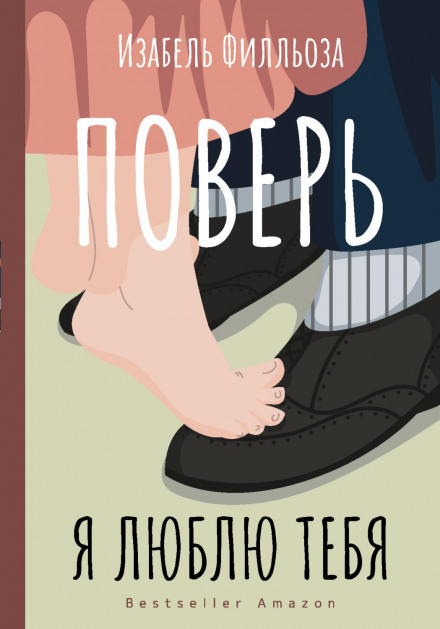
Trust Me. I Love You
8 hrs. 36 min.
Language
Russian
Author
Filliozat Isabelle
Author
Filliozat Isabelle
Narrator
Irina Bulekova
Narrator
Irina Bulekova
Description
Some children call their parents every day—others never call them at all. Some build a home closer to their parents’—while others try to live as far away as possible and prefer not to see them at all. There are children who find it hard to make decisions without mom and dad, and others for whom giving in to family obligations is acceptable only at Christmas, weddings, or funerals. Everyone’s relationships are different. And almost always, every relationship has a rich—and sometimes heavy—history.
The past we share with our parents is a common burden behind our shoulders; it’s hard to keep distance. From the parent’s side and from the side of an adult child, almost any position is possible—except the simplest one. Most people are willing to accept things as they are, believing that nothing can really be changed. Meetings then get reduced to well-known rules of behavior that no one wants to put into question. Relationships can be cold and foreign, falsely intimate. Or they can be stormy or silent, superficial or—on the contrary—deep. They can be painful and tense, or neutral and unexpressive. Rarely are they balanced, healthy, and harmonious.
“Parents/children” relationships look natural. But if you think about it carefully, they require phenomenal abilities to adapt. We are not the same at two months old, at fifteen years old, at thirty, or at seventy. Over a lifetime, our needs change. Since children grow up and parents get older, relationships naturally get out of balance and then search for equilibrium again. They have to keep changing in order to respect the evolution of both sides. There is no relatively simple formula without the risk of trapping one side or the other in a rigid scheme.
So what do we do? How do we find harmony in relationships? All old wounds must be discussed and acknowledged, misunderstandings explained, anger voiced and welcomed—so that connection can be restored. Then reconciliation is born from mutual empathy.
Why agree to superficial relationships, when you can—and in most cases it’s possible—(re)create closeness and shared participation? This book by the well-known French psychologist Isabelle Filliozat offers invaluable advice for adult children and their parents regarding their relationships and helps them find harmony.
From this book you will choose the right solutions to the following problems:
— When parents exercise excessive power, what to do?
— Resentment, condemnation, humiliation/“groundless” wounds—what to do?
— Prohibitions and instructions: how to react?
— Alcoholism, mental instability, and anxious parents—what to do?
— What if needs are ignored?
— The burden of the past / guilt feelings in mothers: how to overcome it?
— Does a mother have the right not to love her child?
— Tension that drags on leads to illness: what to do?
— How to move from angry aggression to constructive anger?
— Refuse or fulfill the duty of gratitude?
“Parents are not judged; they are forgiven!” Is it true? It will kill him! / “I’m afraid to die!” What should I do?
— Turn away from parents / abandon them—what to do?
— How to love your inner child?
— How to free yourself from hatred?
And what if the parents are already gone, but their shadow still haunts you?
The past we share with our parents is a common burden behind our shoulders; it’s hard to keep distance. From the parent’s side and from the side of an adult child, almost any position is possible—except the simplest one. Most people are willing to accept things as they are, believing that nothing can really be changed. Meetings then get reduced to well-known rules of behavior that no one wants to put into question. Relationships can be cold and foreign, falsely intimate. Or they can be stormy or silent, superficial or—on the contrary—deep. They can be painful and tense, or neutral and unexpressive. Rarely are they balanced, healthy, and harmonious.
“Parents/children” relationships look natural. But if you think about it carefully, they require phenomenal abilities to adapt. We are not the same at two months old, at fifteen years old, at thirty, or at seventy. Over a lifetime, our needs change. Since children grow up and parents get older, relationships naturally get out of balance and then search for equilibrium again. They have to keep changing in order to respect the evolution of both sides. There is no relatively simple formula without the risk of trapping one side or the other in a rigid scheme.
So what do we do? How do we find harmony in relationships? All old wounds must be discussed and acknowledged, misunderstandings explained, anger voiced and welcomed—so that connection can be restored. Then reconciliation is born from mutual empathy.
Why agree to superficial relationships, when you can—and in most cases it’s possible—(re)create closeness and shared participation? This book by the well-known French psychologist Isabelle Filliozat offers invaluable advice for adult children and their parents regarding their relationships and helps them find harmony.
From this book you will choose the right solutions to the following problems:
— When parents exercise excessive power, what to do?
— Resentment, condemnation, humiliation/“groundless” wounds—what to do?
— Prohibitions and instructions: how to react?
— Alcoholism, mental instability, and anxious parents—what to do?
— What if needs are ignored?
— The burden of the past / guilt feelings in mothers: how to overcome it?
— Does a mother have the right not to love her child?
— Tension that drags on leads to illness: what to do?
— How to move from angry aggression to constructive anger?
— Refuse or fulfill the duty of gratitude?
“Parents are not judged; they are forgiven!” Is it true? It will kill him! / “I’m afraid to die!” What should I do?
— Turn away from parents / abandon them—what to do?
— How to love your inner child?
— How to free yourself from hatred?
And what if the parents are already gone, but their shadow still haunts you?
