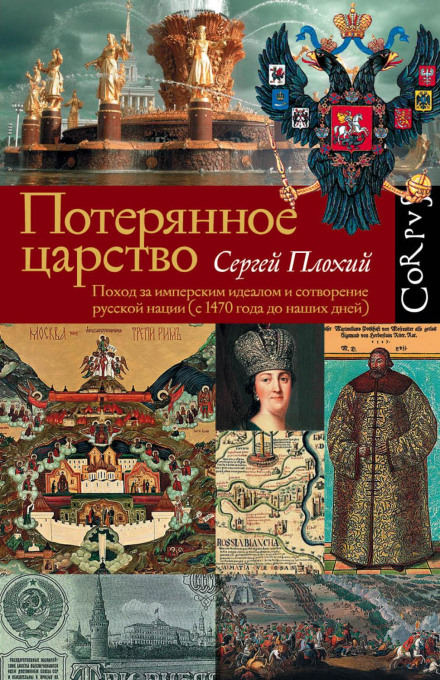
Lost Kingdom: The Quest for Empire and the Making of the Russian Nation
14 hrs. 10 min.
Language
Russian
Author
Serhii Plokhy
Author
Serhii Plokhy
Narrator
Maxim Suslov
Narrator
Maxim Suslov
Description
Across different eras, the map of the world held many empires—and all of them passed into oblivion. But in the case of Russia, the imperial ideal became a guiding reference point that has determined the country’s existence for several centuries.
At the same time as the building of an empire, the process of creating the Russian nation was underway—a painful search for an answer to the question of its identity, and a transformation depending on political conjuncture and the ideological demands of power. As the empire’s territory expanded, national self-awareness was shaped among Ukrainians and Belarusians, who for a long time were considered branches of a single common Russian people.
The book examines the influence of a powerful myth about the continuity of power from Kievan Rus—adopted by the Moscow princes and playing a key role not only in the era of the “gatherers of the Russian land” and the Romanov empire, but also in the Soviet period, despite initially declared internationalism and the disappearance of the national question. The myth has not lost its relevance to this day, as it is clearly present in the concepts of the common Russian people and in the ideologemes of the “Russian World” that came into the reality of the 21st century to continue the march for the “lost kingdom.”
At the same time as the building of an empire, the process of creating the Russian nation was underway—a painful search for an answer to the question of its identity, and a transformation depending on political conjuncture and the ideological demands of power. As the empire’s territory expanded, national self-awareness was shaped among Ukrainians and Belarusians, who for a long time were considered branches of a single common Russian people.
The book examines the influence of a powerful myth about the continuity of power from Kievan Rus—adopted by the Moscow princes and playing a key role not only in the era of the “gatherers of the Russian land” and the Romanov empire, but also in the Soviet period, despite initially declared internationalism and the disappearance of the national question. The myth has not lost its relevance to this day, as it is clearly present in the concepts of the common Russian people and in the ideologemes of the “Russian World” that came into the reality of the 21st century to continue the march for the “lost kingdom.”
100%
14:41
1
38:47
2
44:03
3
40:21
4
39:17
5
35:59
6
41:54
7
38:57
8
37:18
9
40:40
10
45:13
11
41:10
12
46:58
13
36:03
14
43:22
15
34:57
16
42:58
17
49:58
18
46:12
19
40:36
20
35:04
21
11:37
22
04:53
23
