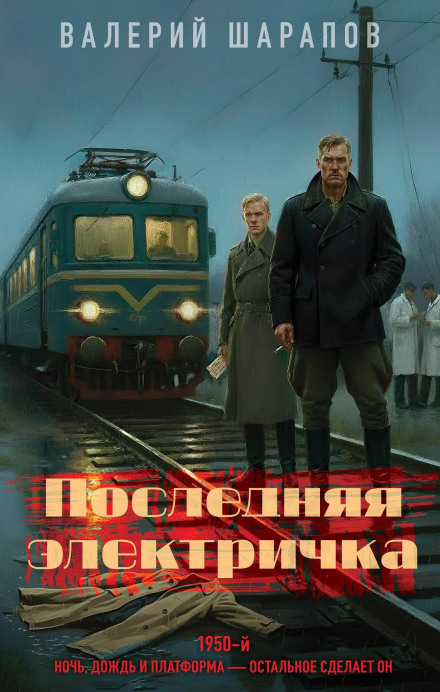
The Last Train
6 hrs. 54 min.
Language
Russian
Author
Valery Sharapov
Author
Valery Sharapov
Narrator
Kirill Fedorov
Narrator
Kirill Fedorov
Description
April 1950. The Moscow region. On a railway embankment, bodies are found with frightening regularity—one after another. The first version seems obvious: the dead were passengers, and death caught them right on the way.
SIX VICTIMS IN A MONTH.
Investigator Arkady Nikitin finds only one thing in the pockets of the killed: long-distance tickets with the dates torn off. But what if the solution isn’t hidden in the obvious clues, but in what seems too simple—and these tickets aren’t an itinerary, but a FALSE TRAIL?
Nikitin’s assistant, Lieutenant Orlov, is sure that the search must be among conductors. Nikitin objects—he believes the killer is closer than people think: the killer rides ordinary evening commuter trains, blends into the station crowd, knows every stop between Serpukhov and Moscow. And the worst part is—
HE HASN’T FINISHED YET.
The suspicion falls on Anna, a conductor who is clearly not indifferent to Nikitin. The investigator’s jealous wife, Varya, makes her only one visit—and Anna disappears. While the investigators argue and search for leads, the killer is back again at the rain-soaked platform, choosing a new companion for whom the next stop may be—
THE LAST.
And the main question is no longer “who did it?” but…
HOW TO STOP A TRAIN RACING TOWARD HELL?
— A retro-detective story with a noir atmosphere: the 1950s, suburban trains, stops between Serpukhov and Moscow.
— A tense plot: clashes of Nikitin’s and Orlov’s theories, the disappearance of a key witness, the threat of new deaths.
— Serial murders on the railway and an investigation without technology—only attentiveness, logic, and strong nerves.
— The final intrigue isn’t about who the killer is, but about how to stop the one who turns the road home into a path to the afterlife.
A novel for those who love retro-detectives, noir, and criminal stories set in the scenery of the Soviet era. For readers who like “no-technologies” investigations—pure deduction and strong characters.
SIX VICTIMS IN A MONTH.
Investigator Arkady Nikitin finds only one thing in the pockets of the killed: long-distance tickets with the dates torn off. But what if the solution isn’t hidden in the obvious clues, but in what seems too simple—and these tickets aren’t an itinerary, but a FALSE TRAIL?
Nikitin’s assistant, Lieutenant Orlov, is sure that the search must be among conductors. Nikitin objects—he believes the killer is closer than people think: the killer rides ordinary evening commuter trains, blends into the station crowd, knows every stop between Serpukhov and Moscow. And the worst part is—
HE HASN’T FINISHED YET.
The suspicion falls on Anna, a conductor who is clearly not indifferent to Nikitin. The investigator’s jealous wife, Varya, makes her only one visit—and Anna disappears. While the investigators argue and search for leads, the killer is back again at the rain-soaked platform, choosing a new companion for whom the next stop may be—
THE LAST.
And the main question is no longer “who did it?” but…
HOW TO STOP A TRAIN RACING TOWARD HELL?
— A retro-detective story with a noir atmosphere: the 1950s, suburban trains, stops between Serpukhov and Moscow.
— A tense plot: clashes of Nikitin’s and Orlov’s theories, the disappearance of a key witness, the threat of new deaths.
— Serial murders on the railway and an investigation without technology—only attentiveness, logic, and strong nerves.
— The final intrigue isn’t about who the killer is, but about how to stop the one who turns the road home into a path to the afterlife.
A novel for those who love retro-detectives, noir, and criminal stories set in the scenery of the Soviet era. For readers who like “no-technologies” investigations—pure deduction and strong characters.
100%
03:04
Последняя электричка 01
09:56
Последняя электричка 02
05:49
Последняя электричка 03
05:07
Последняя электричка 04
04:25
Последняя электричка 05
04:43
Последняя электричка 06
03:58
Последняя электричка 07
04:06
Последняя электричка 08
02:47
Последняя электричка 09
04:21
Последняя электричка 10
04:31
Последняя электричка 11
03:13
Последняя электричка 12
03:56
Последняя электричка 13
03:50
Последняя электричка 14
04:58
Последняя электричка 15
05:00
Последняя электричка 16
04:03
Последняя электричка 17
03:48
Последняя электричка 18
05:47
Последняя электричка 19
04:30
Последняя электричка 20
03:18
Последняя электричка 21
05:24
Последняя электричка 22
06:41
Последняя электричка 23
05:28
Последняя электричка 24
04:55
Последняя электричка 25
06:12
Последняя электричка 26
04:25
Последняя электричка 27
06:10
Последняя электричка 28
05:01
Последняя электричка 29
04:30
Последняя электричка 30
04:46
Последняя электричка 31
05:33
Последняя электричка 32
03:29
Последняя электричка 33
04:47
Последняя электричка 34
04:30
Последняя электричка 35
04:08
Последняя электричка 36
03:53
Последняя электричка 37
03:27
Последняя электричка 38
06:01
Последняя электричка 39
03:25
Последняя электричка 40
03:27
Последняя электричка 41
03:34
Последняя электричка 42
03:31
Последняя электричка 43
05:59
Последняя электричка 44
04:53
Последняя электричка 45
04:03
Последняя электричка 46
06:24
Последняя электричка 47
04:46
Последняя электричка 48
06:27
Последняя электричка 49
06:51
Последняя электричка 50
07:48
Последняя электричка 51
07:52
Последняя электричка 52
03:43
Последняя электричка 53
04:15
Последняя электричка 54
03:25
Последняя электричка 55
04:48
Последняя электричка 56
04:27
Последняя электричка 57
05:16
Последняя электричка 58
05:43
Последняя электричка 59
04:52
Последняя электричка 60
05:18
Последняя электричка 61
04:21
Последняя электричка 62
04:12
Последняя электричка 63
04:24
Последняя электричка 64
05:42
Последняя электричка 65
03:42
Последняя электричка 66
04:31
Последняя электричка 67
03:37
Последняя электричка 68
02:59
Последняя электричка 69
05:11
Последняя электричка 70
03:48
Последняя электричка 71
04:09
Последняя электричка 72
03:51
Последняя электричка 73
04:04
Последняя электричка 74
04:55
Последняя электричка 75
04:05
Последняя электричка 76
02:30
Последняя электричка 77
05:11
Последняя электричка 78
04:36
Последняя электричка 79
06:53
Последняя электричка 80
03:57
Последняя электричка 81
07:17
Последняя электричка 82
05:07
Последняя электричка 83
04:58
Последняя электричка 84
06:14
Последняя электричка 85
02:47
Последняя электричка 86
03:35
Последняя электричка 87
02:38
Последняя электричка 88
