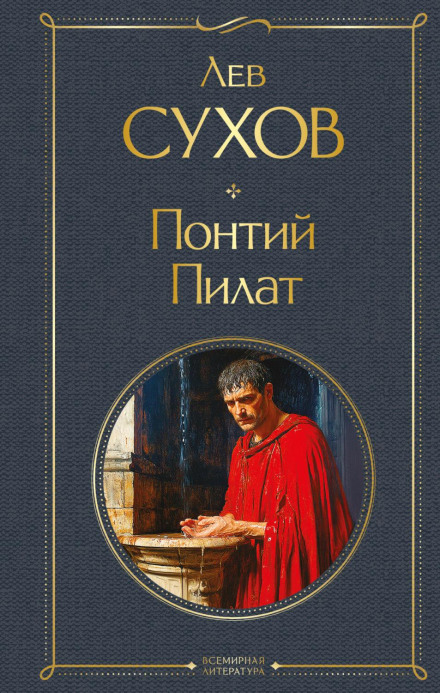
Pontius Pilate
14 hrs. 50 min.
Description
What does it mean to be a human being on whose shoulders rests the fate of history? Pontius Pilate, the procurator of Judea who handed down the fatal sentence on Jesus Christ, knew that better than anyone. His image has found reflection in fiction (“The Master and Margarita” by Mikhail Bulgakov, “Procurator of Judea” by Anatole France, “Pilate’s Credo” by Karel Čapek), in visual art (“Christ before Pilate” (1634) by Rembrandt, “What Is Truth?” (1890) by Nikolay Ge). In this book, the Roman governor is presented not only as a historical figure, but also as a person who faced a moral choice that became fateful for the world. “Pontius Pilate” is a novel about people and epochs, where historical facts intertwine with eternal questions about good, evil, and human freedom.
