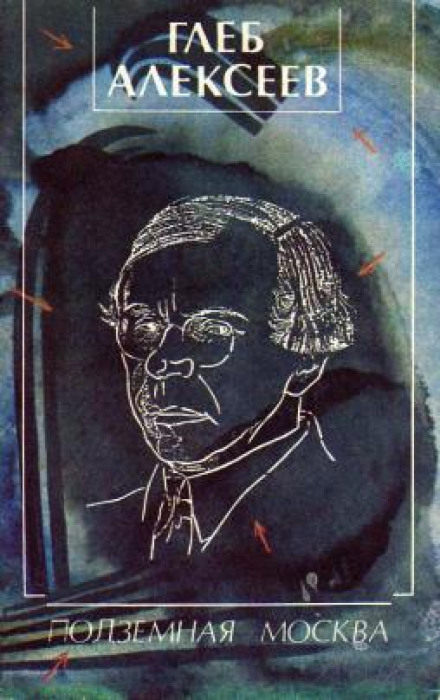
Underground Moscow
4 hrs. 38 min.
Language
Russian
Author
Gleb Alekseyev
Author
Gleb Alekseyev
Narrator
Vladimir Malkov
Narrator
Vladimir Malkov
Description
Gleb Alekseev’s novel “Underground Moscow” was published exactly once—back in 1925. This book is a rare bibliographic find: only a few copies survived, which was also helped by the fact that the author fell victim to Stalinist repressions in 1938. For the modern reader, Gleb Alekseev’s novel is completely unknown, yet it deserves attention and interest.
In the novel, the author turns to one of the mysteries of Russian history—the greatest cultural value of world significance, the so-called Library of Ivan the Terrible, whose search has been going on for almost five centuries and continues to this day. The mystery of the library’s disappearance the writer links to the name and fate of the remarkable architect Aristotle Fioravanti.
Gleb Alekseev describes one of the expeditions undertaken to search for this library in the early 1920s in Moscow’s underground hiding places. Like in any work of fiction, the novel includes the author’s invention, but it is based on deep knowledge of the subject, on historians’ research, and on real events of that time. The prototype of the main hero, the archaeologist Mamo chkin, is the well-known archaeologist Ignatiy Yakovlevich Stelle tskiy, who devoted his entire life to searching for the Library of Ivan the Terrible—someone the writer, apparently, knew well, since the description of Mamo chkin’s dwelling reproduces Stelle tskiy’s room in detail.
It was precisely in those years that Stelle tskiy was making attempts to study underground passages in Moscow. Even though the novel’s plot does not coincide with the facts in full, many scenes were taken, one might say, from life. The characters’ types are credible and lifelike, and the Moscow of that time is described remarkably and with documentary precision (M. Gorky greatly valued Gleb Alekseev’s skill as a writer of sketches).
In the novel, the author turns to one of the mysteries of Russian history—the greatest cultural value of world significance, the so-called Library of Ivan the Terrible, whose search has been going on for almost five centuries and continues to this day. The mystery of the library’s disappearance the writer links to the name and fate of the remarkable architect Aristotle Fioravanti.
Gleb Alekseev describes one of the expeditions undertaken to search for this library in the early 1920s in Moscow’s underground hiding places. Like in any work of fiction, the novel includes the author’s invention, but it is based on deep knowledge of the subject, on historians’ research, and on real events of that time. The prototype of the main hero, the archaeologist Mamo chkin, is the well-known archaeologist Ignatiy Yakovlevich Stelle tskiy, who devoted his entire life to searching for the Library of Ivan the Terrible—someone the writer, apparently, knew well, since the description of Mamo chkin’s dwelling reproduces Stelle tskiy’s room in detail.
It was precisely in those years that Stelle tskiy was making attempts to study underground passages in Moscow. Even though the novel’s plot does not coincide with the facts in full, many scenes were taken, one might say, from life. The characters’ types are credible and lifelike, and the Moscow of that time is described remarkably and with documentary precision (M. Gorky greatly valued Gleb Alekseev’s skill as a writer of sketches).
100%
12:31
01
07:41
02
10:25
03
08:43
04
09:03
05
07:57
06
09:07
07
08:12
08
08:20
09
11:09
10
07:32
11
10:06
12
09:15
13
10:37
14
08:12
15
05:27
16
09:17
17
10:08
18
09:38
19
07:34
20
08:07
21
09:38
22
07:43
23
08:59
24
06:33
25
04:05
26
09:35
27
11:23
28
08:50
29
05:39
30
10:27
31
06:12
32
