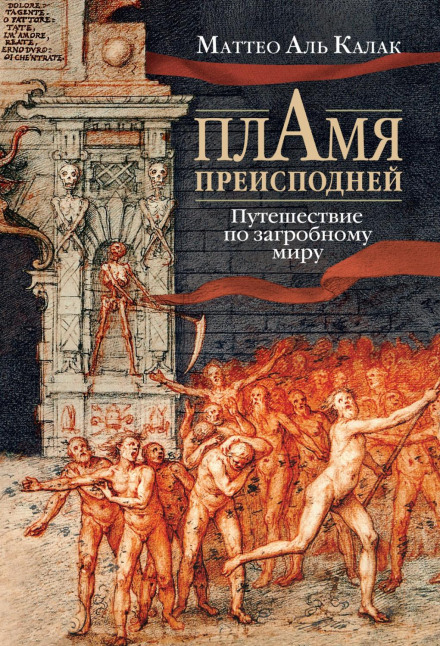
The Flames of Hell: A Journey Through the Afterlife
10 hrs. 41 min.
Language
Russian
Author
Matteo Al Kalak
Author
Matteo Al Kalak
Narrator
Artyom Kukharev
Narrator
Artyom Kukharev
Description
Does Hell really exist? It might seem that today no one asks such a question anymore—but for almost two thousand years it has shaped the lives and fears of entire generations. In the history of Christianity, Hell existed as a real place: underground, in the depths of volcanoes, under the sun, or at the edge of the universe—wherever it was imagined, the focus in every case was on Hell itself, not as a metaphor. Why did the realm of evil have to be seen this way? What forced people to talk about its physical existence rather than moving it into an immaterial dimension? And finally, how was Hell able to survive the philosophical, theological, and cultural changes of different eras, remaining an integral part of Christian doctrine? “Fire of the Underworld” provides answers to these and other questions about the kingdom of darkness—an idea that still stirs our society today.
“A fact that will make a modern reader smile (even a believer!): in the 20th century Hell was finally dematerialized. Although remnants, changes, and pockets of resistance still exist, no one is looking for the kingdom of evil in the bowels of the earth anymore—where, with greater comfort, a metallic core is now located, producing a magnetic field.” (Matteo Al Kalak)
“A fact that will make a modern reader smile (even a believer!): in the 20th century Hell was finally dematerialized. Although remnants, changes, and pockets of resistance still exist, no one is looking for the kingdom of evil in the bowels of the earth anymore—where, with greater comfort, a metallic core is now located, producing a magnetic field.” (Matteo Al Kalak)
