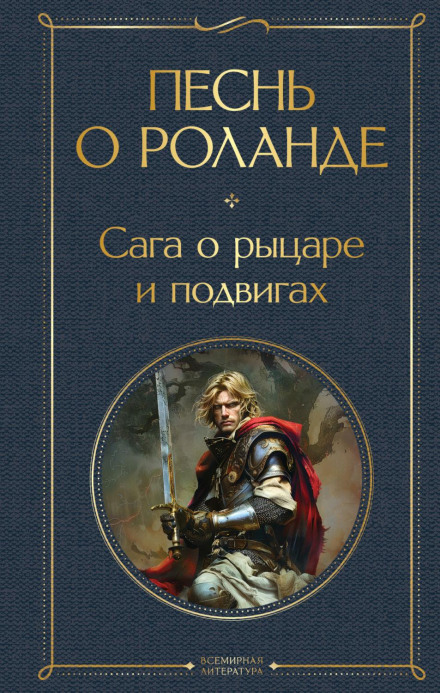
The Song of Roland. The Saga of a Knight and His Deeds
7 hrs. 53 min.
Description
Roland is the hero of the world-famous French heroic poem and an example of a Christian knight.
“The Song of Roland” is a classic example of an epic, celebrating knightly valor, loyalty to God and to the king—who personified the state. The work tells of events during Charlemagne’s war against the Spanish Saracens, written several centuries after the battle that took place in 778.
The treacherous count Ganelon proposes to the king of Zaragoza, Marsilius, to attack Charlemagne’s rear guard by organizing an ambush in the Roncevaux Pass. As a result of this betrayal, the Frankish detachment led by the Breton count Roland is cut off from Charlemagne’s army and forced to fight against forces many times stronger than their own.
In the retelling by Alexander Chudinov
The Saga of the Volsungs is the best-known of the “Sagas of Ancient Times,” which recount the legendary history of Scandinavia. It describes the rise and downfall of the Volsung line (Sigmund and Sigurd), including the story of Brynhild and the destruction of the Burgundian house. The saga is based on epic poetry.
The Saga of the Volsungs repeats plot events found in the “Poetic Edda,” but unlike the Poetic Edda, the events here are arranged into a single continuous narrative.
In the retelling by Boris Yarkho.
“The Song of Roland” is a classic example of an epic, celebrating knightly valor, loyalty to God and to the king—who personified the state. The work tells of events during Charlemagne’s war against the Spanish Saracens, written several centuries after the battle that took place in 778.
The treacherous count Ganelon proposes to the king of Zaragoza, Marsilius, to attack Charlemagne’s rear guard by organizing an ambush in the Roncevaux Pass. As a result of this betrayal, the Frankish detachment led by the Breton count Roland is cut off from Charlemagne’s army and forced to fight against forces many times stronger than their own.
In the retelling by Alexander Chudinov
The Saga of the Volsungs is the best-known of the “Sagas of Ancient Times,” which recount the legendary history of Scandinavia. It describes the rise and downfall of the Volsung line (Sigmund and Sigurd), including the story of Brynhild and the destruction of the Burgundian house. The saga is based on epic poetry.
The Saga of the Volsungs repeats plot events found in the “Poetic Edda,” but unlike the Poetic Edda, the events here are arranged into a single continuous narrative.
In the retelling by Boris Yarkho.
100%
1:12:53
01_01
1:40:55
01_02
1:37:36
01_03
1:28:21
02_01
1:54:12
02_02
