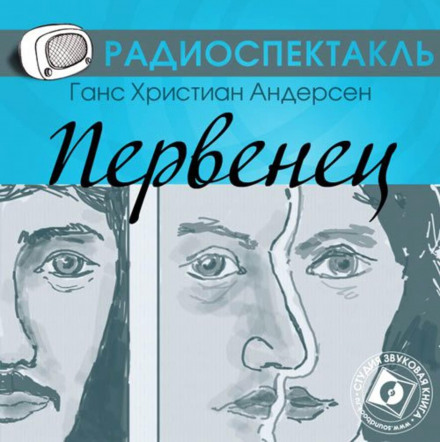
The Firstborn
54 min.
Language
Russian
Author
Hans Christian Andersen
Author
Hans Christian Andersen
Narrator
Nikolai Bubnov
Narrator
Yulia Borisova
Narrator
Acting ensemble
Narrator
Vladimir Etush
Narrator
Mikhail Astangov
Description
Preparations for a celebration of the premiere of his play are underway at the house of the poet and critic Iespersen. While he himself is at the same time writing a laudatory review that will be published in the newspaper tomorrow.
Returning home, he finds an old friend of his there—someone who had been missing for many years, Dr. Wendell…
A lesser-known work by the writer, not belonging to children’s literature. From a young age, Hans was known as a great storyteller. His favorite home game was a puppet theater. Because of his tendency toward fantasies and inventions, he had no friends. Yet it was precisely this talent—despite hardship—that helped Andersen become famous as a fairy-tale writer, first in Denmark and then all over the world. Everyone valued his talent so much that Andersen’s creativity in other genres was simply not taken seriously.
He wasn’t wanted to be recognized as a playwright, although it was his theater productions that allowed him to earn his first “author’s” money. So, when his fame as a storyteller was already ahead of him, Andersen was forced to send his comedy “The Firstborn” anonymously to the Copenhagen Theater—so that the name would not lead the play to be rejected as “unsuitable for the theater.”
The play ended up on stage and achieved huge success, but in general it didn’t change public opinion.
And even in his last years Andersen had to keep working with fairy tales.
Main Editorial Office of Literary and Dramatic Radio Broadcasting
State Academic Theater named after Evgeny Vakhtangov.
Director — Alexandra Remizova.
Returning home, he finds an old friend of his there—someone who had been missing for many years, Dr. Wendell…
A lesser-known work by the writer, not belonging to children’s literature. From a young age, Hans was known as a great storyteller. His favorite home game was a puppet theater. Because of his tendency toward fantasies and inventions, he had no friends. Yet it was precisely this talent—despite hardship—that helped Andersen become famous as a fairy-tale writer, first in Denmark and then all over the world. Everyone valued his talent so much that Andersen’s creativity in other genres was simply not taken seriously.
He wasn’t wanted to be recognized as a playwright, although it was his theater productions that allowed him to earn his first “author’s” money. So, when his fame as a storyteller was already ahead of him, Andersen was forced to send his comedy “The Firstborn” anonymously to the Copenhagen Theater—so that the name would not lead the play to be rejected as “unsuitable for the theater.”
The play ended up on stage and achieved huge success, but in general it didn’t change public opinion.
And even in his last years Andersen had to keep working with fairy tales.
Main Editorial Office of Literary and Dramatic Radio Broadcasting
State Academic Theater named after Evgeny Vakhtangov.
Director — Alexandra Remizova.
100%
54:19
01
