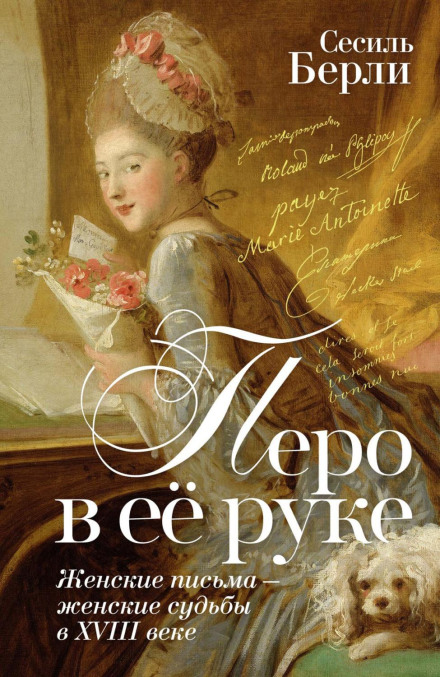
The Pen in Her Hand: Women's Letters – Women's Fates in the 18th Century
7 hrs. 42 min.
Language
Russian
Author
Cecile Berlie
Author
Cecile Berlie
Narrator
Anna Letura
Narrator
Anna Letura
Description
The eighteenth century can be called the age of letters. Postal correspondence becomes the main way to pass along news, ideas, and feelings, influencing the lives even of those who themselves cannot write—including private messengers, couriers, and servants. The women of that time, the heroines of this book, reflect the spirit of their era. They write one letter after another, carefully sprinkle ink with sand, fold the paper, and seal it with their personal stamp. In a society where there is no place for them among men, they find their place behind a secretary in the privacy of a bedroom. Correspondence becomes their way to express freedom, reveal feelings, exchange reflections, and discuss philosophical topics. That is how women of the 18th century find their voice.
Madame du Deffand, the hostess of a cultured salon who turned correspondence into a true art. Marquise de Pompadour, an influential favorite and a trusted person of Louis XV. Catherine II, ruler of Russia and a friend of the Enlighteners. Julie de Lespinasse, an illegitimate daughter, a driving force behind the Encyclopedists, who suffered from her own passions. Isabella of Parma, a princess and philosopher, who skillfully controlled the situation. Maria Theresa of Austria, an empress with a forceful character.
Madame Roland, a brilliant mind who didn’t want to become a writer. Marie Antoinette, the queen, caught at the center of political storms and using correspondence as the last chance to save the monarchy and her own life. Germaine de Staël, a woman ahead of her time, whose style and manners were compared to men’s.
The correspondence of these women lets us get to the core of their lives, understand their inner world, and feel their anxieties and experiences.
Madame du Deffand, the hostess of a cultured salon who turned correspondence into a true art. Marquise de Pompadour, an influential favorite and a trusted person of Louis XV. Catherine II, ruler of Russia and a friend of the Enlighteners. Julie de Lespinasse, an illegitimate daughter, a driving force behind the Encyclopedists, who suffered from her own passions. Isabella of Parma, a princess and philosopher, who skillfully controlled the situation. Maria Theresa of Austria, an empress with a forceful character.
Madame Roland, a brilliant mind who didn’t want to become a writer. Marie Antoinette, the queen, caught at the center of political storms and using correspondence as the last chance to save the monarchy and her own life. Germaine de Staël, a woman ahead of her time, whose style and manners were compared to men’s.
The correspondence of these women lets us get to the core of their lives, understand their inner world, and feel their anxieties and experiences.
100%
10:20
00
57:43
01
42:07
02
50:36
03
52:37
04
38:12
05
52:41
06
57:52
07
56:00
08
44:31
09
