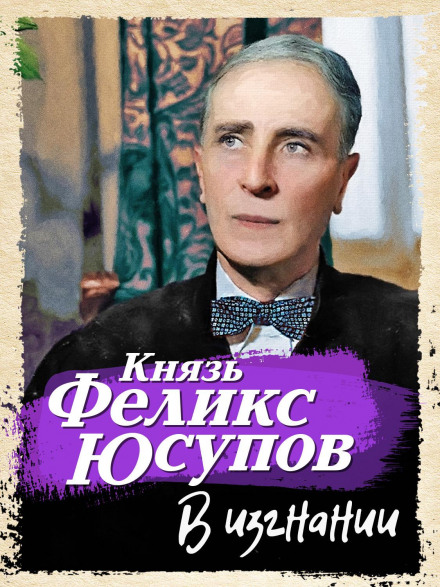
Before Exile. 1887-1919
13 hrs. 24 min.
Language
Russian
Author
Felix Yusupov
Author
Felix Yusupov
Narrator
Sergey Chonishvili
Narrator
Sergey Chonishvili
Description
There probably aren’t many people who provoke such an ambiguous reaction both among their contemporaries and among posterity as Prince Felix Felixovich Yusupov. Most often, his name is associated with the murder of Grigory Rasputin—and this fact of his biography has left a mark on his later life, forcing him to look at what preceded the fateful events on the Moika.
In 1927, in Paris, in Russian, the memoirs of the already-emigrated Yusupov were published under the title “The End of Rasputin,” telling the world about the events of December night in 1916—and about what led up to them.
A quarter of a century later, in Paris, two books of memoirs by F. F. Yusupov were published: “Before Exile 1887–1919” and “In Exile.”
Felix Felixovich Yusupov the Younger was born on March 11 (24), 1887 in St. Petersburg, died on October 27, 1967 in Paris, and was buried in the Russian cemetery in Sainte-Geneviève-des-Bois.
In the audiobook “Before Exile,” you’ll find stories for every taste. First of all—the history of the Yusupov family, largely unknown to most of us. A deed by Felix Yusupov that shocked and fascinated many placed him among prominent historical figures and, in a way, overshadowed the worthy deeds of faraway ancestors who helped bring glory to one of Russia’s most illustrious aristocratic families. The memoirs about the family the author belonged to are extremely interesting because they offer the listener everything that could be of interest: the rhythm of life, everyday life, the circle of acquaintances, descriptions of interiors of palaces, townhouses, villas where the Yusupovs lived—written by the author with great pleasure—along with numerous funny and charming details of that distant life, his relationships with his parents, endless amusements and entertainments, his relationship with his older brother and the story of his death. The warmest and most sincere words are for his mother, Zinaida Nikolaevna Yusupova, whom the younger son adored as the closest person. Alongside the history of the family runs the history of the author himself, told at times with frightening candor and openness.
Closing his book, Felix Yusupov wrote: “Leaving our homeland on April 13, 1919, we knew that exile would be no less of a trial—but who among us could have foreseen that thirty-two years later the end would still be out of sight?” Could it be that the time to return has come?
The second part of the edition is an audio version of letters from the Yusupov archive, selected and kindly provided by the senior researcher of the Department of Written Sources—Natalya Borisovna Strizhova. The inclusion of the letters is not accidental.
They add to the memoirs’ outline of the prince’s life, and their intimate, candid nature allows you to go even deeper into the atmosphere of those distant events.
But that’s not all! In our edition we prepared one more pleasant surprise for you: an audio version of the story by Prince Felix Felixovich Yusupov “In the Trenches,” performed by Alexander Bordukov. The story was written in 1914. It was published by the author for the benefit of war victims and came with a dedicatory preface: “TO HIS IMPERIAL MAJESTY, THE EMPEROR NICHOLAS ALEXANDROVICH, WITH THE DEEPEST VENERATION, MOST OBEDIENTLY DEDICATES THE AUTHOR.” The story went through many editions during the First World War. It was printed both in St. Petersburg, and in Moscow, and in Kyiv. In some publications, the story had a second title—“A Difficult Year.” However, in Soviet and post-Soviet print it was not reproduced and even not mentioned. We decided that, alongside the letters by the Yusupovs included here, it would serve as a vivid addition to the prince’s memoirs and become yet another brushstroke in his self-portrait.
The translation of the book “Before Exile 1887–1919” was done by Olga Valeryanovna Edelman—Candidate of Historical Sciences, a leading specialist at the State Archive of the Russian Federation. General editorial work—Gennady Nikolaevich Kalashnikov.
The selection and publication of the letters were carried out by the senior researcher of the Department of Written Sources of the State Historical Museum—Natalya Borisovna Strizhova.
The book was read by Sergei Chonishvili, Honored Artist of Russia—one of the most in-demand theatre and film actors, a guru of audiobook narration.
We hope you will fully appreciate yet another magnificent work by the master!
In 1927, in Paris, in Russian, the memoirs of the already-emigrated Yusupov were published under the title “The End of Rasputin,” telling the world about the events of December night in 1916—and about what led up to them.
A quarter of a century later, in Paris, two books of memoirs by F. F. Yusupov were published: “Before Exile 1887–1919” and “In Exile.”
Felix Felixovich Yusupov the Younger was born on March 11 (24), 1887 in St. Petersburg, died on October 27, 1967 in Paris, and was buried in the Russian cemetery in Sainte-Geneviève-des-Bois.
In the audiobook “Before Exile,” you’ll find stories for every taste. First of all—the history of the Yusupov family, largely unknown to most of us. A deed by Felix Yusupov that shocked and fascinated many placed him among prominent historical figures and, in a way, overshadowed the worthy deeds of faraway ancestors who helped bring glory to one of Russia’s most illustrious aristocratic families. The memoirs about the family the author belonged to are extremely interesting because they offer the listener everything that could be of interest: the rhythm of life, everyday life, the circle of acquaintances, descriptions of interiors of palaces, townhouses, villas where the Yusupovs lived—written by the author with great pleasure—along with numerous funny and charming details of that distant life, his relationships with his parents, endless amusements and entertainments, his relationship with his older brother and the story of his death. The warmest and most sincere words are for his mother, Zinaida Nikolaevna Yusupova, whom the younger son adored as the closest person. Alongside the history of the family runs the history of the author himself, told at times with frightening candor and openness.
Closing his book, Felix Yusupov wrote: “Leaving our homeland on April 13, 1919, we knew that exile would be no less of a trial—but who among us could have foreseen that thirty-two years later the end would still be out of sight?” Could it be that the time to return has come?
The second part of the edition is an audio version of letters from the Yusupov archive, selected and kindly provided by the senior researcher of the Department of Written Sources—Natalya Borisovna Strizhova. The inclusion of the letters is not accidental.
They add to the memoirs’ outline of the prince’s life, and their intimate, candid nature allows you to go even deeper into the atmosphere of those distant events.
But that’s not all! In our edition we prepared one more pleasant surprise for you: an audio version of the story by Prince Felix Felixovich Yusupov “In the Trenches,” performed by Alexander Bordukov. The story was written in 1914. It was published by the author for the benefit of war victims and came with a dedicatory preface: “TO HIS IMPERIAL MAJESTY, THE EMPEROR NICHOLAS ALEXANDROVICH, WITH THE DEEPEST VENERATION, MOST OBEDIENTLY DEDICATES THE AUTHOR.” The story went through many editions during the First World War. It was printed both in St. Petersburg, and in Moscow, and in Kyiv. In some publications, the story had a second title—“A Difficult Year.” However, in Soviet and post-Soviet print it was not reproduced and even not mentioned. We decided that, alongside the letters by the Yusupovs included here, it would serve as a vivid addition to the prince’s memoirs and become yet another brushstroke in his self-portrait.
The translation of the book “Before Exile 1887–1919” was done by Olga Valeryanovna Edelman—Candidate of Historical Sciences, a leading specialist at the State Archive of the Russian Federation. General editorial work—Gennady Nikolaevich Kalashnikov.
The selection and publication of the letters were carried out by the senior researcher of the Department of Written Sources of the State Historical Museum—Natalya Borisovna Strizhova.
The book was read by Sergei Chonishvili, Honored Artist of Russia—one of the most in-demand theatre and film actors, a guru of audiobook narration.
We hope you will fully appreciate yet another magnificent work by the master!
