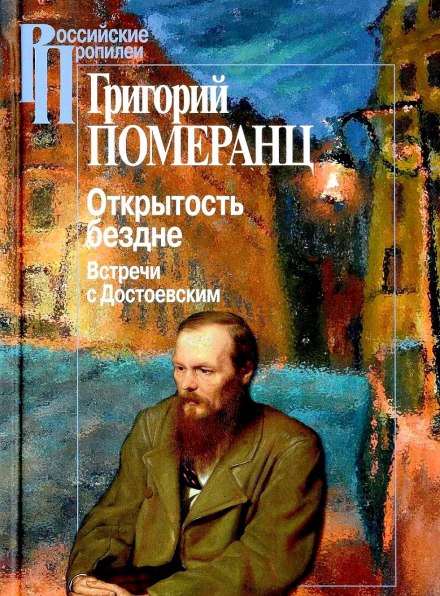
Openness to the Abyss: Encounters with Dostoevsky
20 hrs. 2 min.
Language
Russian
Author
Grigory Pomerants
Author
Grigory Pomerants
Narrator
Leontina Brotskaya
Narrator
Leontina Brotskaya
Description
Dostoevsky’s work is understood in the light of his confession of faith: “If it somehow turned out... that Christ were outside the truth and truth outside Christ, then I would prefer to remain with Christ outside the truth...” (outside any philosophical and religious idea, outside any worldview). The author explores how this inner light breaks through the “points of madness” in Dostoevsky’s hero, in the oscillations between the “Madonna ideal” and the “Sodomy ideal,” and tries to understand the inner structure of the single unwritten novel (“The Life of a Great Sinner”)—the reflection of which were the five written great novels, beginning with “Crime and Punishment.” Dostoevsky’s polemical hyperboles are linked to the formation of his style. We can trace how flashes of xenophobia are dispelled by surges of universal responsiveness, by a planet without hatred (“The Dream of a Ridiculous Man”).
100%
01:17
00-01-soderzhanie
27:34
01-00-01-vstrechi-s-dostoevskim
26:32
01-00-02-vstrechi-s-dostoevskim
26:21
01-01-obschaya-shema-razvitiya
18:29
01-02-asinhronnye-yavleniya
19:12
01-03-paradoks-dostoevskogo
08:40
01-04-u-poroga-fantasticheskogo-realizma
10:52
02-05-treschina-proshedshaya-cherez-serdtse
23:47
02-06-01-hiliazm-i-russoizm-v-romane
22:56
02-06-02-hiliazm-i-russoizm-v-romane
18:56
02-06-03-hiliazm-i-russoizm-v-romane
04:45
02-07-gibel-pervyh-torzhestvo-poslednih
02:21
02-08-stanovlenie-haraktera
28:42
03-01-1946-1954-1970-evklidovskiy-i-neevklidovskiy-razum-v-tvorchestve-dostoevskogo
26:33
03-02-1946-1954-1970-evklidovskiy-i-neevklidovskiy-razum-v-tvorchestve-dostoevskogo
22:23
03-03-1946-1954-1970-evklidovskiy-i-neevklidovskiy-razum-v-tvorchestve-dostoevskogo
15:30
03-04-1946-1954-1970-evklidovskiy-i-neevklidovskiy-razum-v-tvorchestve-dostoevskogo
15:42
03-05-1946-1954-1970-evklidovskiy-i-neevklidovskiy-razum-v-tvorchestve-dostoevskogo
25:32
04-01-zametki-o-vnutrennem-stroe-romana-dostoevskogo
25:14
04-02-zametki-o-vnutrennem-stroe-romana-dostoevskogo
22:32
04-03-zametki-o-vnutrennem-stroe-romana-dostoevskogo
19:20
04-04-zametki-o-vnutrennem-stroe-romana-dostoevskogo
31:16
05-01-pena-na-gubah
04:06
05-02-pochva
30:48
05-03-bog-i-greh
24:50
06-01-antikrasnorechie-dostoevskogo-v-istoriko-kulturnoy-perspektive
26:29
06-02-antikrasnorechie-dostoevskogo-v-istoriko-kulturnoy-perspektive
28:35
06-03-antikrasnorechie-dostoevskogo-v-istoriko-kulturnoy-perspektive
22:46
07-01-smeshnoy-chelovek-i-narod-bogonosets
22:07
07-02-smeshnoy-chelovek-i-narod-bogonosets
24:37
07-03-smeshnoy-chelovek-i-narod-bogonosets
21:59
08-01-tochka-bezumiya-v-zhizni-geroya-dostoevskogo
26:23
08-02-tochka-bezumiya-v-zhizni-geroya-dostoevskogo
20:22
08-03-tochka-bezumiya-v-zhizni-geroya-dostoevskogo
05:19
08-04-tochka-bezumiya-v-zhizni-geroya-dostoevskogo
15:25
09-01-dvoynye-mysli-u-dostoevskogo
18:06
09-02-dvoynye-mysli-u-dostoevskogo
21:17
10-01-deti-i-detskoe-v-mire-dostoevskogo
19:34
10-02-deti-i-detskoe-v-mire-dostoevskogo
25:03
10-03-deti-i-detskoe-v-mire-dostoevskogo
22:03
11-01-knyaz-myshkin
19:57
11-02-knyaz-myshkin
17:57
11-03-knyaz-myshkin
20:01
11-04-knyaz-myshkin
23:08
11-05-knyaz-myshkin
26:17
11-06-knyaz-myshkin
25:00
11-07-knyaz-myshkin
02:21
12-00-vvedenie
25:12
12-01-sindrom-molodyh-suprugov-i-askeza
13:20
12-02-krasnyy-pauchok
09:11
12-03-ananasnyy-kompot
16:55
12-04-01-demon-prevratnosti
17:20
12-04-02-demon-prevratnosti
18:58
12-05-evklidova-i-neevklidova-svoboda
19:58
13-01-podstupy-k-ponimaniyu-dostoevskogo-v-roze-mira-daniila-andreeva
20:44
13-02-podstupy-k-ponimaniyu-dostoevskogo-v-roze-mira-daniila-andreeva
14:19
13-03-podstupy-k-ponimaniyu-dostoevskogo-v-roze-mira-daniila-andreeva
20:18
13-04-podstupy-k-ponimaniyu-dostoevskogo-v-roze-mira-daniila-andreeva
27:38
14-01-otkrytost-bezdne
25:23
14-02-otkrytost-bezdne
14:21
15-myshlenie-harakterami-mysliteley
