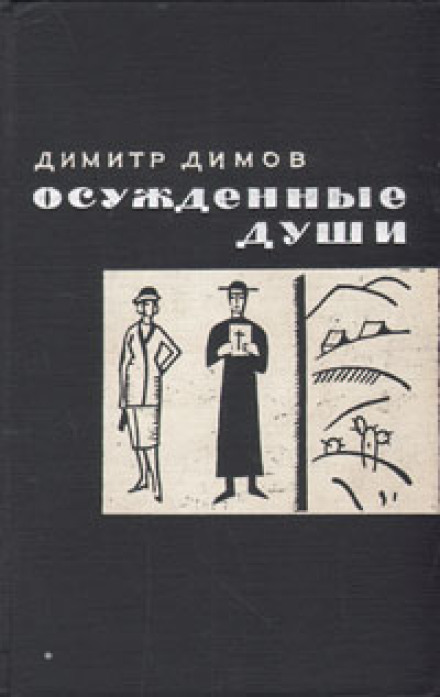
Condemned Souls
13 hrs. 17 min.
Language
Russian
Author
Dimitar Dimov
Author
Dimitar Dimov
Narrator
Margarita Ivanova
Narrator
Margarita Ivanova
Description
In the capital of Francoist Spain—Madrid, where only in the working-class neighborhoods can one still find bitter traces of the recent tragic death of the Republic, while in the wealthy streets and squares of the center reigns ordinary business bustle—two “condemned souls” meet in the luxury hotel “Palace.” The first is the dying, affluent Englishwoman Fanny Horn, wasting away from morphine; the second is Luis Romero de Erea-día and Santa Cruz, a descendant of Spanish aristocrats who makes his living from morphine smuggling.
So begins the novel by Bulgarian writer Dimitar Dimov, author of the widely known (to Soviet readers) novel “Tobacco.” It begins from the end. In essence, Fanny Horn is already standing on the other side of life—she can only remember. She tells Luis about the tragedy she experienced here in Spain a few years earlier, on the eve of the Francoist uprising: about her love for Luis’s brother, the monk Jesuit Ricardo Eredia, and about the tragic outcome of that love in a typhus camp of the Jesuits, where she went to work as a medical nurse for Ricardo.
So begins the novel by Bulgarian writer Dimitar Dimov, author of the widely known (to Soviet readers) novel “Tobacco.” It begins from the end. In essence, Fanny Horn is already standing on the other side of life—she can only remember. She tells Luis about the tragedy she experienced here in Spain a few years earlier, on the eve of the Francoist uprising: about her love for Luis’s brother, the monk Jesuit Ricardo Eredia, and about the tragic outcome of that love in a typhus camp of the Jesuits, where she went to work as a medical nurse for Ricardo.
100%
00:26
00-00-dimov-dimitr-osuzhdennye-dushi
15:20
01-01-konets-odnogo-priklyucheniya
16:18
01-02-konets-odnogo-priklyucheniya
15:41
01-03-konets-odnogo-priklyucheniya
15:39
01-04-konets-odnogo-priklyucheniya
20:08
01-05-konets-odnogo-priklyucheniya
15:48
01-06-konets-odnogo-priklyucheniya
20:38
01-07-konets-odnogo-priklyucheniya
27:12
01-08-konets-odnogo-priklyucheniya
23:18
01-09-konets-odnogo-priklyucheniya
17:04
02-01-fanni-i-loyola
26:03
02-02-fanni-i-loyola
22:59
02-03-fanni-i-loyola
24:16
02-04-fanni-i-loyola
17:53
02-05-fanni-i-loyola
19:02
02-06-fanni-i-loyola
18:39
02-07-fanni-i-loyola
18:28
02-08-fanni-i-loyola
15:15
02-09-fanni-i-loyola
16:51
02-10-fanni-i-loyola
15:40
02-11-fanni-i-loyola
17:30
02-12-fanni-i-loyola
24:31
02-13-fanni-i-loyola
28:20
02-14-fanni-i-loyola
17:27
02-15-fanni-i-loyola
18:12
02-16-fanni-i-loyola
16:33
02-17-fanni-i-loyola
29:28
02-18-fanni-i-loyola
16:38
02-19-fanni-i-loyola
27:17
03-01-fanni-protiv-loyoly
21:04
03-02-fanni-protiv-loyoly
23:57
03-03-fanni-protiv-loyoly
18:25
03-04-fanni-protiv-loyoly
23:40
03-05-fanni-protiv-loyoly
24:14
03-06-fanni-protiv-loyoly
23:19
03-07-fanni-protiv-loyoly
24:17
03-08-fanni-protiv-loyoly
15:04
03-09-fanni-protiv-loyoly
19:11
03-10-fanni-protiv-loyoly
26:05
04-11-posleslovie
