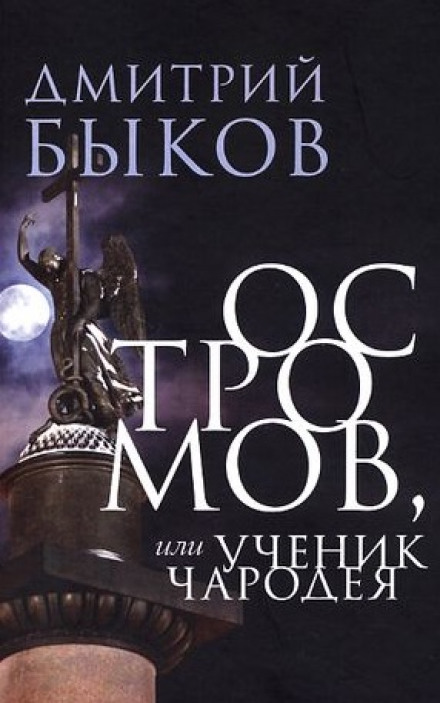
Ostromov, or The Sorcerer's Apprentice
34 hrs. 11 min.
Language
Russian
Author
Dmitry Bykov
Author
Dmitry Bykov
Narrator
Irina Yerisanova
Narrator
Irina Yerisanova
Description
The plot of Dmitry Bykov’s novel “Ostromov, or The Apprentice of a Sorcerer” is based on the now half-forgotten “Case of the Leningrad Masons” of 1925–1926. But it—just as often happens in this writer’s books (let’s recall the novels “Orthography” and “Justification,” with which “Ostromov” forms a kind of trilogy)—became only a backdrop for a many-layered narration about people’s fates in a turning, pivotal era; about rapidly changing criteria of good and evil; about perseverance that seems like a bravado; and about conformism that begins to take on the status of virtue. And it also raises questions about whether we, too, might have to experience something similar.
100%
10:13
Ostromov 001
10:11
Ostromov 002
10:11
Ostromov 003
10:05
Ostromov 004
10:03
Ostromov 005
10:21
Ostromov 006
10:06
Ostromov 007
10:26
Ostromov 008
10:12
Ostromov 009
10:15
Ostromov 010
10:42
Ostromov 011
10:19
Ostromov 012
10:12
Ostromov 013
10:02
Ostromov 014
10:05
Ostromov 015
10:41
Ostromov 016
10:07
Ostromov 017
10:04
Ostromov 018
10:06
Ostromov 019
10:25
Ostromov 020
10:09
Ostromov 021
10:14
Ostromov 022
10:07
Ostromov 023
10:08
Ostromov 024
10:15
Ostromov 025
10:09
Ostromov 026
10:07
Ostromov 027
10:30
Ostromov 028
10:04
Ostromov 029
10:09
Ostromov 030
10:21
Ostromov 031
10:14
Ostromov 032
10:33
Ostromov 033
10:02
Ostromov 034
10:12
Ostromov 035
10:04
Ostromov 036
10:34
Ostromov 037
10:10
Ostromov 038
10:26
Ostromov 039
10:40
Ostromov 040
10:09
Ostromov 041
10:16
Ostromov 042
10:06
Ostromov 043
10:25
Ostromov 044
10:14
Ostromov 045
10:09
Ostromov 046
10:14
Ostromov 047
10:12
Ostromov 048
10:10
Ostromov 049
10:08
Ostromov 050
10:51
Ostromov 051
10:22
Ostromov 052
10:07
Ostromov 053
10:08
Ostromov 054
10:09
Ostromov 055
10:23
Ostromov 056
10:07
Ostromov 057
10:22
Ostromov 058
10:04
Ostromov 059
10:02
Ostromov 060
10:09
Ostromov 061
10:23
Ostromov 062
10:11
Ostromov 063
10:02
Ostromov 064
10:09
Ostromov 065
10:22
Ostromov 066
11:01
Ostromov 067
10:05
Ostromov 068
10:12
Ostromov 069
10:45
Ostromov 070
10:06
Ostromov 071
10:23
Ostromov 072
10:04
Ostromov 073
10:19
Ostromov 074
10:03
Ostromov 075
10:19
Ostromov 076
10:09
Ostromov 077
10:08
Ostromov 078
10:25
Ostromov 079
10:19
Ostromov 080
10:07
Ostromov 081
10:06
Ostromov 082
10:03
Ostromov 083
10:13
Ostromov 084
10:25
Ostromov 085
10:03
Ostromov 086
10:04
Ostromov 087
10:11
Ostromov 088
10:19
Ostromov 089
10:10
Ostromov 090
10:48
Ostromov 091
10:34
Ostromov 092
10:11
Ostromov 093
14:04
Ostromov 094
12:02
Ostromov 095
10:11
Ostromov 096
10:11
Ostromov 097
10:03
Ostromov 098
10:08
Ostromov 099
10:35
Ostromov 100
10:08
Ostromov 101
10:03
Ostromov 102
11:18
Ostromov 103
10:39
Ostromov 104
12:27
Ostromov 105
10:38
Ostromov 106
10:06
Ostromov 107
10:04
Ostromov 108
10:09
Ostromov 109
10:03
Ostromov 110
10:14
Ostromov 111
10:09
Ostromov 112
10:03
Ostromov 113
10:29
Ostromov 114
10:02
Ostromov 115
10:03
Ostromov 116
10:34
Ostromov 117
11:17
Ostromov 118
10:14
Ostromov 119
10:09
Ostromov 120
10:19
Ostromov 121
10:15
Ostromov 122
10:14
Ostromov 123
10:09
Ostromov 124
10:02
Ostromov 125
10:05
Ostromov 126
10:15
Ostromov 127
10:02
Ostromov 128
10:44
Ostromov 129
10:03
Ostromov 130
10:13
Ostromov 131
10:03
Ostromov 132
10:12
Ostromov 133
10:26
Ostromov 134
10:21
Ostromov 135
10:12
Ostromov 136
10:20
Ostromov 137
10:02
Ostromov 138
10:02
Ostromov 139
10:02
Ostromov 140
10:29
Ostromov 141
10:17
Ostromov 142
10:34
Ostromov 143
10:03
Ostromov 144
10:06
Ostromov 145
10:04
Ostromov 146
10:20
Ostromov 147
11:46
Ostromov 148
10:02
Ostromov 149
10:18
Ostromov 150
10:33
Ostromov 151
10:08
Ostromov 152
10:20
Ostromov 153
10:02
Ostromov 154
10:08
Ostromov 155
10:59
Ostromov 156
10:24
Ostromov 157
10:13
Ostromov 158
10:11
Ostromov 159
10:20
Ostromov 160
10:11
Ostromov 161
10:05
Ostromov 162
10:22
Ostromov 163
10:29
Ostromov 164
10:07
Ostromov 165
10:08
Ostromov 166
10:07
Ostromov 167
10:08
Ostromov 168
10:05
Ostromov 169
10:26
Ostromov 170
10:03
Ostromov 171
10:38
Ostromov 172
10:22
Ostromov 173
10:24
Ostromov 174
10:19
Ostromov 175
10:50
Ostromov 176
10:41
Ostromov 177
10:40
Ostromov 178
10:17
Ostromov 179
10:09
Ostromov 180
10:10
Ostromov 181
10:07
Ostromov 182
10:17
Ostromov 183
10:31
Ostromov 184
10:10
Ostromov 185
10:47
Ostromov 186
10:04
Ostromov 187
10:27
Ostromov 188
10:57
Ostromov 189
10:55
Ostromov 190
10:10
Ostromov 191
10:05
Ostromov 192
11:14
Ostromov 193
11:07
Ostromov 194
10:04
Ostromov 195
11:28
Ostromov 196
10:21
Ostromov 197
11:09
Ostromov 198
03:30
Ostromov 199
