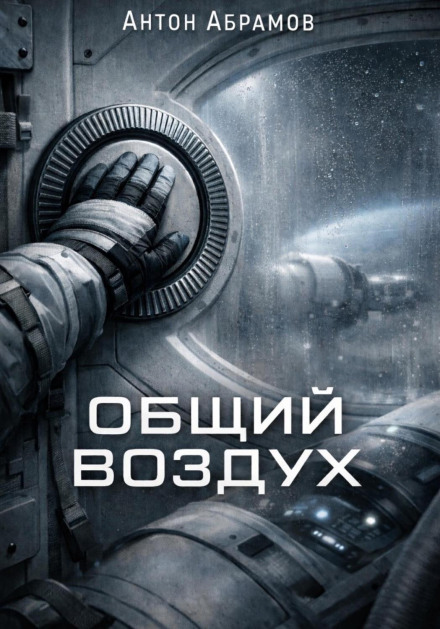
Common Air
1 hr. 56 min.
Language
Russian
Author
Anton Abramov
Author
Anton Abramov
Narrator
Ilya Dementyev
Narrator
Ilya Dementyev
Description
In the cislunar corridor between Earth and the Moon, the rescue node "Pereval-3" stands watch—a station people only remember on a bad day. Lada Ershova, an intersystem compatibility engineer, is used to shifts where the main success is when you don’t have to save anyone. But after a solar flare, three ships emerge to the station almost simultaneously: a scientific run, a water tug, and a medical module carrying a patient on life support. There are ten people. Only seven seats are guaranteed protected. Standard solutions require choosing who to save first. Lada proposes something else: for the first time, to assemble an inter-environment cross-support protocol, in which different ships, systems, and people must learn to breathe together. In space—where everything has long been standardized for flight—it turns out to be far harder to create the main thing: compatibility for rescue.
"Shared Air" is a science-fiction story about the cost of engineering precision and about the fact that the true maturity of a space civilization begins not with records, but with the ability not to abandon one another.
