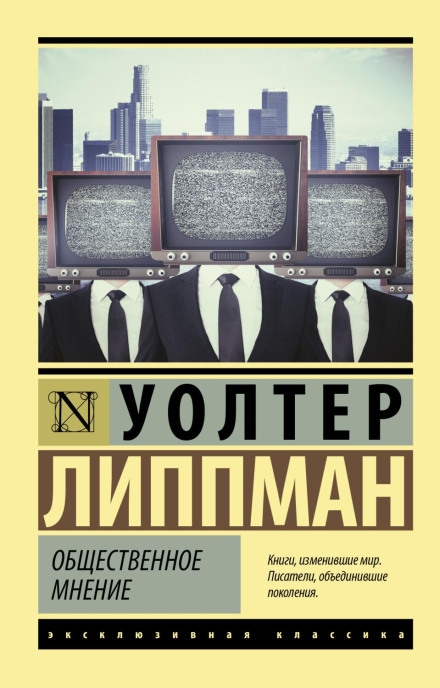
Public Opinion
10 hrs. 7 min.
Language
Russian
Author
Walter Lippmann
Author
Walter Lippmann
Narrator
Glebov Evgeny
Narrator
Glebov Evgeny
Description
Walter Lippmann (1889–1974) was an American writer, journalist, propagandist, and sociologist—one of the creators of modern American liberalism and a two-time Pulitzer Prize laureate. He took an active part in the presidential election campaign of President Woodrow Wilson and in the development of the “Fourteen Points”—the American program for postwar development of the world. During World War I, he worked on questions of propaganda and wrote countless pamphlets and articles; however, later Wilson removed him from the work due to ideological disagreements. Lippmann’s idea—that propaganda should serve not so much the cause of victory as laying the foundations of a just postwar world—was deemed unacceptable. In his work “Public Opinion,” the author combined philosophical, psychological, historical, sociological, and political analysis and introduced the notions of pseudo-environment and stereotype, which, in his view, call into question the fundamental possibility of democratic development. The author supports his conclusions with numerous examples that impress the modern reader with their enduring relevance.
