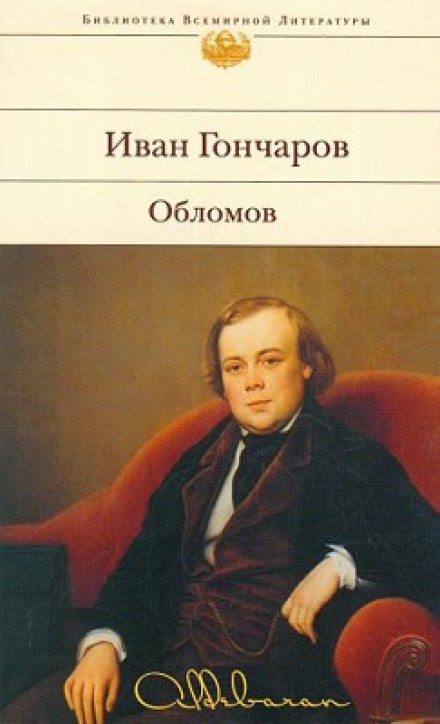
Oblomov
20 hrs. 41 min.
Language
Russian
Author
Ivan Goncharov
Author
Ivan Goncharov
Narrator
Alexander Minaev
Narrator
Alexander Minaev
Description
“Oblomov” has become a household name, and the concept of “Oblomovism” entered everyday life. A man who lies on the couch and dreams of a “perfect” world. A man who does nothing, yet builds castles in the air. Someone tries to justify him and contrast his quiet, outwardly meaningless life with modern business bustle. Someone accuses Oblomov of laziness and calls for action and achievements. And someone is horrified to discover in themselves traces of him.
Whatever the case, Oblomov does not know the happiness people feel after a hard day’s work, does not know duty that love urges, and is incapable of sacrifice for another’s good.
The novel is substantial, and it is not only about the problem of laziness. It reveals the theme of love and friendship, family happiness and peace.
Until the end you want to believe that Oblomov has a future—that he will get up from the couch and start acting. But this does not happen. The main hero resembles a lying stone which, however precious it may be, cannot come to life and set off on its own path.
The tragedy of the situation makes you look once again into your own heart, to answer honestly the question: is Oblomov living in there?
Whatever the case, Oblomov does not know the happiness people feel after a hard day’s work, does not know duty that love urges, and is incapable of sacrifice for another’s good.
The novel is substantial, and it is not only about the problem of laziness. It reveals the theme of love and friendship, family happiness and peace.
Until the end you want to believe that Oblomov has a future—that he will get up from the couch and start acting. But this does not happen. The main hero resembles a lying stone which, however precious it may be, cannot come to life and set off on its own path.
The tragedy of the situation makes you look once again into your own heart, to answer honestly the question: is Oblomov living in there?
100%
30:53
Oblomov - 1-01
53:27
Oblomov - 1-02
12:37
Oblomov - 1-03
23:10
Oblomov - 1-04
16:13
Oblomov - 1-05
19:05
Oblomov - 1-06
18:38
Oblomov - 1-07
1:05:08
Oblomov - 1-08
1:49:12
Oblomov - 1-09
18:09
Oblomov - 1-10
05:48
Oblomov - 1-11
22:48
Oblomov - 2-01
12:27
Oblomov - 2-02
16:19
Oblomov - 2-03
37:57
Oblomov - 2-04
44:54
Oblomov - 2-05
23:10
Oblomov - 2-06
19:57
Oblomov - 2-07
38:56
Oblomov - 2-08
29:26
Oblomov - 2-09
48:59
Oblomov - 2-10
30:45
Oblomov - 2-11
24:04
Oblomov - 2-12
09:28
Oblomov - 3-01
21:57
Oblomov - 3-02
21:19
Oblomov - 3-03
37:38
Oblomov - 3-04
17:55
Oblomov - 3-05
13:16
Oblomov - 3-06
38:04
Oblomov - 3-07
09:22
Oblomov - 3-08
09:13
Oblomov - 3-09
05:18
Oblomov - 3-10
22:18
Oblomov - 3-11
04:59
Oblomov - 3-12
31:21
Oblomov - 4-01
16:30
Oblomov - 4-02
13:35
Oblomov - 4-03
1:10:25
Oblomov - 4-04
17:40
Oblomov - 4-05
21:15
Oblomov - 4-06
15:32
Oblomov - 4-07
57:00
Oblomov - 4-08
41:52
Oblomov - 4-09
13:18
Oblomov - 4-10
09:49
Oblomov - 4-11
