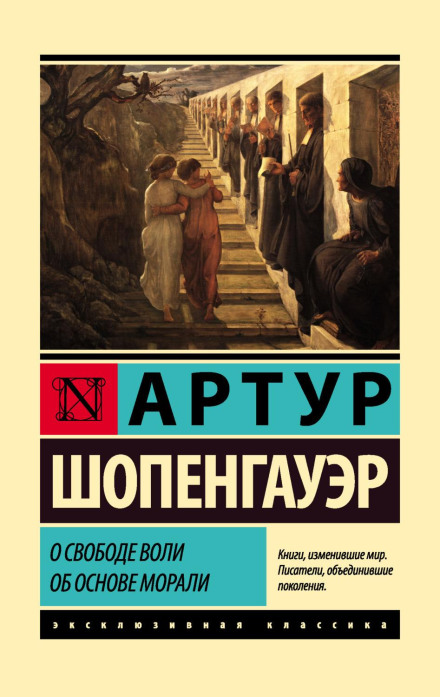
On the Freedom of the Will. On the Basis of Morality
14 hrs. 14 min.
Language
Russian
Author
Arthur Schopenhauer
Author
Arthur Schopenhauer
Narrator
Igor Gmyza
Narrator
Igor Gmyza
Description
Arthur Schopenhauer, the German irrationalist philosopher, made a significant contribution to understanding the foundations of human morality. In his works submitted to the Norwegian Royal Academy of Sciences, he investigates two key ethical problems: freedom of the will and the moral basis. Schopenhauer argues that human nature is neither perfect nor fixed, which makes a person both free and unfree at the same time. In his view, a person’s essence is determined by the will, and true freedom is available only to a few. Interestingly, according to Schopenhauer, morality itself is responsible for people’s voluntary submission.
100%
1:27:54
01. О свободе воли
30:00
02. О свободе воли
34:32
03. О свободе воли
1:45:57
04. О свободе воли
1:09:52
05. О свободе воли
23:38
06. О свободе воли
10:17
07. О свободе воли
28:48
08. Об основе морали
3:20:43
09. Об основе морали
3:40:42
10. Об основе морали
42:22
11. Об основе морали
