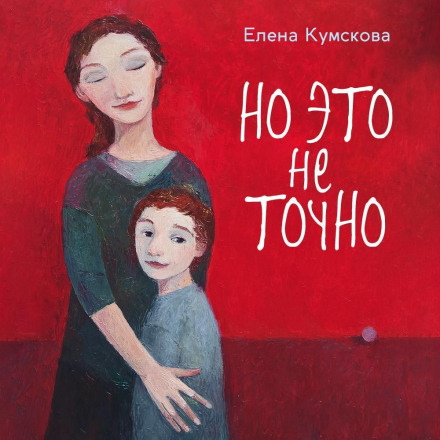
But It's Not Certain
6 hrs. 17 min.
Language
Russian
Author
Elena Kumskova
Author
Elena Kumskova
Narrator
Anna Skazko
Narrator
Anna Skazko
Description
“Real literature takes on difficult topics, helping the reader develop empathy, but does it in different ways: some books leave you with more questions, while others give hope and broaden your understanding of life. Elena Kumskova’s novel belongs to the second category: its heroes learn to accept others and themselves—an essential skill that, sooner or later, everyone needs.” Polina Boyarkina
Katya devotes herself entirely to her little son, Stepa. He almost doesn’t talk, shies away from other children and unfamiliar people. His world is made of his mother and his beloved toy cars—things he can line up neatly in rows for hours.
Katya’s husband can’t manage the role of father and leaves, leaving her alone with her son’s tantrums. After multiple consultations, the doctors diagnose Stepa—though with a caveat: “an autism spectrum disorder.”
Not finding support in the vague medical conclusions, Katya decides to fight for her son on her own, trusting above all her maternal instinct.
Katya’s story is not about “curing autism,” but about how to find inner stability and get out of loneliness.
“But it’s not certain” is a piercingly honest, recognizable novel about maternal love—and about how the hardest trials become bearable when those who are walking the same difficult path are near, and how true happiness is born from love and the ability to accept—others and oneself.
Katya devotes herself entirely to her little son, Stepa. He almost doesn’t talk, shies away from other children and unfamiliar people. His world is made of his mother and his beloved toy cars—things he can line up neatly in rows for hours.
Katya’s husband can’t manage the role of father and leaves, leaving her alone with her son’s tantrums. After multiple consultations, the doctors diagnose Stepa—though with a caveat: “an autism spectrum disorder.”
Not finding support in the vague medical conclusions, Katya decides to fight for her son on her own, trusting above all her maternal instinct.
Katya’s story is not about “curing autism,” but about how to find inner stability and get out of loneliness.
“But it’s not certain” is a piercingly honest, recognizable novel about maternal love—and about how the hardest trials become bearable when those who are walking the same difficult path are near, and how true happiness is born from love and the ability to accept—others and oneself.
100%
06:17
Но это не точно 01
05:09
Но это не точно 02
06:34
Но это не точно 03
07:39
Но это не точно 04
08:38
Но это не точно 05
13:51
Но это не точно 06
10:37
Но это не точно 07
08:01
Но это не точно 08
08:11
Но это не точно 09
14:35
Но это не точно 10
09:04
Но это не точно 11
06:01
Но это не точно 12
20:45
Но это не точно 13
21:06
Но это не точно 14
21:51
Но это не точно 15
16:16
Но это не точно 16
09:17
Но это не точно 17
23:09
Но это не точно 18
17:19
Но это не точно 19
23:09
Но это не точно 20
19:09
Но это не точно 21
20:57
Но это не точно 22
11:47
Но это не точно 23
16:40
Но это не точно 24
17:54
Но это не точно 25
12:38
Но это не точно 26
14:16
Но это не точно 27
06:47
Но это не точно 28
