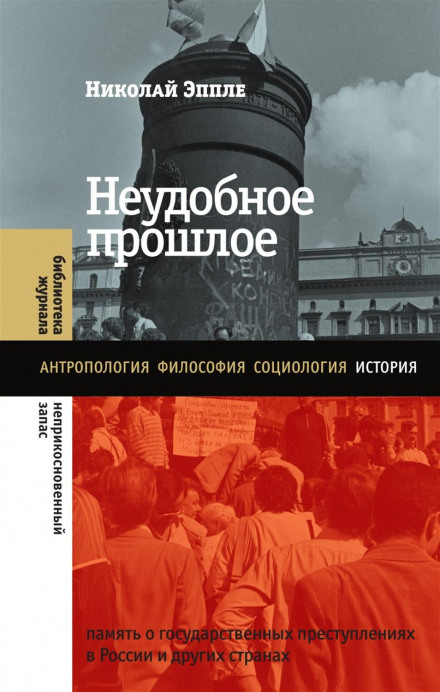
An Inconvenient Past. Memory of State Crimes in Russia and Other Countries
16 hrs. 32 min.
Language
Russian
Author
Nikolay Epple
Author
Nikolay Epple
Narrator
Oleg Bulgak
Narrator
Oleg Bulgak
Description
“Uncomfortable Past” by Nikolay Epple is an important book about historical memory and myths, included in the shortlist of the “Prosvetitel” (“Enlightener”) Prize for 2021. Does the past exist as an objective reality? After all, it is shaped by memory, and memory is biased and easily allows itself to be deceived. And there is also such a past that it’s unclear how to live with—memory of crimes in which the guilty are not external forces, but your own country. Remembering victims and suffering is generally harder than remembering heroes and victories. Yet to overcome the “difficult past” and move forward, the state and society must evaluate it and condemn it. In Russia, the repressions of the Soviet period still have no single legal and ethical assessment that would be significant for society as a whole. As a result of silence about the past, the absence of an opportunity and willingness to find common ground for discussing it, today in the same Russian family one person can consider Stalin’s repressions a myth and “defamation,” while for another person they were everyday reality. But Russia is not the first country to face such a problem. Memorial culture researcher Nikolay Epple, for the first time in Russian, examines the experiences of other countries in working with memory of state crimes. By describing how different scenarios took shape under different political and social circumstances, using examples of Germany, Argentina, Spain, Poland, South Africa, and Japan, Epple outlines principles that may help Russia successfully overcome collective trauma and resolve conflict within society. The book received the VI Publicistic Prize “LibMission” in the “Analytics” category (2021).
100%
26:53
Неудобное прошлое. Память о государственных преступлениях в России и других странах - 0 - Предисловие
03:55
Неудобное прошлое. Память о государственных преступлениях в России и других странах - 1 - Часть 1. Анамнез. Введение
17:12
Неудобное прошлое. Память о государственных преступлениях в России и других странах - 2 - Глава 1. Воспаление памяти
28:29
Неудобное прошлое. Память о государственных преступлениях в России и других странах - 3 - Глава 2. Террор на службе государства_ 1917–1953
59:04
Неудобное прошлое. Память о государственных преступлениях в России и других странах - 4 - Глава 3. Память о ГУЛАГе в СССР и постсоветской России
28:14
Неудобное прошлое. Память о государственных преступлениях в России и других странах - 5 - Глава 4. Примирение сверху_ равновесие без вины и ответственности
31:46
Неудобное прошлое. Память о государственных преступлениях в России и других странах - 6 - Глава 5. Примирение снизу_ возвращение имен
22:28
Неудобное прошлое. Память о государственных преступлениях в России и других странах - 7 - Глава 6. Старый фундамент
06:11
Неудобное прошлое. Память о государственных преступлениях в России и других странах - 8 - Часть 2. Анализ. Введение
45:59
Неудобное прошлое. Память о государственных преступлениях в России и других странах - 9 - Глава 1. Аргентина, или Матери и бабушки против диктатуры
54:15
Неудобное прошлое. Память о государственных преступлениях в России и других странах - 10 - Глава 2. Испания, или Преодоление молчания
54:05
Неудобное прошлое. Память о государственных преступлениях в России и других странах - 11 - Глава 3. ЮАР, или Прощение вместо правосудия
1:07:06
Неудобное прошлое. Память о государственных преступлениях в России и других странах - 12 - Глава 4. Польша, или Бремя жертвы
1:40:03
Неудобное прошлое. Память о государственных преступлениях в России и других странах - 13 - Глава 5. Германия, или От вины к ответственности
51:44
Неудобное прошлое. Память о государственных преступлениях в России и других странах - 14 - Глава 6. Япония, или Балансирующая память
01:40
Неудобное прошлое. Память о государственных преступлениях в России и других странах - 15 - Часть 3. Синтез. Введение
12:14
Неудобное прошлое. Память о государственных преступлениях в России и других странах - 16 - Глава 1. Know your enemy
39:49
Неудобное прошлое. Память о государственных преступлениях в России и других странах - 17 - Глава 2. Подведение черты под прошлым_ отделить, чтобы принять
1:29:17
Неудобное прошлое. Память о государственных преступлениях в России и других странах - 18 - Глава 3. Очищение крови
1:55:47
Неудобное прошлое. Память о государственных преступлениях в России и других странах - 19 - Глава 4. Работа принятия
1:33:18
Неудобное прошлое. Память о государственных преступлениях в России и других странах - 20 - Глава 5. Торг о правде
34:12
Неудобное прошлое. Память о государственных преступлениях в России и других странах - 21 - Глава 6. Инфраструктура «прорыва памяти»
08:37
Неудобное прошлое. Память о государственных преступлениях в России и других странах - 22 - Заключение
