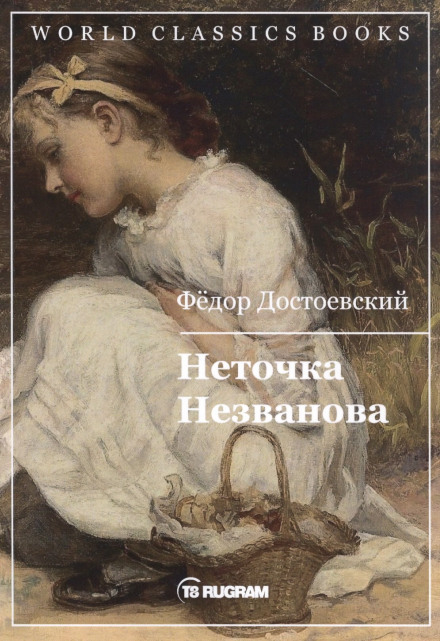
Netochka Nezvanova
7 hrs. 8 min.
Language
Russian
Author
Fyodor Dostoevsky
Author
Fyodor Dostoevsky
Narrator
Anastasia Chepeleva
Narrator
Anastasia Chepeleva
Description
Contemporaries of Fyodor Mikhailovich Dostoevsky perceived his work in different ways: some were captivated by how convincingly he could portray the life of a wide range of people—from a street beggar to the high-ranking “His Excellency”—while others criticized his prose for being overly elaborate and mannered. Yet despite all disagreements, his outstanding gift was recognized then—and is recognized today. You have before you one of the early works by this great writer.
The main heroine of F.M. Dostoevsky’s novel, Netyochka, is born into a poor family. Her father dies when she is still very young, and her mother remarries. Her stepfather, who fancied himself a gifted musician, often reached for the bottle and lived in dreams of another, “better” fate. As it happens, by the age of ten Netyochka is left with no one—an orphan. Dostoevsky traces with subtle psychological precision her path from childhood to adulthood: inner conflicts, changes of character, hopes, dreams, and a persistent striving for happiness.
The main heroine of F.M. Dostoevsky’s novel, Netyochka, is born into a poor family. Her father dies when she is still very young, and her mother remarries. Her stepfather, who fancied himself a gifted musician, often reached for the bottle and lived in dreams of another, “better” fate. As it happens, by the age of ten Netyochka is left with no one—an orphan. Dostoevsky traces with subtle psychological precision her path from childhood to adulthood: inner conflicts, changes of character, hopes, dreams, and a persistent striving for happiness.
100%
59:10
Неточка Незванова 01
51:34
Неточка Незванова 02
55:03
Неточка Незванова 03
29:29
Неточка Незванова 04
1:29:56
Неточка Незванова 05
50:25
Неточка Незванова 06
1:32:25
Неточка Незванова 07
