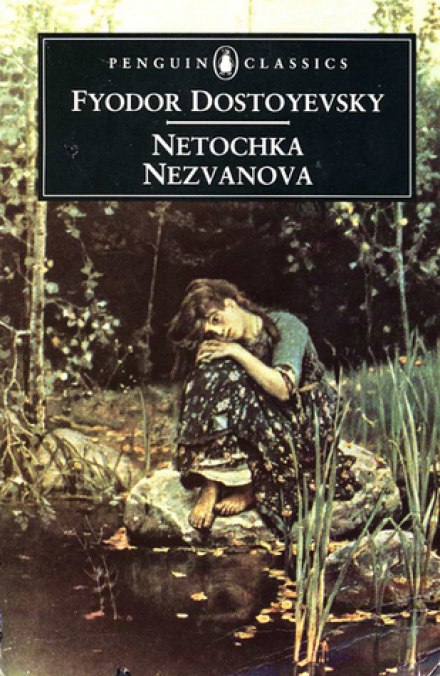
Netochka Nezvanova
6 hrs. 4 min.
Language
Russian
Author
Fyodor Dostoevsky
Author
Fyodor Dostoevsky
Narrator
Anastasia Melnikova
Narrator
Anastasia Melnikova
Description
An unfinished novel (because of an arrest); later it was adapted into a novella. In the magazine edition, the author’s subtitle was: “The Story of One Woman.”
The novel was written during a period when criticism and the public had cooled somewhat toward Dostoevsky’s talent after the success of “Poor Folk.” At the same time, Dostoevsky himself regarded “The Little Nette” (Netočka Nezvanova) as a strong work that was sure to cause a sensation among readers: “It all seems to me that I’ve started a case with all our literature, journals and critics, and with three parts of my novel <…> I establish, and for this year my primacy in spite of my ill-wishers”; “I know this work is serious. I say it at last: it isn’t me who speaks—everyone <…> I love my novel.” Confidence in a work’s success while writing it is one of Dostoevsky’s enduring traits.
All the more painful were the “rough spots” of bringing his texts into the literary world. “The Little Nette” did not enjoy particular success, even though, in a review of critical responses to it, N. N. Solomin lists a number of sympathetic opinions (A. V. Druzhinin, N. A. Dobrolyubov, Ap. A. Grigoriev). Yet it was precisely “Netočka Nezvanova” that was destined to enter a very limited series of Dostoevsky’s works for children.
The novel was written during a period when criticism and the public had cooled somewhat toward Dostoevsky’s talent after the success of “Poor Folk.” At the same time, Dostoevsky himself regarded “The Little Nette” (Netočka Nezvanova) as a strong work that was sure to cause a sensation among readers: “It all seems to me that I’ve started a case with all our literature, journals and critics, and with three parts of my novel <…> I establish, and for this year my primacy in spite of my ill-wishers”; “I know this work is serious. I say it at last: it isn’t me who speaks—everyone <…> I love my novel.” Confidence in a work’s success while writing it is one of Dostoevsky’s enduring traits.
All the more painful were the “rough spots” of bringing his texts into the literary world. “The Little Nette” did not enjoy particular success, even though, in a review of critical responses to it, N. N. Solomin lists a number of sympathetic opinions (A. V. Druzhinin, N. A. Dobrolyubov, Ap. A. Grigoriev). Yet it was precisely “Netočka Nezvanova” that was destined to enter a very limited series of Dostoevsky’s works for children.
100%
17:16
01-1mp3
15:28
01-2mp3
15:13
01-3mp3
15:11
02-1mp3
14:22
02-2mp3
14:54
02-3mp3
14:47
03-1mp3
15:26
03-2mp3
16:12
03-3mp3
12:37
04-1mp3
13:54
04-2mp3
16:27
05-1mp3
18:29
05-2mp3
18:18
05-3mp3
20:07
05-4mp3
20:28
06-1mp3
21:53
06-2mp3
14:01
07-1mp3
15:29
07-2mp3
12:08
07-3mp3
12:46
07-4mp3
14:16
07-5mp3
14:51
07-6mp3
