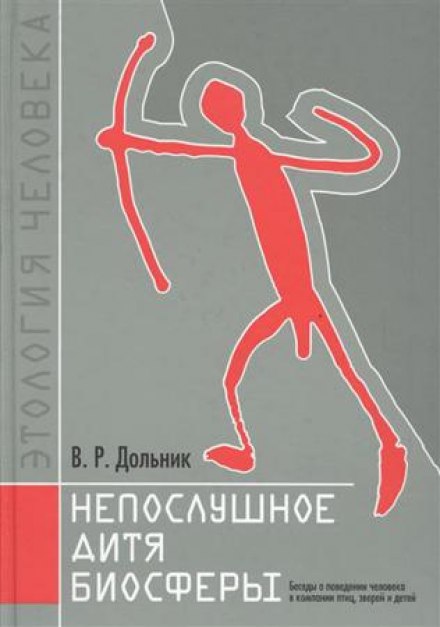
The Disobedient Child of the Biosphere
13 hrs. 25 min.
Language
Russian
Author
Viktor Dolnik
Author
Viktor Dolnik
Narrator
Alexander Klyukvin
Narrator
Alexander Klyukvin
Description
What did our early human ancestors think and feel—those who lived more than a million years ago? How can we understand our own instincts and the instincts of other animals? This and much more is what this audiobook tells.
This book opens the door to our home. On one side of it is our little home world: family and childhood. On the other side is the outside world. It seems enormous to us, but it depends on how you look at it. You can make it shrink at once to a thin film over a tiny ball. Its name is the biosphere.
When we live in a city, it’s as if it doesn’t exist: around us there are mostly people and a little greenery. Somewhere else, there’s some wildlife. How can we believe that on Earth, at the same time as us, several million species of plants and animals live?! In the biosphere, different species are even more numerous than people in a huge city. We think that “we” and “they” are completely different, that we have nothing in common.
Let us be children of the biosphere—but aren’t we special, outstanding? Let us have emerged from all of their nature—yet we emerged! And we have long become lords, conquerors, and transformers. And suddenly we are told that we are just one of the species—not even the most numerous and not at all the most necessary. And not a creator—just a naughty, stubborn child. Something like this: an obedient, uncooperative kid. The mother drags him to the mirror, repeating: “Well, just look—who you look like!”
This book is like mirror-talk—about ourselves—among birds, animals, children, far ancestors, and close predecessors. Not didactic and moralizing, but exactly the kind of talk that you’d expect from naughty, mischievous, stubborn creatures. Prohibited topics, forbidden subjects, free speech, and stories that are either funny, or scary, or just plain ridiculous.
Brief biographical note:
Viktor Rafaеlevich Dolnik is a Russian ornithologist, Doctor of Biological Sciences, professor, and chief researcher at the Zoological Institute of the Russian Academy of Sciences. Vice-President of the Russian Ornithological Society, honorary foreign member of ornithological societies of the USA (one of 6), Germany, and the Netherlands; author of more than 200 scientific works, including
9 monographs. Together with M. A. Kozlov, he co-authored several editions of a middle-school zoology textbook. His broad renown came from publications in the late 1980s–1990s of articles on human ethology. Based on those works, Viktor Dolnik published the book “The Disobedient Child of the Biosphere.”
This book opens the door to our home. On one side of it is our little home world: family and childhood. On the other side is the outside world. It seems enormous to us, but it depends on how you look at it. You can make it shrink at once to a thin film over a tiny ball. Its name is the biosphere.
When we live in a city, it’s as if it doesn’t exist: around us there are mostly people and a little greenery. Somewhere else, there’s some wildlife. How can we believe that on Earth, at the same time as us, several million species of plants and animals live?! In the biosphere, different species are even more numerous than people in a huge city. We think that “we” and “they” are completely different, that we have nothing in common.
Let us be children of the biosphere—but aren’t we special, outstanding? Let us have emerged from all of their nature—yet we emerged! And we have long become lords, conquerors, and transformers. And suddenly we are told that we are just one of the species—not even the most numerous and not at all the most necessary. And not a creator—just a naughty, stubborn child. Something like this: an obedient, uncooperative kid. The mother drags him to the mirror, repeating: “Well, just look—who you look like!”
This book is like mirror-talk—about ourselves—among birds, animals, children, far ancestors, and close predecessors. Not didactic and moralizing, but exactly the kind of talk that you’d expect from naughty, mischievous, stubborn creatures. Prohibited topics, forbidden subjects, free speech, and stories that are either funny, or scary, or just plain ridiculous.
Brief biographical note:
Viktor Rafaеlevich Dolnik is a Russian ornithologist, Doctor of Biological Sciences, professor, and chief researcher at the Zoological Institute of the Russian Academy of Sciences. Vice-President of the Russian Ornithological Society, honorary foreign member of ornithological societies of the USA (one of 6), Germany, and the Netherlands; author of more than 200 scientific works, including
9 monographs. Together with M. A. Kozlov, he co-authored several editions of a middle-school zoology textbook. His broad renown came from publications in the late 1980s–1990s of articles on human ethology. Based on those works, Viktor Dolnik published the book “The Disobedient Child of the Biosphere.”
Contents:
Introduction
First conversation “Archeology of Human Preferences”
The Magic of Fire
From the Raven to the Collector
Meet: instinct
Where does the Motherland begin?
Passion for hunting
Tug toward the land
Why we love dogs
Love of nature
Second conversation “A Journey into the World of Ancestors”
A Portrait Gallery of Ancestors
A Reasonable Person
A Stone in the Way
Pay a Visit to the Ancestors
Third conversation “Such a Long, Understood by No One Childhood”
Is it pleasant to be descended from an ape?
Why ethologists were criticized—and sometimes even forbidden
An Inborn Behavior of a Child
Instinct of Ownership
Pockets full of all sorts of things
Little liars and diplomats
Thieves
Conservatives
Stick and Carrot
Games
Fears in sleep and in waking life
Toys
Living and non-living things
Parents and children
Reason vs. instinct
From instinctive prohibitions to morality
Fourth conversation. “The Rock of Rocks”
Meet: noise-makers
Adolescents have their own noise-makers
Or maybe they’re “clubs”?
Aren’t they “gangs”?
Highlighting behavior
The Carousel of Idols
Fifth conversation. “About Storks, Cabbage, and the Original Sin”
Ethology knows what taste the forbidden fruit had
Innocent games in cabbage patches
The very first love
Rules of meeting
From Venus to a vase
Peeping
Tusks, horns, crests, manes
Just pay attention to me
Not the best choice
Courtship
In falling in love
If storks carried us
The fate of the great apes
Fruits of group marriage
“Sex techniques”
Sixth conversation “What form of marital relations is natural for a person?”
Is there a “natural” form of marital relations for humans?
Sexual behavior and reproduction—does everything here make sense to you?
Let’s get acquainted with animal reproductive behavior
A man is simple; a woman is full of mysteries
Choosing a partner: who chooses whom?
Where there is choice, there is sexual selection
Monogamy is not an ideal from the standpoint of natural selection
“Long live young wives and maidens…”—Why?
Each sex has its own goal
Why love blinds
There are no equalities between the sexes
This is called an inversion of dominance
Convergence of partners
Mating
The missing vervets
Marriage relations in baboons
Marriage relations in great apes
At one time our evolutionary paths diverged
Our evolution went in zigzags
Children—the Achilles’ heel of intellectuals
Making a male into a father—this is tricky
Group marriage is not the best solution, but still a way out of the deadlock
What can group natural selection do?
Children and the strengthening of sociality
What do we feel ashamed of?
The trouble is that people became people too early
Seventh conversation “Ethological excursions to the forbidden gardens of the humanities”
What animals revealed about the nature of power
What apes revealed about the origin of the state
Symbols serve power
The vacant place at the top
Equality or hierarchy
A walk through history with an ethology textbook in hand
The splendor and poverty of empires
When the subconscious determines being
Democracy—a product of reason, but not only reason
Where wars come from
Let’s not forget other features of our species
Excessive militarization
A right to land
Eighth conversation “Dances of Life and Death on the Stage of the Big Theatre of Nature and History”
Explosion—Crisis—Collapse—Stabilization
How it happens in nature
The game of life with death on the stage of history
The state and birth rate
A foreseeable future
Ninth conversation “From cattlemen Darwin wants us to know—until he makes us announce the mid—”“
Reason began with a modest service
Every living thing has its language
But who created the Creator?
First conversation “Archeology of Human Preferences”
The Magic of Fire
From the Raven to the Collector
Meet: instinct
Where does the Motherland begin?
Passion for hunting
Tug toward the land
Why we love dogs
Love of nature
Second conversation “A Journey into the World of Ancestors”
A Portrait Gallery of Ancestors
A Reasonable Person
A Stone in the Way
Pay a Visit to the Ancestors
Third conversation “Such a Long, Understood by No One Childhood”
Is it pleasant to be descended from an ape?
Why ethologists were criticized—and sometimes even forbidden
An Inborn Behavior of a Child
Instinct of Ownership
Pockets full of all sorts of things
Little liars and diplomats
Thieves
Conservatives
Stick and Carrot
Games
Fears in sleep and in waking life
Toys
Living and non-living things
Parents and children
Reason vs. instinct
From instinctive prohibitions to morality
Fourth conversation. “The Rock of Rocks”
Meet: noise-makers
Adolescents have their own noise-makers
Or maybe they’re “clubs”?
Aren’t they “gangs”?
Highlighting behavior
The Carousel of Idols
Fifth conversation. “About Storks, Cabbage, and the Original Sin”
Ethology knows what taste the forbidden fruit had
Innocent games in cabbage patches
The very first love
Rules of meeting
From Venus to a vase
Peeping
Tusks, horns, crests, manes
Just pay attention to me
Not the best choice
Courtship
In falling in love
If storks carried us
The fate of the great apes
Fruits of group marriage
“Sex techniques”
Sixth conversation “What form of marital relations is natural for a person?”
Is there a “natural” form of marital relations for humans?
Sexual behavior and reproduction—does everything here make sense to you?
Let’s get acquainted with animal reproductive behavior
A man is simple; a woman is full of mysteries
Choosing a partner: who chooses whom?
Where there is choice, there is sexual selection
Monogamy is not an ideal from the standpoint of natural selection
“Long live young wives and maidens…”—Why?
Each sex has its own goal
Why love blinds
There are no equalities between the sexes
This is called an inversion of dominance
Convergence of partners
Mating
The missing vervets
Marriage relations in baboons
Marriage relations in great apes
At one time our evolutionary paths diverged
Our evolution went in zigzags
Children—the Achilles’ heel of intellectuals
Making a male into a father—this is tricky
Group marriage is not the best solution, but still a way out of the deadlock
What can group natural selection do?
Children and the strengthening of sociality
What do we feel ashamed of?
The trouble is that people became people too early
Seventh conversation “Ethological excursions to the forbidden gardens of the humanities”
What animals revealed about the nature of power
What apes revealed about the origin of the state
Symbols serve power
The vacant place at the top
Equality or hierarchy
A walk through history with an ethology textbook in hand
The splendor and poverty of empires
When the subconscious determines being
Democracy—a product of reason, but not only reason
Where wars come from
Let’s not forget other features of our species
Excessive militarization
A right to land
Eighth conversation “Dances of Life and Death on the Stage of the Big Theatre of Nature and History”
Explosion—Crisis—Collapse—Stabilization
How it happens in nature
The game of life with death on the stage of history
The state and birth rate
A foreseeable future
Ninth conversation “From cattlemen Darwin wants us to know—until he makes us announce the mid—”“
Reason began with a modest service
Every living thing has its language
But who created the Creator?
