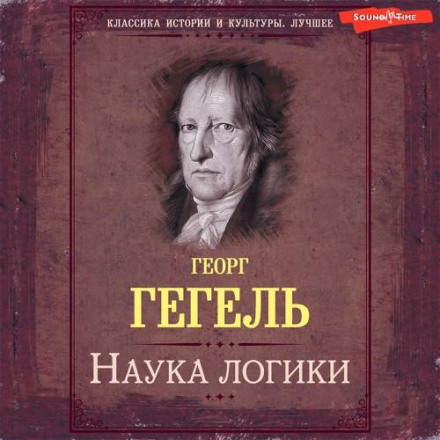
Science of Logic
20 hrs. 2 min.
Description
One of the most influential philosophical works of the modern era, which partly helped shape neo-Marxism, philosophical hermeneutics, and dialectical materialism.
Three books, or three teachings—on Being, Essence, and Concept—form the foundation of Georg Wilhelm Friedrich Hegel’s philosophical system (1770–1831), which took shape in 1812–1816. The work was first published in two volumes: “Objective Logic” (the first two books) and “Subjective Logic” (the last book). It is one of the most influential philosophical works of the modern era, which partly played a role in the formation of neo-Marxism, philosophical hermeneutics, and dialectical materialism.
The Russian translation was made by Doctor of Philosophy Boris Grigorievich Stolpner (1871–1937), a committed Marxist. He used not just one edition; he worked with all of them at once, giving special attention to the first edition published during Hegel’s lifetime. In the early 20th century, reviews of the new translation of “The Science of Logic” noted that the translator managed to convey the fluidity of word meanings by choosing the most precise formulations of Hegel’s ideas.
Three books, or three teachings—on Being, Essence, and Concept—form the foundation of Georg Wilhelm Friedrich Hegel’s philosophical system (1770–1831), which took shape in 1812–1816. The work was first published in two volumes: “Objective Logic” (the first two books) and “Subjective Logic” (the last book). It is one of the most influential philosophical works of the modern era, which partly played a role in the formation of neo-Marxism, philosophical hermeneutics, and dialectical materialism.
The Russian translation was made by Doctor of Philosophy Boris Grigorievich Stolpner (1871–1937), a committed Marxist. He used not just one edition; he worked with all of them at once, giving special attention to the first edition published during Hegel’s lifetime. In the early 20th century, reviews of the new translation of “The Science of Logic” noted that the translator managed to convey the fluidity of word meanings by choosing the most precise formulations of Hegel’s ideas.
100%
2:06:36
00
1:38:19
01
2:54:08
02
1:39:35
03
57:52
04
6:39:55
05
46:51
06
1:12:02
07
1:30:43
08
36:40
09
