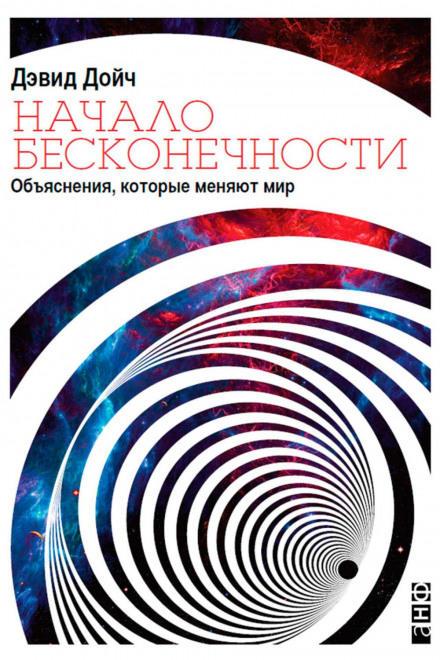
The Beginning of Infinity: Explanations That Transform the World
20 hrs. 45 min.
Language
Russian
Author
David Deutsch
Author
David Deutsch
Narrator
Artificial Intelligence Ivan
Narrator
Artificial Intelligence Ivan
Description
British physicist David Deutsch is not only one of the founders of the theory of quantum computing, but also a philosopher striving to make sense of humanity’s “eternal questions” in the context set by scientific progress. The key question of this book is: is there a limit to human progress? The answer is expressed in the title: we are at the beginning of an infinite journey, along which our universal reason will lead us—proposing guesses and subjecting them to criticism. We set out on this path in the Enlightenment era, but it’s easy to get derailed under the influence of erroneous philosophical ideas, many of which the author includes—ranging from positivism to postmodernism, not to mention religion. An example of a deviation from the path of reason in science is, for him, the Copenhagen interpretation of quantum mechanics. Deutsch sees a sensible alternative in the Everett interpretation, which implies a picture of the world as a multiverse. But the author’s interests are not limited to science. Drawing on Karl Popper’s ideas and the concept of a good explanation, Deutsch formulates a theory of knowledge from which he derives the existence of objective truth in ethics and aesthetics, as well as political principles that make unlimited progress possible. © Storysidе
