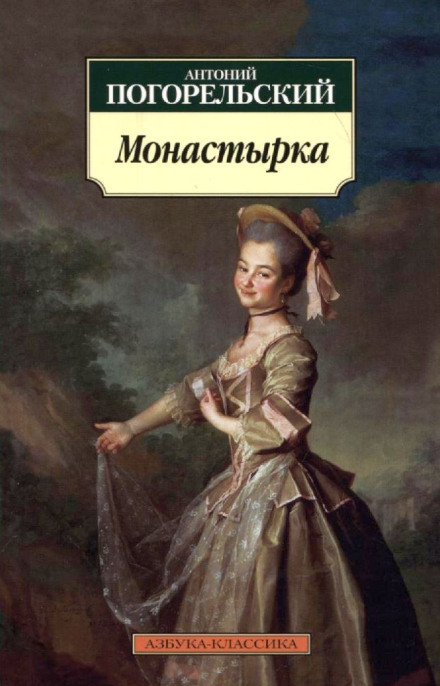
The Convent Girl
7 hrs. 10 min.
Language
Russian
Author
Antony Pogorelsky
Author
Antony Pogorelsky
Narrator
Tatiana Bondarenko
Narrator
Tatiana Bondarenko
Description
The name of the writer Antoniy Pogorelsky (1787–1836) is little known to the modern reader; only one of his works is widely recognized—his magical novella “The Black Chicken, or The Underground Inhabitants,” which, as is known, received high praise from V. A. Zhukovsky and has long been included in the golden fund of children’s classics.
Pogorelsky’s literary legacy is not large, yet researchers unanimously acknowledge his merits in the development of Russian prose: he became the creator of the first fantastic novella and one of the first everyday, “family” novels, and took a noticeable place in the literary process—having influenced the formation and development of the romantic direction and reflected in the creative consciousness of younger contemporaries such as V. F. Odoevsky and N. V. Gogol.
The traits of the era of his time are reflected in the very personality and fate of Aleksei Alekseevich Perovsky—this is his real name. An illegitimate son of Count Aleksei Kirillovich Razumovsky (the surname Perovsky comes from the name of the Moscow region estate of Perovo), he received an excellent home education and graduated from Moscow University in two years with an academic degree in the sciences of philosophy and the humanities. By that time, his first literary experience belonged to—the German-language translation of N. M. Karamzin’s “Poor Liza”—and the beginning of state service, which was interrupted by Napoleon’s invasion of Russia. A young writer with a not-so-bad bureaucratic position, at the very beginning of the Patriotic War he left his service and became an officer to take part in the battle against the enemy.
The novel “The Little Nun” was published in two parts with a three-year interval (1830—Part 1, 1833—Part 2). It earned high critical praise and very quickly became popular. There are several reasons for this. Above all, readers were captivated by the tense plot framework that even allowed one to speak of an adventurous beginning. The setting itself was also attractive—Little Russia, containing a certain exoticism; the characters’ nature interested the audience—despite some one-sidedness and directness, one could see a desire for psychological analysis; the living, vivid, folk speech produced a strong impression. All of this made readers follow the heroes’ adventures with undivided attention. “Not alien to a certain sentimental tone and artificiality of the plot, the novel reveals the internal logic of the characters, and the scenes of everyday life and manners acquire in it the force of living truth” [6, p. 17].
The main heroine of the novel is Anyuta Orlenko, who was left an orphan at the age of five. Anyuta was first taken in by the father’s cousin for upbringing, and then, by a turn of circumstances, became a boarder at the Institute of Noble Maidens at the Smolny Convent. After finishing her education, she returned to her homeland—Little Russia. There she met Vladimir Blistovsky, a wealthy and distinguished guard officer who served in Petersburg and had come on business trip. Convinced of his serious feelings for Anyuta and of her mutuality, Blistovsky makes a proposal and receives approval from her aunt Anna Andreevna…
Pogorelsky’s literary legacy is not large, yet researchers unanimously acknowledge his merits in the development of Russian prose: he became the creator of the first fantastic novella and one of the first everyday, “family” novels, and took a noticeable place in the literary process—having influenced the formation and development of the romantic direction and reflected in the creative consciousness of younger contemporaries such as V. F. Odoevsky and N. V. Gogol.
The traits of the era of his time are reflected in the very personality and fate of Aleksei Alekseevich Perovsky—this is his real name. An illegitimate son of Count Aleksei Kirillovich Razumovsky (the surname Perovsky comes from the name of the Moscow region estate of Perovo), he received an excellent home education and graduated from Moscow University in two years with an academic degree in the sciences of philosophy and the humanities. By that time, his first literary experience belonged to—the German-language translation of N. M. Karamzin’s “Poor Liza”—and the beginning of state service, which was interrupted by Napoleon’s invasion of Russia. A young writer with a not-so-bad bureaucratic position, at the very beginning of the Patriotic War he left his service and became an officer to take part in the battle against the enemy.
The novel “The Little Nun” was published in two parts with a three-year interval (1830—Part 1, 1833—Part 2). It earned high critical praise and very quickly became popular. There are several reasons for this. Above all, readers were captivated by the tense plot framework that even allowed one to speak of an adventurous beginning. The setting itself was also attractive—Little Russia, containing a certain exoticism; the characters’ nature interested the audience—despite some one-sidedness and directness, one could see a desire for psychological analysis; the living, vivid, folk speech produced a strong impression. All of this made readers follow the heroes’ adventures with undivided attention. “Not alien to a certain sentimental tone and artificiality of the plot, the novel reveals the internal logic of the characters, and the scenes of everyday life and manners acquire in it the force of living truth” [6, p. 17].
The main heroine of the novel is Anyuta Orlenko, who was left an orphan at the age of five. Anyuta was first taken in by the father’s cousin for upbringing, and then, by a turn of circumstances, became a boarder at the Institute of Noble Maidens at the Smolny Convent. After finishing her education, she returned to her homeland—Little Russia. There she met Vladimir Blistovsky, a wealthy and distinguished guard officer who served in Petersburg and had come on business trip. Convinced of his serious feelings for Anyuta and of her mutuality, Blistovsky makes a proposal and receives approval from her aunt Anna Andreevna…
100%
14:54
glava-01-vmesto-predislovijamp3
08:46
glava-02-1-prodolzhenie-pismo-pervoemp3
03:33
glava-02-2-prodolzhenie-pismo-vtoroemp3
08:50
glava-02-3-prodolzhenie-pismo-tretiemp3
18:24
glava-03-otec-anjutymp3
14:51
glava-04-tetushka-i-opekunmp3
08:17
glava-05-smolnyjj-monastyr-i-vypusk-iz-onogomp3
22:51
glava-06-vozvrashhenie-v-malorossijump3
14:55
glava-07-cyganskijj-atamanmp3
17:58
glava-08-francuzskijj-jazykmp3
13:53
glava-09-objasneniemp3
27:10
glava-10-smertoubijjstvomp3
16:02
glava-11-primireniemp3
15:52
glava-12-neudachamp3
20:47
glava-13-neozhidannoe-poseshhenie
20:00
glava-14-razluka
20:02
glava-15
22:02
glava-16-prinuzhdennaja-razluka
24:12
glava-17-zaveshhanie
22:27
glava-18-neznakomec
22:37
glava-19-uedinennyjj-khutor
18:19
glava-20-pobeg
27:31
glava-21-neozhidannaja-vstrecha
25:58
glava-22-vsemu-na-svete-est-konec
