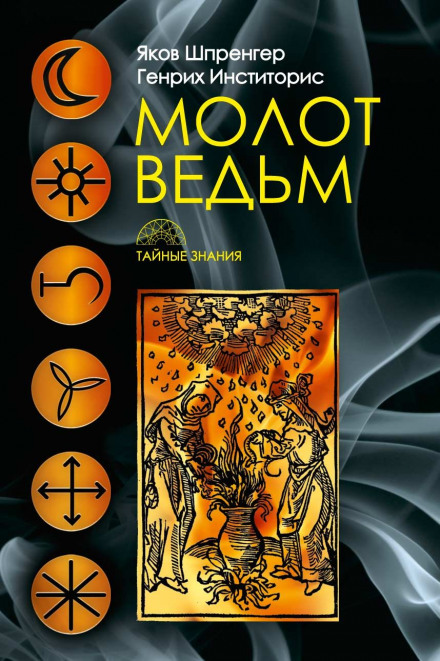
Malleus Maleficarum
14 hrs. 38 min.
Language
Russian
Author
Jakob Sprenger
Author
Heinrich Institoris
Narrator
Yury Grigoryev
Narrator
Yury Grigoryev
Description
Jakob Sprenger (1436, Rheinfelden – December 6, 1495, Strasbourg) was a professor of theology, an inquisitor, and a well-known demonologist— a German Dominican, and dean of the University of Cologne. He is considered a co-author of the book “The Hammer of Witches,” written together with prior Heinrich Institoris. However, Sprenger’s work appears to have been limited to an introduction titled “The Apologia.”
Heinrich Kramer (also known as Henricus Institor; 1430, Schlettstadt – 1505, Brno or Olomouc, Bohemia) was a German Dominican friar and the author of “The Hammer of Witches.” (The name form “Institoris” placed on the title page is a Latin genitive—i.e., it reads as: “The Hammer of Witches” by Institor”; often this genitive is mistakenly taken for the nominative form of the name. The Latin word “Institor” is a precise Latin translation of the German word “Kramer,” meaning “merchant of small goods.”)
Heinrich believed he was sent by the Lord himself to cleanse the world of heresy. His first investigation, already in his role as inquisitor, he carried out in the Italian town of Trent. It concerned the murder of the two-year-old boy Simoni(o), which was allegedly done by a group of Jews in the course of a ritual killing. During this investigation, Heinrich Kramer issued a death sentence for nine Jews from Trent, and the murdered child was canonized.
In 1484, the pope signed a document compiled for him by Heinrich Kramer: according to the witch bull, the authorities of Germany had to help the inquisitors in the fight against witches by all means. During Kramer’s time, about 3,000 so-called “witches” died.
“The Hammer of Witches” or “Hexenhammer” is undoubtedly the central and darkest of all works on demonology. It became a mandatory code that combined ancient legends about black magic with the Church’s dogma of heresy, opening the gates to the torrent of inquisitorial hysteria as widely as a printed work could possibly do.
Heinrich Kramer (also known as Henricus Institor; 1430, Schlettstadt – 1505, Brno or Olomouc, Bohemia) was a German Dominican friar and the author of “The Hammer of Witches.” (The name form “Institoris” placed on the title page is a Latin genitive—i.e., it reads as: “The Hammer of Witches” by Institor”; often this genitive is mistakenly taken for the nominative form of the name. The Latin word “Institor” is a precise Latin translation of the German word “Kramer,” meaning “merchant of small goods.”)
Heinrich believed he was sent by the Lord himself to cleanse the world of heresy. His first investigation, already in his role as inquisitor, he carried out in the Italian town of Trent. It concerned the murder of the two-year-old boy Simoni(o), which was allegedly done by a group of Jews in the course of a ritual killing. During this investigation, Heinrich Kramer issued a death sentence for nine Jews from Trent, and the murdered child was canonized.
In 1484, the pope signed a document compiled for him by Heinrich Kramer: according to the witch bull, the authorities of Germany had to help the inquisitors in the fight against witches by all means. During Kramer’s time, about 3,000 so-called “witches” died.
“The Hammer of Witches” or “Hexenhammer” is undoubtedly the central and darkest of all works on demonology. It became a mandatory code that combined ancient legends about black magic with the Church’s dogma of heresy, opening the gates to the torrent of inquisitorial hysteria as widely as a printed work could possibly do.
100%
05:39
G_01_00_01
05:20
G_01_00_02
05:06
G_01_01_01
03:49
G_01_01_02
10:28
G_01_01_03
08:35
G_01_01_04
05:01
G_01_01_05
05:31
G_01_01_06
04:54
G_01_01_07
05:30
G_01_01_08
05:12
G_01_01_09
06:06
G_01_01_10
06:59
G_01_01_11
04:56
G_01_01_12
07:01
G_01_01_13
05:05
G_01_01_14
05:30
G_01_01_15
05:34
G_01_01_16
08:42
G_01_01_17
07:25
G_01_01_18
09:01
G_01_01_19
03:24
G_01_01_20
06:37
G_01_02_01
06:24
G_01_02_02
07:07
G_01_02_03
06:18
G_01_02_04
05:16
G_01_02_05
06:22
G_01_02_06
05:27
G_01_03_01
07:36
G_01_03_02
06:35
G_01_03_03
08:30
G_01_03_04
06:04
G_01_04_01
07:46
G_01_04_02
06:59
G_01_05_01
04:44
G_01_05_02
04:12
G_01_05_03
05:32
G_01_05_04
06:19
G_01_05_05
06:52
G_01_05_06
06:42
G_01_05_07
04:33
G_01_05_08
06:20
G_01_06_01
06:28
G_01_06_02
05:14
G_01_06_03
05:57
G_01_06_04
06:07
G_01_06_05
05:47
G_01_07_01
04:57
G_01_07_02
04:19
G_01_07_03
06:16
G_01_08_01
08:15
G_01_08_02
07:57
G_01_08_03
06:41
G_01_08_04
07:24
G_01_09_01
06:52
G_01_09_02
08:28
G_01_09_03
06:50
G_01_09_04
05:51
G_01_09_05
05:58
G_01_10_01
07:52
G_01_10_02
05:43
G_01_10_03
06:01
G_01_10_04
06:58
G_01_11_01
06:07
G_01_11_02
07:58
G_01_12_01
04:32
G_01_12_02
06:36
G_01_13_01
06:11
G_01_13_02
05:46
G_01_14_01
10:42
G_01_15_01
07:06
G_01_16_01
07:28
G_01_16_02
06:25
G_01_16_03
07:41
G_01_16_04
07:55
G_01_16_05
06:56
G_01_16_06
06:42
G_01_16_07
07:27
G_01_16_08
07:47
G_01_16_09
05:51
G_01_16_10
06:17
G_02_01_01
05:34
G_02_01_02
04:25
G_02_02_01
04:40
G_02_02_02
04:40
G_02_03_01
04:42
G_02_04_01
04:42
G_02_05_01
03:54
G_02_05_02
05:50
G_02_06_01
04:17
G_02_06_02
05:47
G_02_06_03
05:31
G_02_06_04
06:36
G_02_07_01
05:46
G_02_08_01
07:20
G_03_01_01
06:37
G_03_01_02
08:16
G_03_02_01
06:19
G_03_02_02
04:30
G_03_02_03
04:51
G_03_02_04
04:19
G_03_02_05
05:09
G_03_03_01
04:53
G_03_03_02
07:04
G_03_03_03
04:31
G_03_03_04
05:14
G_03_04_01
05:13
G_03_04_02
08:35
G_03_04_03
06:25
G_03_04_04
06:55
G_03_05_01
05:31
G_03_06_01
06:16
G_03_07_01
07:45
G_03_07_02
08:21
G_03_07_03
07:21
G_03_07_04
08:02
G_03_07_05
08:46
G_03_07_06
08:06
G_03_07_07
07:45
G_03_07_08
06:39
G_03_07_09
07:01
G_03_07_10
07:53
G_03_07_11
06:54
G_03_07_12
06:16
G_03_07_13
07:10
G_03_07_14
08:02
G_03_07_15
06:53
G_03_07_16
06:00
G_03_07_17
07:38
G_03_07_18
07:10
G_03_07_19
05:43
G_03_07_20
08:06
G_03_07_21
08:00
G_03_07_22
06:17
G_03_07_23
06:45
G_03_07_24
06:58
G_03_07_25
