The Magic of Reality: How We Know What's Really True
7 hrs. 20 min.
Language
Russian
Author
Richard Dawkins
Author
Richard Dawkins
Narrator
Fuad Nasirov
Narrator
Fuad Nasirov
Description
Richard Dawkins is an outstanding British scientist—an ethologist and tireless popularizer of science—winner of many literary and scientific awards, author of books translated into many languages: “The Selfish Gene,” “The Extended Phenotype,” “The Blind Watchmaker,” “Unweaving the Rainbow,” “The God Delusion,” and others. His works have played a huge role in reviving interest in science writing aimed at a broad readership.
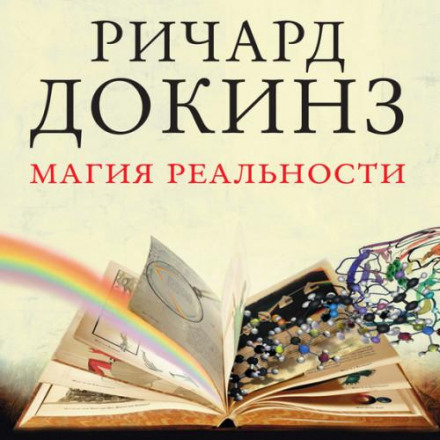
Dawkins’s new book is a conversation with a young reader. Most of its chapters are titled with a question: “Who was the first human?”, “What is everything made of?”, “What is a rainbow?”, or “Why do unpleasant things happen?” The author not only tries to provide accessible and convincing answers to these questions, but also explains how exactly scientists come to the solutions of puzzles that the universe tirelessly presents to humanity. Even today, Dawkins writes, it’s possible to explain far from everything—but one of science’s main strengths is that “scientists know when the answer to some question is unknown. They are happy to admit their ignorance. Joy is appropriate here, because the search for a correct answer is an incredibly exciting activity.”
Dawkins’s new book is a conversation with a young reader. Most of its chapters are titled with a question: “Who was the first human?”, “What is everything made of?”, “What is a rainbow?”, or “Why do unpleasant things happen?” The author not only tries to provide accessible and convincing answers to these questions, but also explains how exactly scientists come to the solutions of puzzles that the universe tirelessly presents to humanity. Even today, Dawkins writes, it’s possible to explain far from everything—but one of science’s main strengths is that “scientists know when the answer to some question is unknown. They are happy to admit their ignorance. Joy is appropriate here, because the search for a correct answer is an incredibly exciting activity.”
100%
43:07
01
39:14
02
37:03
03
38:50
04
41:25
05
36:55
06
24:14
07
34:53
08
38:44
09
30:14
10
37:54
11
37:28
12
