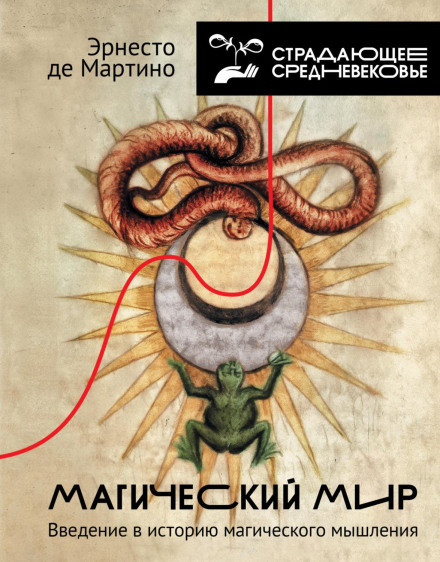
The Magic World: An Introduction to the History of Magical Thinking
15 hrs. 28 min.
Language
Russian
Author
Ernesto de Martino
Author
Ernesto de Martino
Narrator
Agniya Yegoshina
Narrator
Agniya Yegoshina
Description
The book “Magic World: An Introduction to the Theory of Magical Thinking” occupies a prominent place among the classic works of contemporary European thought—published in 1948, it has gone through a notable number of reprints, testifying to the enduring interest in the author and his work. It offers the reader an innovative study of magical thinking in traditional societies, where the boundaries between one’s own “self” and the surrounding world are blurred. Based on the philosophy of the well-known German thinker of the 20th century Martin Heidegger, the author develops the theory of the “crisis of presence,” according to which an unprotected consciousness of a primitive person is on the verge of complete dissolution in the face of immeasurable and uncontrollable forces of nature. Drawing on ethnographic works by colleagues, de Martino examines the religious worldviews and practices of the people of Tierra del Fuego in South America, the indigenous peoples of Greenland, the pygmies of equatorial Africa, and Australian Aboriginals of the Arunta tribe: from ceremonies of initiation into shamanism and honoring totemic animals to predictions of a successful hunt. It is precisely such practices that help traditional societies overcome fear of the surrounding world and shape their way of life.
100%
39:23
Магический мир. Введение в историю магического мышления - 0 -
28:33
Магический мир. Введение в историю магического мышления - 1 -
28:09
Магический мир. Введение в историю магического мышления - 2 -
56:17
Магический мир. Введение в историю магического мышления - 3 -
16:20
Магический мир. Введение в историю магического мышления - 4 -
2:44:10
Магический мир. Введение в историю магического мышления - 5 -
4:42:15
Магический мир. Введение в историю магического мышления - 6 -
2:17:06
Магический мир. Введение в историю магического мышления - 7 -
1:50:59
Магический мир. Введение в историю магического мышления - 8 -
02:22
Магический мир. Введение в историю магического мышления - 9 -
07:14
Магический мир. Введение в историю магического мышления - 10 -
11:06
Магический мир. Введение в историю магического мышления - 11 -
13:30
Магический мир. Введение в историю магического мышления - 12 -
11:04
Магический мир. Введение в историю магического мышления - 13 -
07:36
Магический мир. Введение в историю магического мышления - 14 -
12:45
Магический мир. Введение в историю магического мышления - 15 -
