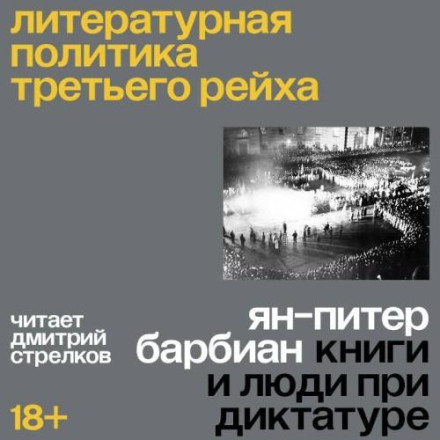
Literary Policy of the Third Reich
17 hrs. 34 min.
Language
Russian
Author
Jan-Pieter Barbian
Author
Jan-Pieter Barbian
Narrator
Dmitry Strelkov
Narrator
Dmitry Strelkov
Description
On May 10, 1933, in Berlin at Opernplatz, and then throughout Germany, tens of thousands of books were burned—an event that marked the beginning of the widespread affirmation and development of the Third Reich’s totalitarian policy in the literary sphere. Historian Jan-Pieter Barbian, a specialist in the study of relations between power and subordination, uses a wide range of sources to describe how the book market turned into a key tool of political propaganda. Control over writers, publishers, bookstores, and libraries; their persecution; and the growth of self-censorship: the author reconstructs a detailed picture of society under the yoke of dictatorship, where anyone who didn’t openly oppose it inevitably became part of the mechanism that suppresses freedom and independence—whether a writer, editor, or ordinary reader.
100%
41:32
01
37:09
02
59:21
03
27:05
04
41:55
05
49:31
06
14:41
07
12:57
08
23:34
09
21:51
10
28:42
11
12:59
12
17:08
13
1:00:17
14
58:44
15
1:00:13
16
29:28
17
29:25
18
13:54
19
53:30
20
25:08
21
15:43
22
14:06
23
22:23
24
55:51
25
1:24:07
26
1:01:03
27
41:39
28
40:24
29
