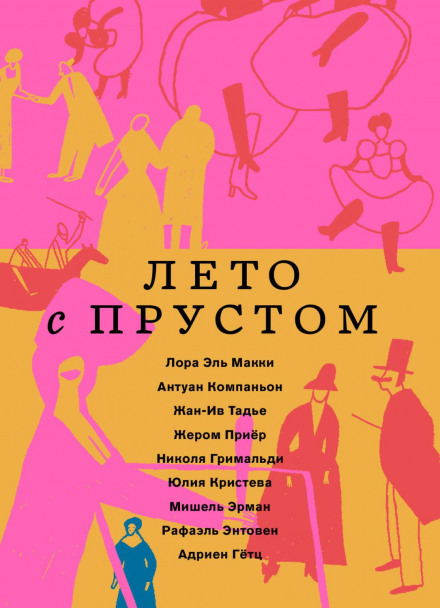
A Summer with Proust
5 hrs. 4 min.
Language
Russian
Author
Laura El Mackie
Author
Laura El Mackie
Narrator
Natalya Kaznacheeva
Narrator
Andrey Kurilov
Description
Marcel Proust’s novel (1871–1922) In Search of Lost Time has been an enduring challenge to readers around the world ever since its publication in the 1910s–1920s. What is it—an immense cathedral-book in the tradition of the big novels of the 19th century, a panoramic view of refined European culture of the “end of the beautiful era” swept away by world wars, an experience of philosophical reflection on memory through literature, the author’s attempt to understand himself, his thoughts on what it means to write a book and how to dare to do it—or, at last, an invitation to the reader to truly grasp what it means to read a book? All of this together—and much more—are contemplated from different angles by nine of Proust’s readers: literary scholars, philosophers, and art historians. And of course, Search is also a challenge for the translator: in this book, Elena Baeva takes it on, opening up a fragmentary but at the same time unified view of the body of texts of the outstanding French writer.
