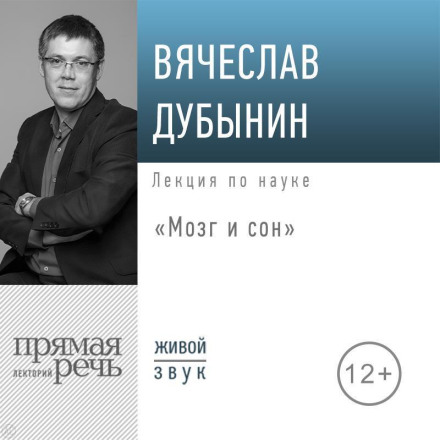
Lecture: "The Brain and Sleep"
2 hrs. 7 min.
Language
Russian
Author
Vyacheslav Dubynin
Author
Vyacheslav Dubynin
Narrator
Vyacheslav Dubynin
Narrator
Vyacheslav Dubynin
Description
There is a myth that outstanding people sleep very little. For example, Margaret Thatcher slept about five hours a day, preferring to spend her time styling her hair rather than sleeping. The legend also says that Leonardo da Vinci spent only 15 minutes asleep, alternating it with four hours of work. Neurophysiologist Vyacheslav Dubynin can’t confirm the accuracy of these stories, but he is confident about the negative consequences of such sleep schedules. During sleep, the brain performs important functions: it clears metabolic waste, processes information from the day, and helps the body recover. The lecture will cover the following topics:
— where the biological clock is located in the brain;
— methods of studying the nervous system through electroencephalography (EEG);
— differences between slow-wave and paradoxical (REM) sleep;
— the nature and significance of dreams;
— how sleeping pills work and the use of melatonin.
We’ll also discuss why drowsiness comes after eating, and what is more effective at fighting it—stress or caffeine. «Sleep is not uniform, and even the ancient Greeks understood this by distinguishing quiet sleep and sleep with dreams. They even had two sleep gods—Hypnos and Morpheus. Modern scientists have greatly expanded their knowledge about sleep, although there is still much unknown,» notes Vyacheslav Dubynin. Vyacheslav Dubynin is Doctor of Biological Sciences, Professor at the Department of Physiology of Humans and Animals at the Faculty of Biology of Lomonosov Moscow State University, a specialist in general physiology, neurobiology, and psychopharmacology. He is the author of more than 100 scientific publications and several textbooks, as well as a popular science book «The Brain and Its Needs».
— where the biological clock is located in the brain;
— methods of studying the nervous system through electroencephalography (EEG);
— differences between slow-wave and paradoxical (REM) sleep;
— the nature and significance of dreams;
— how sleeping pills work and the use of melatonin.
We’ll also discuss why drowsiness comes after eating, and what is more effective at fighting it—stress or caffeine. «Sleep is not uniform, and even the ancient Greeks understood this by distinguishing quiet sleep and sleep with dreams. They even had two sleep gods—Hypnos and Morpheus. Modern scientists have greatly expanded their knowledge about sleep, although there is still much unknown,» notes Vyacheslav Dubynin. Vyacheslav Dubynin is Doctor of Biological Sciences, Professor at the Department of Physiology of Humans and Animals at the Faculty of Biology of Lomonosov Moscow State University, a specialist in general physiology, neurobiology, and psychopharmacology. He is the author of more than 100 scientific publications and several textbooks, as well as a popular science book «The Brain and Its Needs».
100%
2:07:50
Лекция «Мозг и сон»
