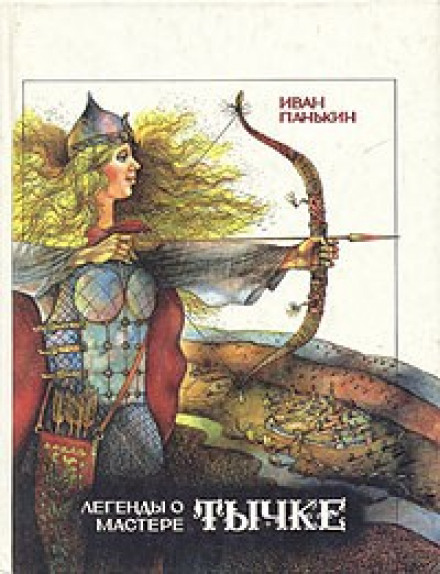
Legends of Master Tychka
7 hrs. 4 min.
Language
Russian
Author
Ivan Pankin
Author
Ivan Pankin
Narrator
Leonid Kareev
Narrator
Leonid Kareev
Description
Pardon the reader if, in my book, they find stories shorter than a handful. We, the people of Tula, are a busy lot and we have no time to talk in big, fancy words. We don’t even let ourselves that luxury of addressing each other with long and grand names during our busy hours. Our fathers used patronymics only on the patronal (local) holidays and on Sundays. Tula people have always loved short names so they can pass freely through the throat, not get stuck in teeth, and fly through the workshop like a bullet: "Chizh!", "Levsha-a!", "Tychka!" And at work I’m called Iv, a name shorter than a rifle shot—though my mother, naively, thought that once I learned to read and write, they would call me not only by my full name—Ivan—but also by my patronymic—Fyodorov.
Be that as it may, in our city it goes like this: after the "a"-s, "buki," "vedi," no one calls anyone Uncle Feya. And if you like praise and having bells of brass blaring for you, then there’s nothing to do in Tula. That’s what our grandfathers used to say, and that’s what we say too. So, since that’s the way things are, I won’t waste any more time and will proceed straight to the stories about the extraordinary master Tychka—who, without saying a word, with nothing but his hands, could make an entire city laugh, and if a need ever made him speak, he could drive the word in like a nail—not only into a person’s head, but even into the ax’s poll.
Be that as it may, in our city it goes like this: after the "a"-s, "buki," "vedi," no one calls anyone Uncle Feya. And if you like praise and having bells of brass blaring for you, then there’s nothing to do in Tula. That’s what our grandfathers used to say, and that’s what we say too. So, since that’s the way things are, I won’t waste any more time and will proceed straight to the stories about the extraordinary master Tychka—who, without saying a word, with nothing but his hands, could make an entire city laugh, and if a need ever made him speak, he could drive the word in like a nail—not only into a person’s head, but even into the ax’s poll.
100%
00:35
00_Legendy_o_mastere_Tychke
28:53
01_Legendy_o_mastere_Tychke
23:55
02_Legendy_o_mastere_Tychke
26:56
03_Legendy_o_mastere_Tychke
28:27
04_Legendy_o_mastere_Tychke
26:40
05_Legendy_o_mastere_Tychke
27:09
06_Legendy_o_mastere_Tychke
29:40
07_Legendy_o_mastere_Tychke
25:19
08_Legendy_o_mastere_Tychke
26:24
09_Legendy_o_mastere_Tychke
29:11
10_Legendy_o_mastere_Tychke
29:46
11_Legendy_o_mastere_Tychke
28:27
12_Legendy_o_mastere_Tychke
27:39
13_Legendy_o_mastere_Tychke
21:25
14_Legendy_o_mastere_Tychke
21:12
15_Legendy_o_mastere_Tychke
22:28
16_Legendy_o_mastere_Tychke
