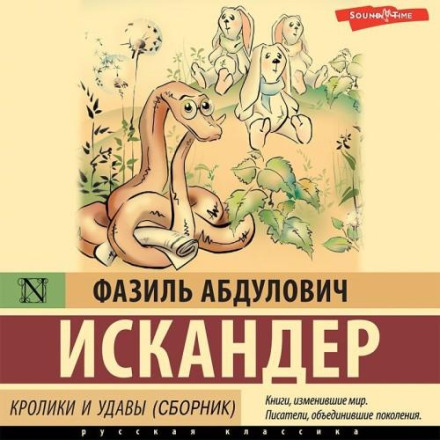
Rabbits and Boa Constrictors. The Stopover of Man
14 hrs. 11 min.
Language
Russian
Author
Fazil Iskander
Author
Fazil Iskander
Narrator
Georgy Arsenyev
Narrator
Georgy Arsenyev
Description
The parable “Rabbits and Boas” was, like most of Iskander’s “Soviet-era” masterpieces, written “away in a drawer.” It was first published abroad, and only in 1986 did it appear for Russian readers—causing a scandal comparable only to the lifetime publications of Saltykov-Shchedrin’s biting fairy tales. What is the power of the mighty boas over naive, simple-minded rabbits based on? Fear—dazzling, irrational, paralyzing terror. What is the idea of the fiercely brave rabbit—trying to throw off this bloodthirsty power—based on? On the simple denial of fear: what can you frighten those who, in principle, have nothing to lose with? But why are the rabbits even more dissatisfied with such a revolutionary idea than their crawling masters and executioners? Perhaps because they, too—accustomed to living in “small, but charming injustice” of theft and bribery—fear a change of power far more than the possibility of being eaten.
100%
1
28:05
01
52:42
02
1:06:24
03
34:36
04
49:56
05
34:42
06
31:35
07
36:52
08
40:02
09
1
21:09
01. Знакомство с героем
15:04
02. Зана
26:03
03. Две женщины
31:18
04. Сердце
29:39
05. Время большого везенья
18:40
06. Охотник-ясновидец
45:29
07. Тайга и море
47:30
08. Идеалист
2:04:03
09. Мальчики и первая любовь
21:26
10. Беседы с Виктором Максимовичем
1:03:34
11. Девушка Лора и лошадник Чагу
26:54
12. Вечер в саду
06:10
13. Последнее
