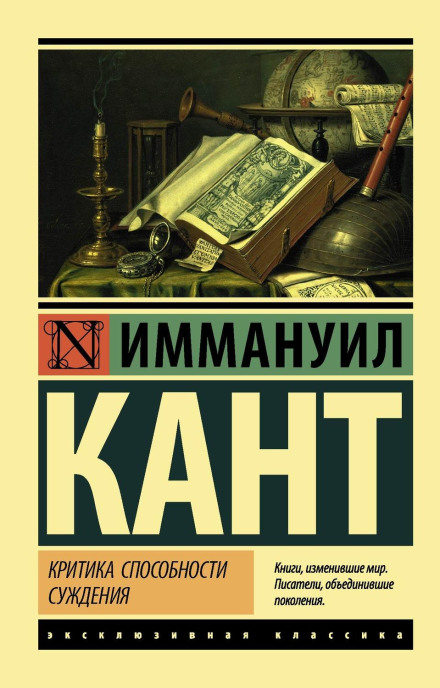
Critique of Judgment
16 hrs. 4 min.
Description
The greatest philosopher of Western Europe and a leading thinker of the Enlightenment period discusses the moral world of a person and turns to the notions of the beautiful, the sublime, and the useful! Immanuel Kant is one of the most influential philosophers in history, the author of many works, but his three main works—“Critique of Pure Reason,” “Critique of Practical Reason,” and “Critique of the Power of Judgment”—are the most significant and debated. They are interesting because in them Immanuel Kant offers new and original approaches to philosophy that had a huge impact on the development of this science. In “Critique of Pure Reason,” he introduces the concept of a priori knowledge, which became the foundation for many subsequent philosophical discussions. In “Critique of Practical Reason,” he formulates his categorical imperative, which became one of the best-known ethical principles. Finally, in “Critique of the Power of Judgment,” the philosopher explores questions of aesthetics and the theory of art, offering new ideas about how we perceive beauty and harmony.
