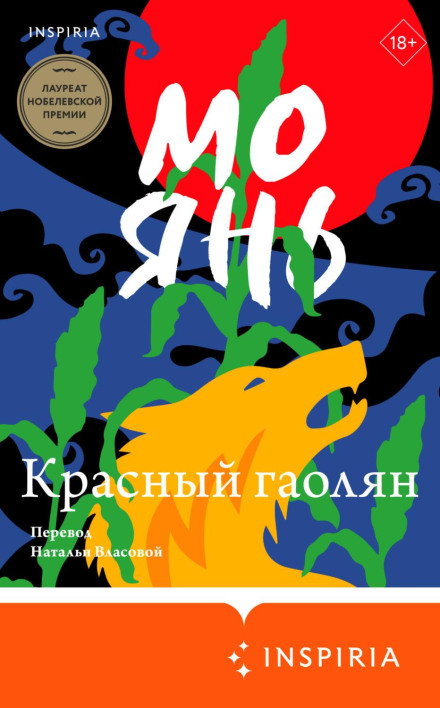
Red Sorghum
17 hrs. 31 min.
Description
Mo Yan’s Nobel Prize-winning novel is an extensive narrative about China’s fate in the twentieth century, revealed through the dramatic story of one family.
The action takes place in Gaomi county from the 1920s to the 1970s, during a period of changes and trials: Japanese occupation, civil war, the struggle for land, the arrival of communists to power, and the Great Leap Forward led by Mao Zedong. Against this backdrop, the story unfolds of a girl who is married to a well-off distillery owner, and her forbidden love for a criminal. Their relationship, built on passion, violence, and the struggle to survive, symbolizes the unbreakable force of the human spirit.
The story is told from the perspective of the grandson of the heroes, who remembers the fate of his ancestors—filled with tragedies, courage, and unexpected tenderness. The main characters are ordinary people caught in historical whirlpools—they lose and find themselves, and face cruelty, betrayal, self-sacrifice, and true love.
Mo Yan’s style is powerful and vivid: he blends realism with folklore and magical elements. His prose is saturated with smells, sounds, and colors that you can’t tear yourself away from. This is a work in which the inexorable beauty of the world makes your heart tremble.
The film adaptation of the book—“Red Sorghum,” directed by Zhang Yimou in 1987—caused a sensation and brought international recognition to Chinese cinema.
The action takes place in Gaomi county from the 1920s to the 1970s, during a period of changes and trials: Japanese occupation, civil war, the struggle for land, the arrival of communists to power, and the Great Leap Forward led by Mao Zedong. Against this backdrop, the story unfolds of a girl who is married to a well-off distillery owner, and her forbidden love for a criminal. Their relationship, built on passion, violence, and the struggle to survive, symbolizes the unbreakable force of the human spirit.
The story is told from the perspective of the grandson of the heroes, who remembers the fate of his ancestors—filled with tragedies, courage, and unexpected tenderness. The main characters are ordinary people caught in historical whirlpools—they lose and find themselves, and face cruelty, betrayal, self-sacrifice, and true love.
Mo Yan’s style is powerful and vivid: he blends realism with folklore and magical elements. His prose is saturated with smells, sounds, and colors that you can’t tear yourself away from. This is a work in which the inexorable beauty of the world makes your heart tremble.
The film adaptation of the book—“Red Sorghum,” directed by Zhang Yimou in 1987—caused a sensation and brought international recognition to Chinese cinema.
