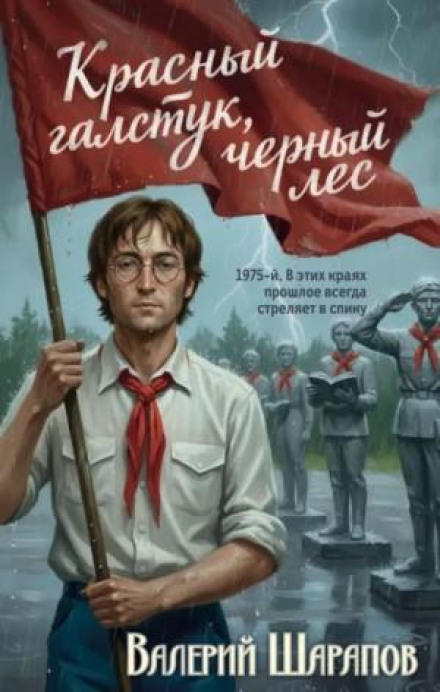
Red Tie, Black Forest
6 hrs. 15 min.
Language
Russian
Author
Valery Sharapov
Author
Valery Sharapov
Narrator
Andron Sergeyev
Narrator
Andron Sergeyev
Description
June 1975. Western Ukraine. A pioneer camp lost among the deep, silent Carpathian forests.
After an evening headcount, three boys disappear without a trace. Their belongings remain where they were; the beds aren’t disturbed— as if they had just stepped out for a moment and simply didn’t come back. The camp is closed-type, guarded, for the children of high officials, and the authorities demand only one thing: no publicity. But the more insistently they order everyone to be silent, the clearer it becomes that someone here is lying.
Along with an operations team from Moscow, investigator Tumanskiy arrives. He quickly realizes that the director is more afraid for his own future than for the children’s safety; however, the real power in the camp does not belong to him. The main figure here is the senior counselor Nikiphor Guz, nicknamed John: round spectacles, a stone face, and influence that rests not on his position, but on fear and practiced obedience. Expert Grayva feels a troubling sense of recognition: from the depths of her memory, the image of a boy from the past rises— frighteningly similar to John. She doesn’t get the chance to confirm it.
At dawn, Nikiphor is found in the forest— hanging from an oak. It looks like suicide. But the examination establishes that he was hanged after he was already dead.
Tumanskiy understands: the disappearance of the children and John’s death are connected by one secret that the adults are hiding too carefully. All that’s left is to find out what price they’re willing to pay so that the truth never comes out.
After an evening headcount, three boys disappear without a trace. Their belongings remain where they were; the beds aren’t disturbed— as if they had just stepped out for a moment and simply didn’t come back. The camp is closed-type, guarded, for the children of high officials, and the authorities demand only one thing: no publicity. But the more insistently they order everyone to be silent, the clearer it becomes that someone here is lying.
Along with an operations team from Moscow, investigator Tumanskiy arrives. He quickly realizes that the director is more afraid for his own future than for the children’s safety; however, the real power in the camp does not belong to him. The main figure here is the senior counselor Nikiphor Guz, nicknamed John: round spectacles, a stone face, and influence that rests not on his position, but on fear and practiced obedience. Expert Grayva feels a troubling sense of recognition: from the depths of her memory, the image of a boy from the past rises— frighteningly similar to John. She doesn’t get the chance to confirm it.
At dawn, Nikiphor is found in the forest— hanging from an oak. It looks like suicide. But the examination establishes that he was hanged after he was already dead.
Tumanskiy understands: the disappearance of the children and John’s death are connected by one secret that the adults are hiding too carefully. All that’s left is to find out what price they’re willing to pay so that the truth never comes out.
100%
12:31
Красный галстук, черный лес 01
05:42
Красный галстук, черный лес 02
10:33
Красный галстук, черный лес 03
06:36
Красный галстук, черный лес 04
04:33
Красный галстук, черный лес 05
05:15
Красный галстук, черный лес 06
05:29
Красный галстук, черный лес 07
07:56
Красный галстук, черный лес 08
07:43
Красный галстук, черный лес 09
04:29
Красный галстук, черный лес 10
08:06
Красный галстук, черный лес 11
05:04
Красный галстук, черный лес 12
06:51
Красный галстук, черный лес 13
07:20
Красный галстук, черный лес 14
08:37
Красный галстук, черный лес 15
04:27
Красный галстук, черный лес 16
06:02
Красный галстук, черный лес 17
08:06
Красный галстук, черный лес 18
06:12
Красный галстук, черный лес 19
04:34
Красный галстук, черный лес 20
06:58
Красный галстук, черный лес 21
05:24
Красный галстук, черный лес 22
10:16
Красный галстук, черный лес 23
10:37
Красный галстук, черный лес 24
07:15
Красный галстук, черный лес 25
10:11
Красный галстук, черный лес 26
06:37
Красный галстук, черный лес 27
08:56
Красный галстук, черный лес 28
06:58
Красный галстук, черный лес 29
08:11
Красный галстук, черный лес 30
06:38
Красный галстук, черный лес 31
05:36
Красный галстук, черный лес 32
07:04
Красный галстук, черный лес 33
04:46
Красный галстук, черный лес 34
04:37
Красный галстук, черный лес 35
05:32
Красный галстук, черный лес 36
06:14
Красный галстук, черный лес 37
05:17
Красный галстук, черный лес 38
09:30
Красный галстук, черный лес 39
06:10
Красный галстук, черный лес 40
05:54
Красный галстук, черный лес 41
10:12
Красный галстук, черный лес 42
09:47
Красный галстук, черный лес 43
08:38
Красный галстук, черный лес 44
08:43
Красный галстук, черный лес 45
04:13
Красный галстук, черный лес 46
04:56
Красный галстук, черный лес 47
04:37
Красный галстук, черный лес 48
04:03
Красный галстук, черный лес 49
05:42
Красный галстук, черный лес 50
04:53
Красный галстук, черный лес 51
05:58
Красный галстук, черный лес 52
04:51
Красный галстук, черный лес 53
04:42
Красный галстук, черный лес 54
03:49
Красный галстук, черный лес 55
06:01
Красный галстук, черный лес 56
