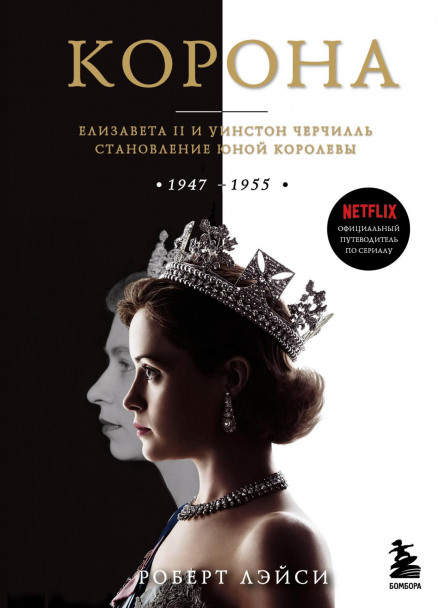
The Crown: The Official Companion. Queen Elizabeth II and Winston Churchill. The Making of a Young Queen
9 hrs. 2 min.
Language
Russian
Author
Robert Lacey
Author
Robert Lacey
Narrator
Rustam Osmanov
Narrator
Rustam Osmanov
Description
“I’m a queen, but I’m also a woman. And a wife.”
Queen Elizabeth Princess Elizabeth Windsor never thought she would become queen at such an early age. At twenty-five, she was a happy wife and mother, trying to find a balance between family life and the duties of a princess. However, the news of her father’s sudden death from cancer flipped Elizabeth’s life: now she had to ascend the throne and become a symbol of a country with the greatest history, abandoning personal desires and ambitions.
But the series “The Crown,” which has won many prestigious awards in recent years, tells more than just that. First and foremost, it is the story of Elizabeth’s relationship with her husband, Philip Mountbatten.
That is why the first episode of the series does not begin with the accession of Queen Elizabeth II to the throne in February 1952, nor with her ceremonial coronation in June the following year—although both events formed the foundation for this story.
This book, devoted to the first two seasons of the series, will show how its creators carefully researched historical facts and tried to skillfully weave artistic fiction into them. It will explain that the goal of the series is not only to entertain the viewer, but also to portray on screen the great characters and the large-scale themes that defined the life of the country—as well as to reveal the meaning of the unusual events that took place in its history. The highest power of the long-standing and contemporary British monarchy lies in its ability to evoke sincere feelings—sometimes angry and hostile, more often curious and admiring, but always extremely sentimental. That is why this story has captured the hearts of TV audiences around the world for many years—because each person finds in it not only the story of one of the greatest dynasties in history, but also ordinary problems that are understandable to everyone.
Queen Elizabeth Princess Elizabeth Windsor never thought she would become queen at such an early age. At twenty-five, she was a happy wife and mother, trying to find a balance between family life and the duties of a princess. However, the news of her father’s sudden death from cancer flipped Elizabeth’s life: now she had to ascend the throne and become a symbol of a country with the greatest history, abandoning personal desires and ambitions.
But the series “The Crown,” which has won many prestigious awards in recent years, tells more than just that. First and foremost, it is the story of Elizabeth’s relationship with her husband, Philip Mountbatten.
That is why the first episode of the series does not begin with the accession of Queen Elizabeth II to the throne in February 1952, nor with her ceremonial coronation in June the following year—although both events formed the foundation for this story.
This book, devoted to the first two seasons of the series, will show how its creators carefully researched historical facts and tried to skillfully weave artistic fiction into them. It will explain that the goal of the series is not only to entertain the viewer, but also to portray on screen the great characters and the large-scale themes that defined the life of the country—as well as to reveal the meaning of the unusual events that took place in its history. The highest power of the long-standing and contemporary British monarchy lies in its ability to evoke sincere feelings—sometimes angry and hostile, more often curious and admiring, but always extremely sentimental. That is why this story has captured the hearts of TV audiences around the world for many years—because each person finds in it not only the story of one of the greatest dynasties in history, but also ordinary problems that are understandable to everyone.
This audiobook has been removed at the request of the copyright holder.
