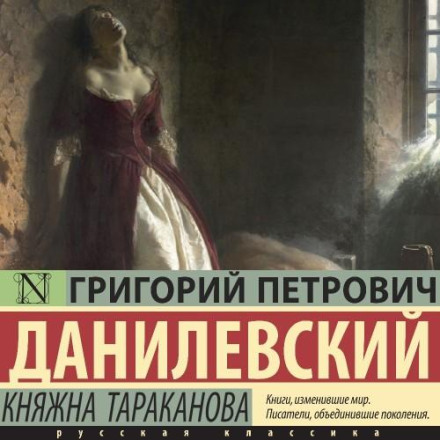
Princess Tarakanova
4 hrs. 1 min.
Language
Russian
Author
Grigory Danilevsky
Author
Grigory Danilevsky
Narrator
Glebov Evgeny
Narrator
Glebov Evgeny
Description
For all fans of historical novels!
About the most mysterious page of Russian history. About the fate of Princess Tarakanova. A beauty-adventurer—the last of the House of Romanov.
In Russian tradition, Nazism is called “fascism.” Umberto Eco, a cultural scholar, publicist, and philosopher, doesn’t dispute the terminological mismatch. On the contrary, in the key essay of the collection he outlines shared principles for different totalitarian regimes and helps rethink the roots of what he calls “eternal fascism” in its historical—and, alas, contemporary—manifestations. This selection of essays gives food for thought about hatred, about war, about religion—reflections that unite those for whom the world is not indifferent, those who realize that the victory of reason over regression is never final and that inner work for each of us is always required. Is it a matter of morality, ethics, conscience, decency, citizenship—the differences are, again, only in terms. The essence is one: the lessons of history are useful only if people aren’t too lazy to think them through. And mental labor alongside Eco is usually not a burden; a conversation with him is both a joy and entertainment.
About the most mysterious page of Russian history. About the fate of Princess Tarakanova. A beauty-adventurer—the last of the House of Romanov.
In Russian tradition, Nazism is called “fascism.” Umberto Eco, a cultural scholar, publicist, and philosopher, doesn’t dispute the terminological mismatch. On the contrary, in the key essay of the collection he outlines shared principles for different totalitarian regimes and helps rethink the roots of what he calls “eternal fascism” in its historical—and, alas, contemporary—manifestations. This selection of essays gives food for thought about hatred, about war, about religion—reflections that unite those for whom the world is not indifferent, those who realize that the victory of reason over regression is never final and that inner work for each of us is always required. Is it a matter of morality, ethics, conscience, decency, citizenship—the differences are, again, only in terms. The essence is one: the lessons of history are useful only if people aren’t too lazy to think them through. And mental labor alongside Eco is usually not a burden; a conversation with him is both a joy and entertainment.
