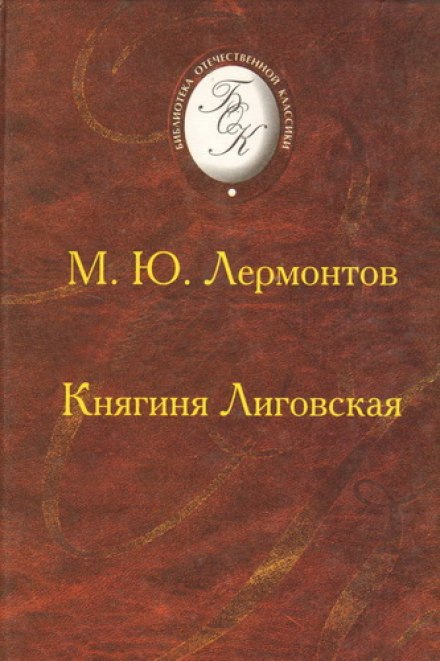
Princess Ligovskaya
4 hrs. 29 min.
Language
Russian
Author
Mikhail Lermontov
Author
Mikhail Lermontov
Narrator
Oleg Fedorov
Narrator
Oleg Fedorov
Description
A novel about the lives of officers and officials in St. Petersburg. Love, struggles for status in high society, intrigue, inequality—these are the themes of M. Yu. Lermontov’s dramatic work.
The history of the creation of the work “The Princess Ligovskaya”:
Lermontov began writing “A Novel in The Princess Ligovskaya” in 1836, following the play “Two Brothers.” The central episode from that play—when the hero meets his beloved woman—Lermontov included in “The Princess Ligovskaya,” and later in “A Hero of Our Time.” One of the monologues of the main character of the play “Two Brothers,” Alexander Radin, Lermontov “transmitted” to Pechorin—the main hero of his novel. Such relationships between отдельных episodes, scenes, striking phrases in prose, or stanzas and lines in poems are a characteristic feature of Lermontov’s “technique” of artistic writing—this has been noted by researchers more than once. But they speak not only about “technique”; they also connect the thoughts, feelings, and images that are dear to the artist into “links” of a single chain of creative work, when the artist searches for the most perfect embodiment of them.
In “The Princess Ligovskaya,” Lermontov depicted a representative of the Russian young generation of that era. The poet well knew the moods, thoughts, feelings, and way of life of his contemporaries—as well as the milieu they faced: fighting it, yet unable to break away from it.
To this conflict of Lermontov’s generation of young nobles with their environment in “The Princess Ligovskaya” is added an accidental but potentially serious collision of Pechorin (as Lermontov named the main hero of his second novel) with the poor but proud official Krasinsky.
Work on the novel “The Princess Ligovskaya” was interrupted due to Lermontov’s arrest and his exile to the Caucasus for “unacceptable poems” that he wrote in response to Pushkin’s death. Why Lermontov did not return to the interrupted work on the “prolonged” novel (as he himself called it in a letter to his friend and assistant S. A. Raevsky) is difficult to say. Researchers believe that the process was hindered by the overly obvious closeness of the images of Prince Ligovsky and his wife Vera, as well as E. N. Negurova, to their prototypes. However, new impressions brought to him by his Caucasus exile played a significant—and not small!—role here.
A new meeting with the Caucasus inspired him to create a work of greater scope and significance than “The Princess Ligovskaya.” But precisely this—unfinished—work stands closest, more than any other, to Lermontov’s best novel, “A Hero of Our Time.”
Strangely enough, of all the major Lermontov works, the history of this one has been studied the least. Neither in the poet’s letters nor in his “Autobiographical Notes” are there any details about when work on the novel began, or about which parts of its novellas were written earlier and which later—when the author had the idea to divide it into two parts, gathering in the first what other characters tell about the main hero, and in the second what he himself thinks, says, and does.
It is least plausible to think that Lermontov “by chance” abandoned the concept of a secular-life novel, which “The Princess Ligovskaya” could have become, and “by chance” opened a new genre of the social-psychological novel, which “A Hero of Our Time” turned out to be.
Lermontov begins work on his new novel, feeling the “highest historical necessity” to create an image of a hero who lives, thinks, and acts “in the spirit of the times.” In connection with the question of the role of “chance” that we have raised in a great writer’s creative activity, let us recall interesting reflections on this from young Herzen, who belonged to Lermontov’s generation.
“Time has come to leave behind the unfortunate delusion that art depends on the artist’s personal taste—or on chance,” Herzen wrote. “Religion, science, and art least of all depend on everything accidental and personal. To begin with, the great artist cannot be out of date. Independence from the spirit of the times is granted to mediocrity alone.” Herzen wrote this in the late 1830s in one of the drafts of an article on architecture. This draft begins with the words: “There is a higher historical necessity, neglecting which will lead to ugliness.” Isn’t it striking—yet lawful—that the direction of creative aspirations of these two great writers of words matches so closely?!
The novel attracted general attention, and the critic of that time stated in the journal “Domestic Notes”: “A Hero of Our Time” found in Lermontov the same great poet in prose as in his verse.” Belinsky wrote of the Lermontov book: “No one and nothing will stop its course and distribution, until it sells out—then it will appear as the fourth edition, and that will continue as long as Russians speak to Russians in Russian.”
The history of the creation of the work “The Princess Ligovskaya”:
Lermontov began writing “A Novel in The Princess Ligovskaya” in 1836, following the play “Two Brothers.” The central episode from that play—when the hero meets his beloved woman—Lermontov included in “The Princess Ligovskaya,” and later in “A Hero of Our Time.” One of the monologues of the main character of the play “Two Brothers,” Alexander Radin, Lermontov “transmitted” to Pechorin—the main hero of his novel. Such relationships between отдельных episodes, scenes, striking phrases in prose, or stanzas and lines in poems are a characteristic feature of Lermontov’s “technique” of artistic writing—this has been noted by researchers more than once. But they speak not only about “technique”; they also connect the thoughts, feelings, and images that are dear to the artist into “links” of a single chain of creative work, when the artist searches for the most perfect embodiment of them.
In “The Princess Ligovskaya,” Lermontov depicted a representative of the Russian young generation of that era. The poet well knew the moods, thoughts, feelings, and way of life of his contemporaries—as well as the milieu they faced: fighting it, yet unable to break away from it.
To this conflict of Lermontov’s generation of young nobles with their environment in “The Princess Ligovskaya” is added an accidental but potentially serious collision of Pechorin (as Lermontov named the main hero of his second novel) with the poor but proud official Krasinsky.
Work on the novel “The Princess Ligovskaya” was interrupted due to Lermontov’s arrest and his exile to the Caucasus for “unacceptable poems” that he wrote in response to Pushkin’s death. Why Lermontov did not return to the interrupted work on the “prolonged” novel (as he himself called it in a letter to his friend and assistant S. A. Raevsky) is difficult to say. Researchers believe that the process was hindered by the overly obvious closeness of the images of Prince Ligovsky and his wife Vera, as well as E. N. Negurova, to their prototypes. However, new impressions brought to him by his Caucasus exile played a significant—and not small!—role here.
A new meeting with the Caucasus inspired him to create a work of greater scope and significance than “The Princess Ligovskaya.” But precisely this—unfinished—work stands closest, more than any other, to Lermontov’s best novel, “A Hero of Our Time.”
Strangely enough, of all the major Lermontov works, the history of this one has been studied the least. Neither in the poet’s letters nor in his “Autobiographical Notes” are there any details about when work on the novel began, or about which parts of its novellas were written earlier and which later—when the author had the idea to divide it into two parts, gathering in the first what other characters tell about the main hero, and in the second what he himself thinks, says, and does.
It is least plausible to think that Lermontov “by chance” abandoned the concept of a secular-life novel, which “The Princess Ligovskaya” could have become, and “by chance” opened a new genre of the social-psychological novel, which “A Hero of Our Time” turned out to be.
Lermontov begins work on his new novel, feeling the “highest historical necessity” to create an image of a hero who lives, thinks, and acts “in the spirit of the times.” In connection with the question of the role of “chance” that we have raised in a great writer’s creative activity, let us recall interesting reflections on this from young Herzen, who belonged to Lermontov’s generation.
“Time has come to leave behind the unfortunate delusion that art depends on the artist’s personal taste—or on chance,” Herzen wrote. “Religion, science, and art least of all depend on everything accidental and personal. To begin with, the great artist cannot be out of date. Independence from the spirit of the times is granted to mediocrity alone.” Herzen wrote this in the late 1830s in one of the drafts of an article on architecture. This draft begins with the words: “There is a higher historical necessity, neglecting which will lead to ugliness.” Isn’t it striking—yet lawful—that the direction of creative aspirations of these two great writers of words matches so closely?!
The novel attracted general attention, and the critic of that time stated in the journal “Domestic Notes”: “A Hero of Our Time” found in Lermontov the same great poet in prose as in his verse.” Belinsky wrote of the Lermontov book: “No one and nothing will stop its course and distribution, until it sells out—then it will appear as the fourth edition, and that will continue as long as Russians speak to Russians in Russian.”
100%
04:58
1-01-01
05:00
1-01-02
05:19
1-01-03
05:10
1-01-04
04:53
1-02-01
05:14
1-02-02
07:21
1-02-03
04:49
1-03-01
05:09
1-03-02
04:05
1-03-03
04:00
1-03-04
05:02
1-03-05
06:09
1-03-06
05:08
1-04-01
05:17
1-04-02
05:42
1-04-03
05:08
1-05-01
03:47
1-05-02
04:18
1-05-03
05:03
1-06-01
05:05
1-06-02
05:47
1-06-03
05:08
1-06-04
04:14
1-06-05
03:31
1-06-06
05:07
1-07-01
04:30
1-07-02
03:51
1-07-03
05:03
1-08-01
05:17
1-08-02
07:29
1-08-03
05:12
1-09-01
06:57
1-09-02
05:03
1-09-03
05:12
2-01
06:17
2-02
05:07
3-01
05:16
3-02
05:19
3-03
07:28
3-04
05:01
4-01
04:55
4-02
06:33
5-01-01
02:32
5-01-02
05:11
5-02-01
07:07
5-02-02
05:04
5-03-01
05:10
5-03-02
06:05
5-03-03
05:06
6-01
03:33
6-02
04:27
6-03
