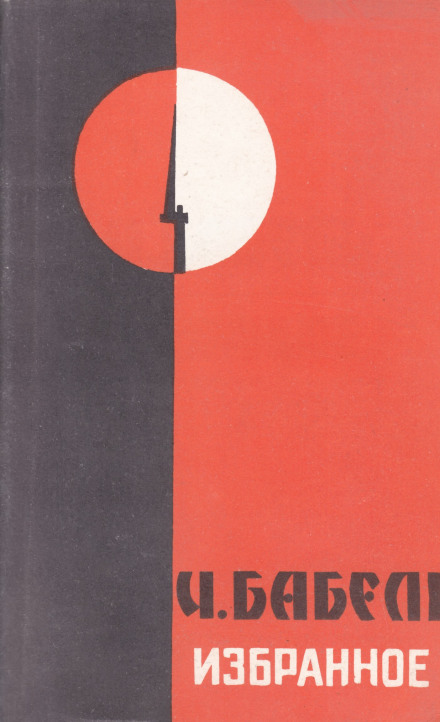
Selected Stories
12 hrs. 27 min.
Language
Russian
Author
Isaac Babel
Author
Isaac Babel
Narrator
Ilya Prudovsky
Narrator
Ilya Prudovsky
Description
Isaac Emmanuelovich Babel (original surname Bobel; June 30 (July 12) 1894, Odessa — January 27, 1940, Moscow) was a Russian Soviet writer, playwright, translator, and journalist.
Born in Odessa into a Jewish merchant family. The early 20th century was a time of social unrest and mass emigration of Jews from the Russian Empire. Babel survived the 1905 pogrom (a Christian family hid him), and his grandfather Shoyl was one of 300 Jews killed.
To enter the preparatory class of Nicholas I’s Odessa commercial school, Babel had to exceed the quota for Jewish students (10% within the Pale of Settlement, 5% outside it, and 3% for both capitals). Despite excellent marks that granted eligibility for enrollment, the place was given to another young man whose parents bribed the school administration. During one year of home education, Babel completed the curriculum of two classes. In addition to traditional subjects, he studied the Talmud and worked on music. After another unsuccessful attempt to enter Odessa University (again due to quotas), he ended up at the Kyiv Institute of Finance and Business.
There he met his future wife, Yevgeniya Gronfein. Speaking Yiddish, Russian, and French fluently, Babel wrote his first works in French, though they have not survived to the present. His first Russian-language stories were published in the journal “Letopis.” Then, on Maxim Gorky’s advice, he “went among people” and held several jobs.
In December 1917, Babel began working for the Cheka—a fact his acquaintances were long surprised by. In 1920 he served as a fighter and political worker in the Red Army’s cavalry units. In 1924 he published a number of stories in the journals “Lef” and “Krasnaya nov.” Later, those stories formed the cycles “Red Cavalry” and “Odessa Tales.” Babel managed to convey in Russian the stylistic flavor of literature created in Yiddish (especially noticeable in “Odessa Tales,” where, at times, the direct speech of his characters is a literal, under-the-text translation from Yiddish).
Soviet critics of those years, while acknowledging Babel’s talent and importance, pointed to “antipathy toward the working class cause” and accused him of “naturalism and an apology for the spontaneous element and romanticization of banditry.”
In “Odessa Tales,” Babel portrays, in a romantic key, the life of Jewish criminals in the early 20th century, finding in everyday usage traits of thieves and raiders, as well as the quirky character of craftsmen and small traders.
In 1928 Babel published the play “Sunset” (staged in the Second Moscow Art Theatre), and in 1935 the play “Maria.” Babel also wrote several screenplays. A master of the short story, Babel sought concision and precision—combining, in the images of his characters, plot situations, and descriptions, enormous temperament with an outwardly calm, impartial demeanor. The ornate, metaphor-heavy language of his early stories was later replaced by a strict, restrained narrative style.
In May 1939 Babel was arrested on charges of “anti-Soviet conspiratorial terrorist activity” and was executed on January 27, 1940. In 1954 he was posthumously rehabilitated.
Babel’s work had a huge influence on writers of the so-called “South Russian school” (Ilf, Petrov, Olesha, Kataev, Paustovsky, Svetlov, Bagritsky) and received wide recognition in the Soviet Union; his books were translated into many foreign languages.
Born in Odessa into a Jewish merchant family. The early 20th century was a time of social unrest and mass emigration of Jews from the Russian Empire. Babel survived the 1905 pogrom (a Christian family hid him), and his grandfather Shoyl was one of 300 Jews killed.
To enter the preparatory class of Nicholas I’s Odessa commercial school, Babel had to exceed the quota for Jewish students (10% within the Pale of Settlement, 5% outside it, and 3% for both capitals). Despite excellent marks that granted eligibility for enrollment, the place was given to another young man whose parents bribed the school administration. During one year of home education, Babel completed the curriculum of two classes. In addition to traditional subjects, he studied the Talmud and worked on music. After another unsuccessful attempt to enter Odessa University (again due to quotas), he ended up at the Kyiv Institute of Finance and Business.
There he met his future wife, Yevgeniya Gronfein. Speaking Yiddish, Russian, and French fluently, Babel wrote his first works in French, though they have not survived to the present. His first Russian-language stories were published in the journal “Letopis.” Then, on Maxim Gorky’s advice, he “went among people” and held several jobs.
In December 1917, Babel began working for the Cheka—a fact his acquaintances were long surprised by. In 1920 he served as a fighter and political worker in the Red Army’s cavalry units. In 1924 he published a number of stories in the journals “Lef” and “Krasnaya nov.” Later, those stories formed the cycles “Red Cavalry” and “Odessa Tales.” Babel managed to convey in Russian the stylistic flavor of literature created in Yiddish (especially noticeable in “Odessa Tales,” where, at times, the direct speech of his characters is a literal, under-the-text translation from Yiddish).
Soviet critics of those years, while acknowledging Babel’s talent and importance, pointed to “antipathy toward the working class cause” and accused him of “naturalism and an apology for the spontaneous element and romanticization of banditry.”
In “Odessa Tales,” Babel portrays, in a romantic key, the life of Jewish criminals in the early 20th century, finding in everyday usage traits of thieves and raiders, as well as the quirky character of craftsmen and small traders.
In 1928 Babel published the play “Sunset” (staged in the Second Moscow Art Theatre), and in 1935 the play “Maria.” Babel also wrote several screenplays. A master of the short story, Babel sought concision and precision—combining, in the images of his characters, plot situations, and descriptions, enormous temperament with an outwardly calm, impartial demeanor. The ornate, metaphor-heavy language of his early stories was later replaced by a strict, restrained narrative style.
In May 1939 Babel was arrested on charges of “anti-Soviet conspiratorial terrorist activity” and was executed on January 27, 1940. In 1954 he was posthumously rehabilitated.
Babel’s work had a huge influence on writers of the so-called “South Russian school” (Ilf, Petrov, Olesha, Kataev, Paustovsky, Svetlov, Bagritsky) and received wide recognition in the Soviet Union; his books were translated into many foreign languages.
Contents:
Poliak’s introductory article
Autobiography
Red Cavalry
Odessa Tales
Stories
Articles, speeches
Autobiography
Red Cavalry
Odessa Tales
Stories
Articles, speeches
100%
02:13
00-01-soderzhanie
58:04
00-02-vstupitelnaya-statya-polyaka
03:47
00-03-avtobiografiya
04:25
01-01-perehod-cherez-zbruch
06:01
01-02-kostel-v-novograde
09:57
01-03-pismo
04:38
01-04-nachalnik-konzapasa
17:23
01-05-pan-apolek
07:56
01-06-solntse-italii
06:42
01-07-gedali
07:31
01-08-moy-pervyy-gus
05:40
01-09-rabbi
04:12
01-10-put-v-brody
06:27
01-11-uchenie-o-tachanke
06:55
01-12-smert-dolgushova
03:30
01-13-kombrig-2
10:36
01-14-sashka-hristos
12:38
01-15-zhizneopisanie-pavlichenki-matveya-rodionycha
01:42
01-16-kladbische-v-kozine
02:31
01-17-prischepa
08:07
01-18-istoriya-odnoy-loshadi
06:14
01-19-konkin
05:59
01-20-berestechko
08:20
01-21-sol
05:49
01-22-vecher
13:44
01-23-afonka-bida
09:24
01-24-u-svyatogo-valenta
15:28
01-25-eskadronnyy-trunov
13:18
01-26-ivany
02:44
01-27-prodolzhenie-istorii-odnoy-loshadi
09:15
01-28-vdova
07:20
01-29-zamoste
09:52
01-30-izmena
07:43
01-31-chesniki
07:22
01-32-posle-boya
05:54
01-33-pesnya
05:12
01-34-syn-rabbi
11:22
01-35-argamak
14:34
02-01-korol
20:42
02-02-kak-eto-delalos-v-odesse
19:30
02-03-otets
14:30
02-04-lyubka-kazak
07:01
03-01-elya-isaakovich-i-margarita-prokofevna
14:58
03-02-shabos-nahamu
05:36
03-03-liniya-i-tsvet
10:07
03-04-iisusov-greh
26:09
03-05-istoriya-moey-golubyatni
15:58
03-06-pervaya-lyubov
05:50
03-07-konets-svyatogo-ippatiya
03:27
03-08-ty-promorgal-kapitan
19:34
03-09-konets-bogadelni
15:23
03-10-doroga
20:14
03-11-v-podvale
16:11
03-12-probuzhdenie
17:18
03-13-karl-yankel
17:26
03-14-gyui-de-moppasan
11:36
03-15-neft
12:25
03-16-ulitsa-dante
11:02
03-17-froim-grach
05:04
03-18-tsulak
09:35
03-19-di-grasso
13:24
03-20-potseluy
04:51
03-21-sud
03:47
03-22-vospominaniya
10:04
03-23-nachalo
02:52
04-01-v-odesse-kazhdyy-yunosha
11:23
04-02-rabota-nad-rasskazom
09:40
04-03-rech-na-1-vsesoyuznom-sezde-soyuza-pisateley
08:23
04-04-o-rabotnikah-novoy-kultury
27:59
04-05-puteshestvie-vo-frantsiyu
05:05
04-06-maksim-gorkiy
