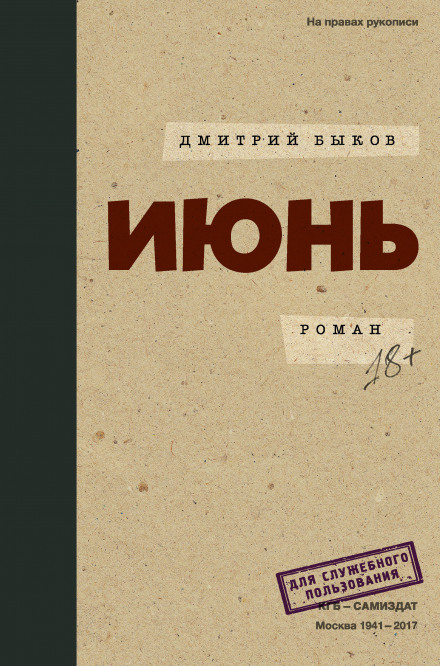
June
13 hrs. 59 min.
Language
Russian
Author
Dmitry Bykov
Author
Dmitry Bykov
Narrator
Kirill Petrov
Narrator
Kirill Petrov
Description
Dmitry Bykov’s new novel is, as always, a bright experiment. Three different stories are united by time and place. The late 1930s and the middle of 1941. Students of the IFELI, a return from exile, a mad philologist who decided he had found a way to influence the country’s main decisions with texts. In the air hangs a sense of war—the war both feared and rushed by the heroes of the novel. It seems it will cut all the knots…
When, in October 1940, Misha Gvirtsman was expelled from the institute, he suddenly had a lot of free time.
How was he supposed to spend it? Staying at home was unthinkable; his mother’s sighs drove him into a white, wild, unjust rage. He barely managed to stop her from going to the rector—from filing a statement admitting her son’s guilt—and she calmed down, but didn’t truly settle. The worst were the offers, every hour, to “go eat something,” the slyly placed treats. But the evening coughing of his father and the deliberately cheerful conversations about anything at all—most often about newspaper news—were no better. He couldn’t stay at home. At first he just wandered around the city; September was warm, almost summery, and his feet carried him as far from Sokolniki as possible, so “no-no-no”—not to meet someone from the institute. Nobody came across him, nobody called, nobody suggested getting together: for some he was a contagious case; for others they felt guilty. He did allow that some might be happy, but hardly many.
Most of his time went into painting over real memories and inventing new ones—embedding them into his picture of the world. He considered himself on an academic leave. Didn’t Yevsevich tell him—muttering under his breath, and even winking—that nothing, he’d come back in six months, everyone would forget, he’d recover? If only last spring someone had dared to hint that he would be comforting himself with Yevsevich’s winking—this adaptable opportunist, forever dangling on the edge, fearing expulsion yet still somehow immortal! Once every semester, Yevsevich changed his concept of the history of Russian criticism that he taught in a dim, half-whispered manner—and at times he had been the most impressive lecturer in Moscow. They kept him around, it seemed, only to show the results of a re-forging. Unclear whether it was a bad example or a good one. But here’s what will happen to whoever has been reforged—or to whoever, in his soul, didn’t get reforged! Yevsevich was unquestionably “not ours.” “Our own” can’t be like that. And now, when Yevsevich leaned near the dean’s office, furtively and half-whispering, regretted him, Misha Gvirtsman felt himself doubly disgusting.
When, in October 1940, Misha Gvirtsman was expelled from the institute, he suddenly had a lot of free time.
How was he supposed to spend it? Staying at home was unthinkable; his mother’s sighs drove him into a white, wild, unjust rage. He barely managed to stop her from going to the rector—from filing a statement admitting her son’s guilt—and she calmed down, but didn’t truly settle. The worst were the offers, every hour, to “go eat something,” the slyly placed treats. But the evening coughing of his father and the deliberately cheerful conversations about anything at all—most often about newspaper news—were no better. He couldn’t stay at home. At first he just wandered around the city; September was warm, almost summery, and his feet carried him as far from Sokolniki as possible, so “no-no-no”—not to meet someone from the institute. Nobody came across him, nobody called, nobody suggested getting together: for some he was a contagious case; for others they felt guilty. He did allow that some might be happy, but hardly many.
Most of his time went into painting over real memories and inventing new ones—embedding them into his picture of the world. He considered himself on an academic leave. Didn’t Yevsevich tell him—muttering under his breath, and even winking—that nothing, he’d come back in six months, everyone would forget, he’d recover? If only last spring someone had dared to hint that he would be comforting himself with Yevsevich’s winking—this adaptable opportunist, forever dangling on the edge, fearing expulsion yet still somehow immortal! Once every semester, Yevsevich changed his concept of the history of Russian criticism that he taught in a dim, half-whispered manner—and at times he had been the most impressive lecturer in Moscow. They kept him around, it seemed, only to show the results of a re-forging. Unclear whether it was a bad example or a good one. But here’s what will happen to whoever has been reforged—or to whoever, in his soul, didn’t get reforged! Yevsevich was unquestionably “not ours.” “Our own” can’t be like that. And now, when Yevsevich leaned near the dean’s office, furtively and half-whispering, regretted him, Misha Gvirtsman felt himself doubly disgusting.
100%
00:33
00_00_Bykov_D_Iyun_Petrov_K
09:14
01_01_Iyun
16:09
01_02_Iyun
09:50
01_03_Iyun
11:15
01_04_Iyun
11:31
01_05_Iyun
23:34
01_06_01_Iyun
23:18
01_06_02_Iyun
23:28
01_07_Iyun
08:55
01_08_Iyun
39:38
01_09_Iyun
14:10
01_10_Iyun
19:36
01_11_Iyun
13:55
01_12_Iyun
15:45
01_13_Iyun
28:12
01_14_Iyun
15:42
01_15_Iyun
32:59
01_16_Iyun
24:11
01_17_Iyun
32:37
01_18_Iyun
33:30
01_19_Iyun
16:24
01_20_01_Iyun
25:29
01_20_02_Iyun
24:10
01_21_Iyun
04:07
02_01_Iyun
17:29
02_02_01_Iyun
16:12
02_02_02_Iyun
22:24
02_02_03_Iyun
29:30
02_03_01_Iyun
18:58
02_03_02_Iyun
22:31
02_04_Iyun
18:14
02_05_01_Iyun
25:01
02_05_02_Iyun
24:39
02_05_03_Iyun
19:01
02_05_04_Iyun
29:18
02_05_05_Iyun
19:43
02_06_Iyun
14:20
03_01_Iyun
10:01
03_02_Iyun
27:36
03_03_Iyun
14:48
03_04_Iyun
23:06
03_05_Iyun
08:42
03_06_Epilog
