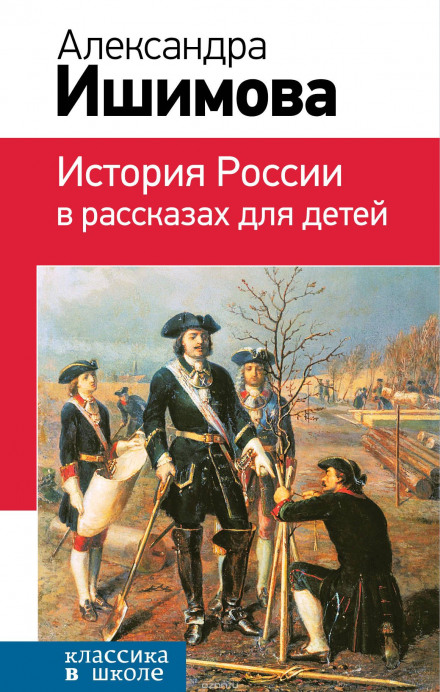
History of Russia in Stories for Children
35 hrs. 12 min.
Language
Russian
Author
Alexandra Ishimova
Author
Alexandra Ishimova
Narrator
Stanislav Fedosov
Narrator
Stanislav Fedosov
Description
Aleksandra Osipovna Ishimova (1805–1881) is a talented children’s writer and a historian.
In 1834, Ishimova began writing “The History of Russia in Stories for Children,” using Karamzin’s work and some other historical sources. The book was published in parts from 1837 to 1840 and received enthusiastic responses from contemporaries, including Pushkin, Pletnev, Grot, and Belinsky.
Ishimova’s work is rightfully considered the best presentation of Russian history for children. Written engagingly and accessibly, this book is ideal for a child’s first acquaintance with Russia’s past. Educational stories about events from more than a thousand years of history—from the first Russian princes to the Patriotic War of 1812—will captivate both the very youngest listeners, schoolchildren, and adults.
01_01 - The Slavs (up to 862 of the Christian era)
01_02 - The beginning of the Russian state and the first Russian rulers (802–944)
01_03 - Saint Olga (945–955)
01_04 - Grand Prince Sviatoslav I (955–972)
01_05 - Sons of Sviatoslav (972–980)
01_06 - The Baptism of the Russian people (980–988)
01_07 - The death of Saint Vladimir the Holy (988–1014)
01_08 - Unthankfulness (1015–1019)
01_09 - Grand Prince Yaroslav I Vladimirovich (1019–1054)
01_10 - The magicians (1054–1077)
01_11 - Quarrels among the princes (1077–1097)
01_12 - Congresses of princes (1097–1113)
01_13 - Vladimir Monomakh (1113–1125)
01_14 - The Olegovichi and the Monomakhovichi (1125–1147)
01_15 - The beginning of Moscow (1146–1155)
01_16 - The willfulness of the Novgorodians (1155–1167)
01_17 - The new Grand Principality of Suzdal, or of Vladimir (1167–1173)
01_18 - The killing of Andrei Bogolyubsky (1174)
01_19 - Grand Prince Mikhail Georgievich (1174–1176)
01_20 - Accession of Grand Prince Vsevolod III (1176–1178)
01_21 - The first Russian poem (1178–1185)
01_22 - The Lithuanians and German knights (1185–1200)
01_23 - Volhynian Roman and the Galician Principality (1200–1212)
01_24 - Mstislav Mstislavich the Brave, Prince of Novgorod (1212–1219)
01_25 - The invasion of the Tatars (1219–1238)
01_26 - Conquered Russia (1238–1243)
01_27 - Saint Alexander Nevsky (1243–1263)
01_28 - Grand Prince Yaroslav III and Lithuanian princes (1263–1272)
01_29 - Children of Alexander Nevsky (1272–1304)
01_30 - The death of Saint Martyr and Grand Prince Mikhail I (1304–1319)
01_31 - Revenge (1319–1328)
01_32 - Ivan Kalita and Moscow, capital of Russia (1328–1340)
01_33 - Saint Metropolitan Alexy (1340–1359)
01_34 - Russian children (1359–1362)
01_35 - The Battle on the Don, or the Battle of Kulikovo (1362–1388)
01_36 - Moscow’s new misfortune and the raids of the Novgorodians (1380–1388)
01_37 - The magnanimity of Prince Vladimir the Brave (1389)
01_38 - The faith and piety of the Russians (1389–1395)
01_39 - Two cunning enemies (1395–1425)
01_40 - A quarrel at the wedding of Grand Prince Vasily III (1425–1433)
01_41 - Dmitry Shemyaka (1433–1446)
01_42 - The last years of the reign of Vasily the Dark (1446–1462)
02_01 - Grand Prince Ivan III and the Greek princess Sophia (1462–1472)
02_02 - The final subjugation of Novgorod (1472–1478)
02_03 - Liberated Russia (1478–1480)
02_04 - A new condition of Russia (1480–1498)
02_05 - Two heirs to the throne (1498–1505)
02_06 - The conquest of Pskov and the final destruction of appanages (1505–1523)
02_07 - Customs and ways of the Russians under Vasily IV (1523–1533)
02_08 - Ruler Elena and Prince Tepepnyev (1533–1538)
02_09 - Childhood and first youth of Ivan IV (1538–1546)
02_10 - A marvelous change (1547)
02_11 - The Cossacks (1547–1552)
02_12 - The conquest of the kingdom of Kazan (1552)
02_13 - The glory of Ivan IV and the death of Anastasia (1552–1560)
02_14 - The Oprichniki and the Alexandrovskaya Sloboda (1560–1569)
02_15 - The weakness of Russia (1569–1582)
02_16 - Yermak, conqueror of Siberia (1582–1584)
02_17 - The death of Ivan the Terrible (1584)
02_18 - A new tsar and his favorite (1584–1591)
02_19 - Uglich and the last descendant of Rurik (1591–1597)
02_20 - Boris Godunov, Tsar of Russia (1597–1600)
02_21 - The tormenting life of a murderer (1600–1603)
02_22 - The impostor (1603–1605)
02_23 - The Poles in Moscow (1605–1606)
02_24 - The death of the impostor (1606)
02_25 - The unfortunate reign of Shuisky (1606–1610)
02_26 - Prince Mikhail Vasilyevich Skopin-Shuisky (1609–1610)
02_27 - The interregnum (1610–1613)
02_28 - Ivan Susanin and his descendants (1613)
02_29 - The modesty of the Romanovs (1613–1619)
02_30 - Tsaritsa Evdokiya (1619–1626)
02_31 - Continuation of the reign of Mikhail Fyodorovich and his death (1626–1645)
02_32 - Boyarin Morozov and popular uprisings (1645–1649)
02_33 - Patriarch Nikon (1649–1654)
02_34 - Little Russia and Bohdan Khmelnitsky (1654–1667)
02_35 - The greatness of Alexey’s soul (1667–1670)
02_36 - The birth of Peter I (1670–1676)
02_37 - Tsar Fyodor Alekseyevich (1676–1682)
03_01 - Peter, the decade-old Tsar of Russia (1682)
03_02 - Tsarevna Sophia Alekseyevna and the Streltsy (1682–1688)
03_03 - Peter, sole ruler of Russia (1689)
03_04 - The beginning of the Russian navy and Peter’s first victory (1689–1697)
03_05 - Peter’s journey to foreign lands and the last streltsy uprising (1697–1700)
03_06 - New customs and war with Sweden (1698–1703)
03_07 - A new capital, new fortresses and harbors (1703–1708)
03_08 - The traitor Mazepa and the Battle of Poltava (1708–1710)
03_09 - Tsaritsa Ekaterina (1710–1712)
03_10 - Petersburg festivities and entertainments (1712–1717)
03_11 - Peter’s new journey to foreign lands and Tsarevich Alexey (1717–1719)
03_12 - Peace with Sweden and Peter-the-Emperor (1719–1722)
03_13 - Peter’s last campaigns and affairs (1722–1725)
03_14 - The death of Peter the Great (1725)
03_15 - Empress Catherine I (1725–1727)
03_16 - Peter II and Prince Menshikov (1727–1728)
03_17 - Dolgorukiy (1728–1730)
03_18 - Empress Anna Ioannovna (1730)
03_19 - Biron (1731–1733)
03_20 - Wars with Poland and Turkey (1732–1739)
03_21 - The court of Empress Anna (1739–1740)
03_22 - Emperor John and his regent (1740)
03_23 - Ruler Anna Leopoldovna (1740–1741)
04_01 - Empress Elizabeth (1741)
04_02 - The instability of happiness (1741–1742)
04_03 - The heir to the throne and his spouse (1742–1745)
04_04 - The condition of Europe during the reign of Empress Elizabeth (1745–1756)
04_05 - War with Prussia and the death of the empress (1756–1762)
04_06 - Emperor Peter III (1762)
04_07 - The first five years of Catherine II’s reign (1762–1767)
04_08 - Catherine and her enemies (1767–1772)
04_09 - The plague and Pugachev (1772–1775)
04_10 - The triumph of peace with Turkey and the establishment of governorates (1775)
04_11 - Armed neutrality, or Catherine’s new glory (1775–1780)
04_12 - Prince Potemkin-Tavricheskiy (1780–1786)
04_13 - The Crimean Peninsula and the empress’s journey (1787)
04_14 - War with Turkey and Suvorov (1787–1790)
04_15 - War and peace with Sweden (1790)
04_16 - Potemkin’s death and peace with Turkey (1790–1792)
04_17 - Poland (1792–1795)
04_18 - The death of Catherine (1796)
05_01 - Emperor Paul I (1796–1797)
05_02 - Empress Maria
05_03 - Russians in Italy and Switzerland (1797–1801)
05_04 - The state of Europe in the first four years of Emperor Alexander I’s reign (1801–1805)
05_05 - Wars with France and the Treaty of Tilsit (1805–1808)
05_06 - Finland (1808–1810)
05_07 - New successes of the Russians in military and civil affairs (1810–1812)
05_08 - The Patriotic War (1812)
05_09 - Alexander in Paris (1813–1815)
05_10 - Congress in Vienna (1815)
05_11 - The last ten years of Alexander I’s reign (1815–1825)
In 1834, Ishimova began writing “The History of Russia in Stories for Children,” using Karamzin’s work and some other historical sources. The book was published in parts from 1837 to 1840 and received enthusiastic responses from contemporaries, including Pushkin, Pletnev, Grot, and Belinsky.
Ishimova’s work is rightfully considered the best presentation of Russian history for children. Written engagingly and accessibly, this book is ideal for a child’s first acquaintance with Russia’s past. Educational stories about events from more than a thousand years of history—from the first Russian princes to the Patriotic War of 1812—will captivate both the very youngest listeners, schoolchildren, and adults.
Contents
Part I. From the ancient Slavs to Vasily the Dark (1462) —
01_01 - The Slavs (up to 862 of the Christian era)
01_02 - The beginning of the Russian state and the first Russian rulers (802–944)
01_03 - Saint Olga (945–955)
01_04 - Grand Prince Sviatoslav I (955–972)
01_05 - Sons of Sviatoslav (972–980)
01_06 - The Baptism of the Russian people (980–988)
01_07 - The death of Saint Vladimir the Holy (988–1014)
01_08 - Unthankfulness (1015–1019)
01_09 - Grand Prince Yaroslav I Vladimirovich (1019–1054)
01_10 - The magicians (1054–1077)
01_11 - Quarrels among the princes (1077–1097)
01_12 - Congresses of princes (1097–1113)
01_13 - Vladimir Monomakh (1113–1125)
01_14 - The Olegovichi and the Monomakhovichi (1125–1147)
01_15 - The beginning of Moscow (1146–1155)
01_16 - The willfulness of the Novgorodians (1155–1167)
01_17 - The new Grand Principality of Suzdal, or of Vladimir (1167–1173)
01_18 - The killing of Andrei Bogolyubsky (1174)
01_19 - Grand Prince Mikhail Georgievich (1174–1176)
01_20 - Accession of Grand Prince Vsevolod III (1176–1178)
01_21 - The first Russian poem (1178–1185)
01_22 - The Lithuanians and German knights (1185–1200)
01_23 - Volhynian Roman and the Galician Principality (1200–1212)
01_24 - Mstislav Mstislavich the Brave, Prince of Novgorod (1212–1219)
01_25 - The invasion of the Tatars (1219–1238)
01_26 - Conquered Russia (1238–1243)
01_27 - Saint Alexander Nevsky (1243–1263)
01_28 - Grand Prince Yaroslav III and Lithuanian princes (1263–1272)
01_29 - Children of Alexander Nevsky (1272–1304)
01_30 - The death of Saint Martyr and Grand Prince Mikhail I (1304–1319)
01_31 - Revenge (1319–1328)
01_32 - Ivan Kalita and Moscow, capital of Russia (1328–1340)
01_33 - Saint Metropolitan Alexy (1340–1359)
01_34 - Russian children (1359–1362)
01_35 - The Battle on the Don, or the Battle of Kulikovo (1362–1388)
01_36 - Moscow’s new misfortune and the raids of the Novgorodians (1380–1388)
01_37 - The magnanimity of Prince Vladimir the Brave (1389)
01_38 - The faith and piety of the Russians (1389–1395)
01_39 - Two cunning enemies (1395–1425)
01_40 - A quarrel at the wedding of Grand Prince Vasily III (1425–1433)
01_41 - Dmitry Shemyaka (1433–1446)
01_42 - The last years of the reign of Vasily the Dark (1446–1462)
Part II. From Ivan III (1462) to the first Romanovs (1682)
02_01 - Grand Prince Ivan III and the Greek princess Sophia (1462–1472)
02_02 - The final subjugation of Novgorod (1472–1478)
02_03 - Liberated Russia (1478–1480)
02_04 - A new condition of Russia (1480–1498)
02_05 - Two heirs to the throne (1498–1505)
02_06 - The conquest of Pskov and the final destruction of appanages (1505–1523)
02_07 - Customs and ways of the Russians under Vasily IV (1523–1533)
02_08 - Ruler Elena and Prince Tepepnyev (1533–1538)
02_09 - Childhood and first youth of Ivan IV (1538–1546)
02_10 - A marvelous change (1547)
02_11 - The Cossacks (1547–1552)
02_12 - The conquest of the kingdom of Kazan (1552)
02_13 - The glory of Ivan IV and the death of Anastasia (1552–1560)
02_14 - The Oprichniki and the Alexandrovskaya Sloboda (1560–1569)
02_15 - The weakness of Russia (1569–1582)
02_16 - Yermak, conqueror of Siberia (1582–1584)
02_17 - The death of Ivan the Terrible (1584)
02_18 - A new tsar and his favorite (1584–1591)
02_19 - Uglich and the last descendant of Rurik (1591–1597)
02_20 - Boris Godunov, Tsar of Russia (1597–1600)
02_21 - The tormenting life of a murderer (1600–1603)
02_22 - The impostor (1603–1605)
02_23 - The Poles in Moscow (1605–1606)
02_24 - The death of the impostor (1606)
02_25 - The unfortunate reign of Shuisky (1606–1610)
02_26 - Prince Mikhail Vasilyevich Skopin-Shuisky (1609–1610)
02_27 - The interregnum (1610–1613)
02_28 - Ivan Susanin and his descendants (1613)
02_29 - The modesty of the Romanovs (1613–1619)
02_30 - Tsaritsa Evdokiya (1619–1626)
02_31 - Continuation of the reign of Mikhail Fyodorovich and his death (1626–1645)
02_32 - Boyarin Morozov and popular uprisings (1645–1649)
02_33 - Patriarch Nikon (1649–1654)
02_34 - Little Russia and Bohdan Khmelnitsky (1654–1667)
02_35 - The greatness of Alexey’s soul (1667–1670)
02_36 - The birth of Peter I (1670–1676)
02_37 - Tsar Fyodor Alekseyevich (1676–1682)
Part III. From Peter I (1682) to Anna Leopoldovna (1741)
03_01 - Peter, the decade-old Tsar of Russia (1682)
03_02 - Tsarevna Sophia Alekseyevna and the Streltsy (1682–1688)
03_03 - Peter, sole ruler of Russia (1689)
03_04 - The beginning of the Russian navy and Peter’s first victory (1689–1697)
03_05 - Peter’s journey to foreign lands and the last streltsy uprising (1697–1700)
03_06 - New customs and war with Sweden (1698–1703)
03_07 - A new capital, new fortresses and harbors (1703–1708)
03_08 - The traitor Mazepa and the Battle of Poltava (1708–1710)
03_09 - Tsaritsa Ekaterina (1710–1712)
03_10 - Petersburg festivities and entertainments (1712–1717)
03_11 - Peter’s new journey to foreign lands and Tsarevich Alexey (1717–1719)
03_12 - Peace with Sweden and Peter-the-Emperor (1719–1722)
03_13 - Peter’s last campaigns and affairs (1722–1725)
03_14 - The death of Peter the Great (1725)
03_15 - Empress Catherine I (1725–1727)
03_16 - Peter II and Prince Menshikov (1727–1728)
03_17 - Dolgorukiy (1728–1730)
03_18 - Empress Anna Ioannovna (1730)
03_19 - Biron (1731–1733)
03_20 - Wars with Poland and Turkey (1732–1739)
03_21 - The court of Empress Anna (1739–1740)
03_22 - Emperor John and his regent (1740)
03_23 - Ruler Anna Leopoldovna (1740–1741)
Part IV. From Elizabeth (1741) to Catherine II (1796)
04_01 - Empress Elizabeth (1741)
04_02 - The instability of happiness (1741–1742)
04_03 - The heir to the throne and his spouse (1742–1745)
04_04 - The condition of Europe during the reign of Empress Elizabeth (1745–1756)
04_05 - War with Prussia and the death of the empress (1756–1762)
04_06 - Emperor Peter III (1762)
04_07 - The first five years of Catherine II’s reign (1762–1767)
04_08 - Catherine and her enemies (1767–1772)
04_09 - The plague and Pugachev (1772–1775)
04_10 - The triumph of peace with Turkey and the establishment of governorates (1775)
04_11 - Armed neutrality, or Catherine’s new glory (1775–1780)
04_12 - Prince Potemkin-Tavricheskiy (1780–1786)
04_13 - The Crimean Peninsula and the empress’s journey (1787)
04_14 - War with Turkey and Suvorov (1787–1790)
04_15 - War and peace with Sweden (1790)
04_16 - Potemkin’s death and peace with Turkey (1790–1792)
04_17 - Poland (1792–1795)
04_18 - The death of Catherine (1796)
Part V. From Paul I (1796) to Alexander I (1825)
05_01 - Emperor Paul I (1796–1797)
05_02 - Empress Maria
05_03 - Russians in Italy and Switzerland (1797–1801)
05_04 - The state of Europe in the first four years of Emperor Alexander I’s reign (1801–1805)
05_05 - Wars with France and the Treaty of Tilsit (1805–1808)
05_06 - Finland (1808–1810)
05_07 - New successes of the Russians in military and civil affairs (1810–1812)
05_08 - The Patriotic War (1812)
05_09 - Alexander in Paris (1813–1815)
05_10 - Congress in Vienna (1815)
05_11 - The last ten years of Alexander I’s reign (1815–1825)
100%
1
08:06
Istoriya_Rossii_01_01
12:31
Istoriya_Rossii_01_02
06:01
Istoriya_Rossii_01_03
10:44
Istoriya_Rossii_01_04
05:58
Istoriya_Rossii_01_05
09:16
Istoriya_Rossii_01_06
11:02
Istoriya_Rossii_01_07
04:04
Istoriya_Rossii_01_08
11:12
Istoriya_Rossii_01_09
09:46
Istoriya_Rossii_01_10
07:11
Istoriya_Rossii_01_11
07:22
Istoriya_Rossii_01_12
10:18
Istoriya_Rossii_01_13
06:03
Istoriya_Rossii_01_14
06:04
Istoriya_Rossii_01_15
06:39
Istoriya_Rossii_01_16
06:20
Istoriya_Rossii_01_17
07:20
Istoriya_Rossii_01_18
04:50
Istoriya_Rossii_01_19
04:51
Istoriya_Rossii_01_20
09:42
Istoriya_Rossii_01_21
05:47
Istoriya_Rossii_01_22
09:36
Istoriya_Rossii_01_23
13:06
Istoriya_Rossii_01_24
23:30
Istoriya_Rossii_01_25
11:32
Istoriya_Rossii_01_26
14:26
Istoriya_Rossii_01_27
05:09
Istoriya_Rossii_01_28
10:13
Istoriya_Rossii_01_29
08:09
Istoriya_Rossii_01_30
09:49
Istoriya_Rossii_01_31
12:42
Istoriya_Rossii_01_32
09:45
Istoriya_Rossii_01_33
06:12
Istoriya_Rossii_01_34
19:05
Istoriya_Rossii_01_35
09:08
Istoriya_Rossii_01_36
09:16
Istoriya_Rossii_01_37
06:36
Istoriya_Rossii_01_38
11:09
Istoriya_Rossii_01_39
13:34
Istoriya_Rossii_01_40
09:02
Istoriya_Rossii_01_41
06:28
Istoriya_Rossii_01_42
1
10:26
Istoriya_Rossii_02_01
06:04
Istoriya_Rossii_02_02
06:45
Istoriya_Rossii_02_03
08:16
Istoriya_Rossii_02_04
10:48
Istoriya_Rossii_02_05
10:57
Istoriya_Rossii_02_06
17:27
Istoriya_Rossii_02_07
04:50
Istoriya_Rossii_02_08
11:21
Istoriya_Rossii_02_09
15:35
Istoriya_Rossii_02_10
14:26
Istoriya_Rossii_02_11
12:39
Istoriya_Rossii_02_12
17:53
Istoriya_Rossii_02_13
16:55
Istoriya_Rossii_02_14
14:09
Istoriya_Rossii_02_15
19:25
Istoriya_Rossii_02_16
04:49
Istoriya_Rossii_02_17
09:34
Istoriya_Rossii_02_18
11:14
Istoriya_Rossii_02_19
08:02
Istoriya_Rossii_02_20
15:21
Istoriya_Rossii_02_21
18:46
Istoriya_Rossii_02_22
12:00
Istoriya_Rossii_02_23
09:47
Istoriya_Rossii_02_24
12:20
Istoriya_Rossii_02_25
13:28
Istoriya_Rossii_02_26
25:14
Istoriya_Rossii_02_27
08:29
Istoriya_Rossii_02_28
15:57
Istoriya_Rossii_02_29
06:14
Istoriya_Rossii_02_30
10:53
Istoriya_Rossii_02_31
06:30
Istoriya_Rossii_02_32
12:22
Istoriya_Rossii_02_33
21:21
Istoriya_Rossii_02_34
14:25
Istoriya_Rossii_02_35
14:20
Istoriya_Rossii_02_36
12:26
Istoriya_Rossii_02_37
1
18:32
Istoriya_Rossii_03_01
22:26
Istoriya_Rossii_03_02
18:34
Istoriya_Rossii_03_03
24:44
Istoriya_Rossii_03_04
30:48
Istoriya_Rossii_03_05
25:09
Istoriya_Rossii_03_06
28:29
Istoriya_Rossii_03_07
28:20
Istoriya_Rossii_03_08
25:34
Istoriya_Rossii_03_09
13:26
Istoriya_Rossii_03_10
16:29
Istoriya_Rossii_03_11
15:29
Istoriya_Rossii_03_12
18:20
Istoriya_Rossii_03_13
08:54
Istoriya_Rossii_03_14
07:22
Istoriya_Rossii_03_15
15:40
Istoriya_Rossii_03_16
13:39
Istoriya_Rossii_03_17
09:39
Istoriya_Rossii_03_18
11:50
Istoriya_Rossii_03_19
12:08
Istoriya_Rossii_03_20
22:03
Istoriya_Rossii_03_21
13:00
Istoriya_Rossii_03_22
10:55
Istoriya_Rossii_03_23
1
11:48
Istoriya_Rossii_04_01
21:16
Istoriya_Rossii_04_02
15:48
Istoriya_Rossii_04_03
11:34
Istoriya_Rossii_04_04
43:40
Istoriya_Rossii_04_05
07:37
Istoriya_Rossii_04_06
18:56
Istoriya_Rossii_04_07
21:31
Istoriya_Rossii_04_08
31:38
Istoriya_Rossii_04_09
26:47
Istoriya_Rossii_04_10
26:25
Istoriya_Rossii_04_11
39:24
Istoriya_Rossii_04_12
1:02:43
Istoriya_Rossii_04_13
41:10
Istoriya_Rossii_04_14
11:03
Istoriya_Rossii_04_15
14:37
Istoriya_Rossii_04_16
18:59
Istoriya_Rossii_04_17
14:06
Istoriya_Rossii_04_18
1
06:38
Istoriya_Rossii_05_01
37:33
Istoriya_Rossii_05_02
40:50
Istoriya_Rossii_05_03
19:59
Istoriya_Rossii_05_04
28:38
Istoriya_Rossii_05_05
28:16
Istoriya_Rossii_05_06
17:43
Istoriya_Rossii_05_07
1:40:52
Istoriya_Rossii_05_08
43:50
Istoriya_Rossii_05_09
31:46
Istoriya_Rossii_05_10
55:09
Istoriya_Rossii_05_11
