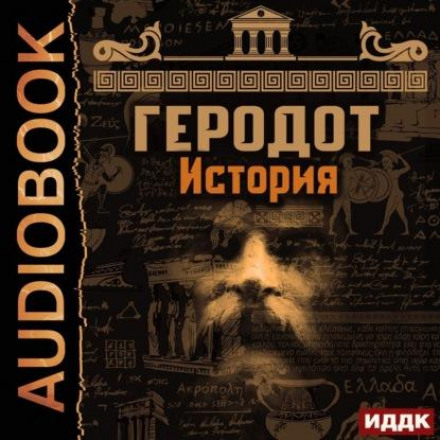
Histories
32 hrs. 1 min.
Language
Russian
Author
Herodotus
Author
Herodotus
Narrator
Yaroslav Lukashev
Narrator
Yaroslav Lukashev
Description
“The History” (otherwise “Music”)—a book by the Greek historian Herodotus, the first fully preserved historical and, in general, prose work in European literature.
Herodotus’s composition is not a history in the modern sense of the word. Although the main plot for it became the story of the Greco-Persian wars (the second half presents a consistent historical account of the Greco-Persian wars, ending with the news of the conquest of Sestus by the Greeks in 479 BC), the author, alongside this, creates a real encyclopedia containing geographical, ethnographic, natural-historical, and literary information. The first half contains narratives about the rise of the Persian Kingdom, about Babylonia, Assyria, Egypt, Scythia, Libya, and more.
To some extent, the unity of the presentation is also achieved by the fact that from the very first words to the end the historian tries to trace the struggle between barbarians and Greeks.
This most important work of ancient historiography reached us in numerous copies from the 10th to 15th centuries in Greek and was first published (in a Latin translation) by Lorenzo Valla at the end of the 15th century AD. The oldest manuscripts of the 10th–11th centuries are known by the so-called stirps Florentina. Manuscripts of the 14th century are known by stirps Romana. In addition, there are papyrus fragments of Herodotus’s work dating to the 2nd–3rd centuries AD.
Contents:
Book One. Clio
Book Two. EUTERPE
Book Three. THALIA
Book Four. MELPOMENE
Book Five. TERPSICHORE
Book Six. ERATO
Book Seven. POLYHYMNIА
Book Eight. URANIA
Book Nine. CALLIOPE
Herodotus’s composition is not a history in the modern sense of the word. Although the main plot for it became the story of the Greco-Persian wars (the second half presents a consistent historical account of the Greco-Persian wars, ending with the news of the conquest of Sestus by the Greeks in 479 BC), the author, alongside this, creates a real encyclopedia containing geographical, ethnographic, natural-historical, and literary information. The first half contains narratives about the rise of the Persian Kingdom, about Babylonia, Assyria, Egypt, Scythia, Libya, and more.
To some extent, the unity of the presentation is also achieved by the fact that from the very first words to the end the historian tries to trace the struggle between barbarians and Greeks.
This most important work of ancient historiography reached us in numerous copies from the 10th to 15th centuries in Greek and was first published (in a Latin translation) by Lorenzo Valla at the end of the 15th century AD. The oldest manuscripts of the 10th–11th centuries are known by the so-called stirps Florentina. Manuscripts of the 14th century are known by stirps Romana. In addition, there are papyrus fragments of Herodotus’s work dating to the 2nd–3rd centuries AD.
Contents:
Book One. Clio
Book Two. EUTERPE
Book Three. THALIA
Book Four. MELPOMENE
Book Five. TERPSICHORE
Book Six. ERATO
Book Seven. POLYHYMNIА
Book Eight. URANIA
Book Nine. CALLIOPE
