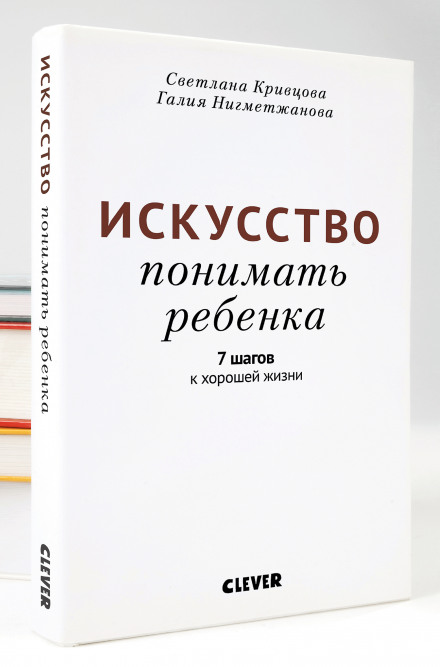
The Art of Understanding Your Child: 7 Steps to a Good Life
9 hrs. 48 min.
Language
Russian
Author
Svetlana Krivtsova
Author
Galiya Nigmetzhanova
Narrator
Anna Geller
Narrator
Anna Geller
Description
The book “The Art of Understanding the Child” will help you openly, without prejudice, see your child—and thereby notice the most important thing in any given situation. And finally understand what you can do and how to act.
Few of us remember childhood as a time of understanding, acceptance, and openness. More often, we recall the experience of pressure (from parents and teachers), rejection (from peers). And our character, our attitude toward people and toward ourselves, the very life story we live grows out of these childhood experiences of not being understood. That’s why it’s especially good when there is a sensitive conversation partner nearby—someone you can tell about your parental anxieties, fears, and doubts that we ourselves forbid ourselves to experience. And slowly, trustingly, discuss them among professionals and simply caring people.
“The task of parents is this: when communicating with a child, to remain your best self—the one you’re not ashamed of in front of yourself. This most important parental skill helps in any situation choose the right tone and the right action. In the end, that determines whether the child will be well brought up and whether he will be happy.”
Svetlana Krivtsova is an existential psychotherapist, Candidate of Psychological Sciences, Associate Professor at the Department of Personality Psychology, Lomonosov Moscow State University, and scientific supervisor of the project “Life Skills: Psychological Classes with Children from 5 to 15.” Galya Nigmetzhanova is a child psychologist and lead specialist at the Moscow Family Support Psychological Center “Kontakt.”
Few of us remember childhood as a time of understanding, acceptance, and openness. More often, we recall the experience of pressure (from parents and teachers), rejection (from peers). And our character, our attitude toward people and toward ourselves, the very life story we live grows out of these childhood experiences of not being understood. That’s why it’s especially good when there is a sensitive conversation partner nearby—someone you can tell about your parental anxieties, fears, and doubts that we ourselves forbid ourselves to experience. And slowly, trustingly, discuss them among professionals and simply caring people.
“The task of parents is this: when communicating with a child, to remain your best self—the one you’re not ashamed of in front of yourself. This most important parental skill helps in any situation choose the right tone and the right action. In the end, that determines whether the child will be well brought up and whether he will be happy.”
Svetlana Krivtsova is an existential psychotherapist, Candidate of Psychological Sciences, Associate Professor at the Department of Personality Psychology, Lomonosov Moscow State University, and scientific supervisor of the project “Life Skills: Psychological Classes with Children from 5 to 15.” Galya Nigmetzhanova is a child psychologist and lead specialist at the Moscow Family Support Psychological Center “Kontakt.”
100%
41:32
00_Vstuplenie
1:04:55
01_Vnimatelno smotret na rebenka
1:14:14
02_Uchitsya v uvidennom zamechat sebya
1:13:36
03_Uhazhivat za svoimi chuvstvami
1:09:57
04_Zanimatsya konfliktami
50:10
05_Uvidet proishodyaschee glazami rebenka
45:43
06_Byt vzroslym ryadom s detmi
2:48:10
07_Ponimat zhiznennye zadachi detey
