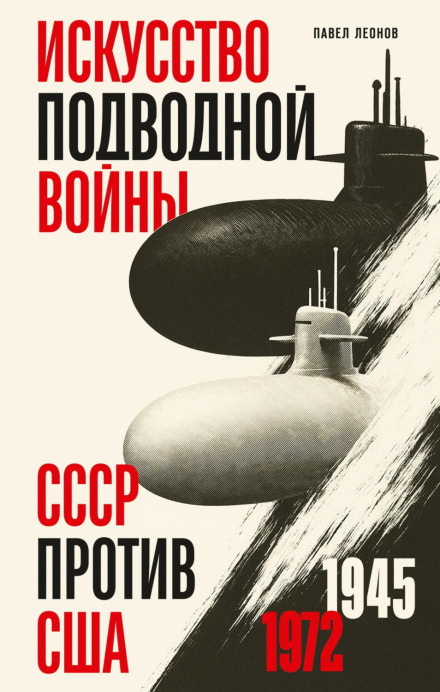
The Art of Submarine Warfare. USSR vs USA, 1945–1972
11 hrs. 31 min.
Language
Russian
Author
Pavel Leonov
Author
Pavel Leonov
Narrator
Yegor Fedotov
Narrator
Yegor Fedotov
Description
The creation of nuclear weapons became an outstanding scientific and technical achievement of humanity and, at the same time, brought civilization a deadly danger. In 1945–1949, the United States remained the sole possessor of the military atom. The USSR managed to become the second nuclear power in the most extremely compressed time, but the very appearance of the atomic bomb had not yet eliminated the strategic imbalance with America.
The Soviet Union bet on rockets as the main means of delivering nuclear warheads, and special submarines became the key carriers—vessels capable of secretly reaching the required distance and striking. The United States responded in kind: the rapid buildup of strategic atomic fleets began. How this race unfolded largely determined the fate of the world.
The book tells of the fierce rivalry among designers, engineers, admirals, and commanders—of a struggle in which the opponents again and again had to borrow each other’s experience and try to see events through the eyes of the other side. And it is also about people who proved stronger than a titan: those who, with bare hands, scooped radioactive water, sealed bulkhead hatches from inside a burning or flooding compartment, kept ships of a probable enemy in their sights, and bore the terrible responsibility for the lives of millions.
The Soviet Union bet on rockets as the main means of delivering nuclear warheads, and special submarines became the key carriers—vessels capable of secretly reaching the required distance and striking. The United States responded in kind: the rapid buildup of strategic atomic fleets began. How this race unfolded largely determined the fate of the world.
The book tells of the fierce rivalry among designers, engineers, admirals, and commanders—of a struggle in which the opponents again and again had to borrow each other’s experience and try to see events through the eyes of the other side. And it is also about people who proved stronger than a titan: those who, with bare hands, scooped radioactive water, sealed bulkhead hatches from inside a burning or flooding compartment, kept ships of a probable enemy in their sights, and bore the terrible responsibility for the lives of millions.
100%
09:04
01 - Ввведение
36:37
02 - Человек, задающий темп
30:24
03 - Ядерный менеджмент по-флотски
26:25
04 - Первые советские шаги
31:20
05 - Экономический фон начала Холодной войны
10:34
06 - Неприятные ракетные сюрпризы
13:45
07 - Подводная архитектура
24:32
08 - Ненадежные союзники Американской империи. Великобритания
17:21
09 - Американское видение внешней политики в начале Холодной войны
19:25
10 - Взгляд из ЦРУ военно-морская стратегия СССР и развитие сил флота в 1953–1963 гг.
31:27
11 - Откуда исходит угроза миру
18:35
12 - Советский взгляд на использование флота СССР в грядущей войне
30:56
13 - Отработка американской теории противодействия Советам на частном ТВД
14:24
14 - Теоретический базис СССР в случае ядерной войны, вариант 1961 года
08:23
15 - Строительство АПЛ К-3
09:39
16 - Проект «Нобска»
32:56
17 - Борьба с подводной угрозой до 1972 года
20:15
18 - Политическая оценка флота США глазами советских офицеров
17:24
19 - Как правильно учить людей
19:02
20 - Карибский кризис
16:35
21 - Ошибка, поменявшая курс гибель «Трешера»
16:39
22 - Ядерный паритет — почему это важно
08:35
23 - Развитие строительства атомных подводных лодок в США
26:24
24 - Рождение «Полариса»
13:44
25 - Развитие атомных лодок в США и СССР в период Холодной войны
14:13
26 - Процедура пуска
18:33
27 - Теория противостояния
35:57
28 - Начальная фаза противостояния
07:32
29 - Вынужденная интерлюдия война во Вьетнаме 1964–1973 гг.
13:45
30 - Ошибка, поменявшая курс инцидент с «Ноябрем»
16:39
31 - Вторая фаза подводного противостояния. Теория
27:27
32 - Вторая фаза подводного противостояния. Практика
17:58
33 - Третья фаза противостояния. Уравнивание сил
22:56
34 - Приложения. Докладная трумэну 1947 года
06:29
35 - Способы обнаружения подводных лодок
05:29
36 - Пассивная акустика в ПЛО
